Different Visions at the U.S.-China Summit? Differences Emerge Over AI and Rare Earths
- Input
- 2026-09-27 08:26:12
- Updated
- 2026-09-27 08:26:12
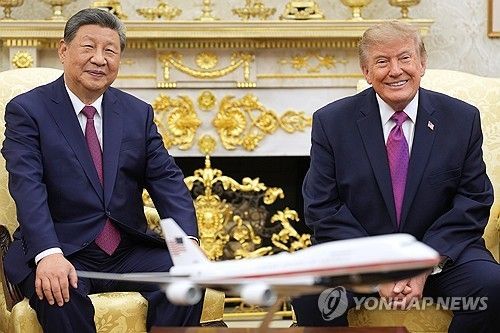
[Financial News] Despite announcing their respective achievements after their summit, U.S. President Donald Trump and Chinese President Xi Jinping are showing differences over specific issues, including artificial intelligence (AI) and rare earths. The two countries agreed to mutual tariff reductions involving $30 billion (approximately 41 trillion won) in trade, but sensitive issues such as Taiwan were left out of statements on the summit's results. The Office of the United States Trade Representative (USTR) plans to announce the specific negotiation results on the 28th.
The White House said in a fact sheet on the 25th local time that President Trump and Chinese President Xi Jinping "agreed to build a constructive relationship that promotes strategic stability based on respect, fairness and reciprocity."
China also announced the summit's "eight major outcomes" through the Xinhua News Agency on the 26th, saying that the two countries had agreed to build a constructive strategic relationship promoting stability between China and the United States based on respect, fairness and equality.
The two countries cited as achievements an agreement to apply lower tariffs to goods worth $30 billion each in the trade sector, as well as the launch of their trade and investment committees. However, their positions differed subtly on the details. The United States said it would continue consultations on shortages in supply chains for critical minerals, including rare earths, with the goal of restoring supplies to an appropriate level. The rare earths issue was not included in China's announcement of the summit's outcomes.
The United States needs to import rare earths, while China is weaponizing them. China currently controls more than half of global rare-earth mining and more than 90% of refining and processing capacity.
There was only a formal agreement in the AI sector. The White House said the two leaders had agreed to use the term "superintelligence" (SI) instead of AI and to continue follow-up talks through November. China also confirmed that the two countries had agreed to discuss the risks and benefits of AI and establish a communication channel for related incidents, but it continued to use the existing term "AI" rather than "SI."
The two countries also showed differences over recent calls to slow the pace of AI development. President Trump said, "I want to leave things as they are," while Xi Jinping said AI "must remain under human control," highlighting the gap between their positions.
Neither country mentioned Taiwan in its statement. Chinese media reported that Xi Jinping told President Trump during the summit that he wanted the United States to maintain its opposition to Taiwan independence.
Both sides said the two leaders agreed to oppose Iran's possession of nuclear weapons and the imposition of tolls on passage through the Strait of Hormuz.
[email protected] Lee Hwan-joo Reporter