"Donald Trump and Xi Jinping to Meet Twice More This Year"
- Input
- 2026-09-27 07:18:11
- Updated
- 2026-09-27 07:18:11
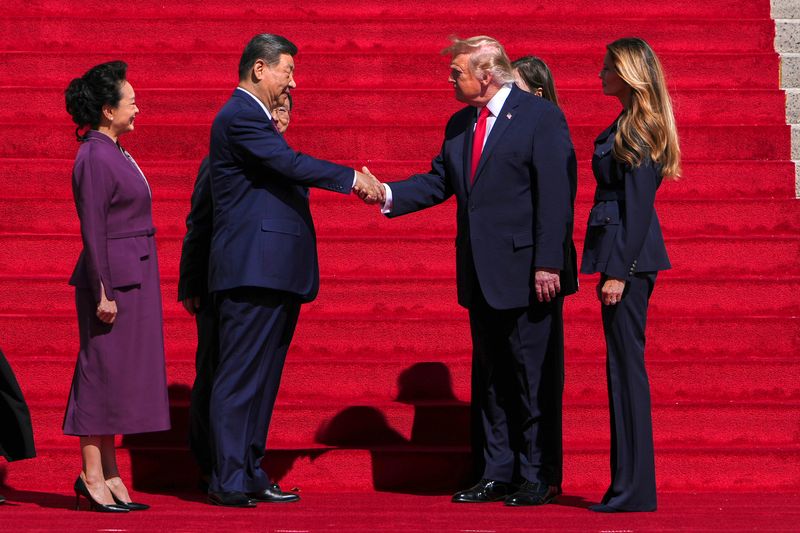
U.S. President Donald Trump and Chinese President Xi Jinping have agreed to meet twice more this year.
The White House and the Ministry of Foreign Affairs of the People's Republic of China announced the agreement in separate statements on the 26th (local time).
The two leaders are scheduled to meet at the Asia-Pacific Economic Cooperation (APEC) summit in Shenzhen, China, in November and at the Group of Twenty (G20) summit in Miami, Florida, in December.
Xi left China on the 25th after completing a three-day state visit to the United States. However, the visit produced no notable results.
Rare Earths
The issue of China's export controls on rare earths, a top concern for the United States, also remained unresolved.
The White House said in a statement that the two countries had agreed "to continue jointly addressing supply shortages involving exports of critical minerals, including rare earths, that concern the United States."
China's Ministry of Foreign Affairs said in a statement that Xi and Trump had instructed their respective economic teams to implement the agreements reached before their summit in Busan last October. They also agreed to renew the one-year trade-war truce reached at that time.
U.S. Treasury Secretary Scott Bessent said two days before the Washington summit that both sides had agreed to extend the trade-war truce until January 10 next year.
The Financial Times (FT), citing U.S. administration officials, reported that China wanted to extend the truce until the end of Trump's term, but the United States rejected the proposal because it wanted improvements in China's rare-earth exports. A senior U.S. administration official noted that China had fulfilled only two-thirds of its rare-earth export commitment made in Busan last year.
Strait of Hormuz and Drugs
The two countries agreed on the Strait of Hormuz that "no country or institution can impose transit fees on this international waterway."
The White House also said Trump urged Xi to increase China's exports of refined petroleum products to help stabilize global supplies.
The two countries also agreed to cooperate in addressing the drug problem. Although the White House said it recognized China's new controls on exports of fentanyl precursors, it urged Beijing to take further action to prevent illegal drug ingredients from reaching drug dealers in North America.
Tariff Cuts and Taiwan
The United States also suggested that it might move to lower tariffs on Chinese products following the meeting.
U.S. Trade Representative (USTR) Jamieson Greer said details of the 'Trade Council,' a mechanism for lowering tariffs on non-sensitive items, would be announced on the 28th.
The two leaders avoided the sensitive issue of Taiwan. Their official statements contained no mention of Taiwan. Trump also said that they had not spent much time discussing the issue during the talks.
AI
The White House announced that the two leaders had agreed to call artificial intelligence (AI) 'Superintelligence.' Trump recently proposed on his social media platform Truth Social that it be called superintelligence (SI) instead of AI.
According to China's statement, the two countries also agreed to establish a U.S.-China AI Dialogue to discuss AI-related risks and create a bilateral communication channel for use in the event of an AI-related accident.
Disagreement Over Military Issues
China's Ministry of Foreign Affairs also said in its statement that the U.S. and Chinese militaries had "agreed to sign a memorandum of understanding (MOU) on an emergency communications hotline," but the Trump administration denied that this was the case.
A U.S. official told the FT, "That's inaccurate," adding, "This issue was not even discussed."
The two sides also appear to disagree on arms control.
The United States proposed trilateral arms-control negotiations involving the United States, China and Russia. However, the proposal was not included in China's statement.
Amid criticism that the summit produced no substantive results, experts said its significance lay in helping maintain and stabilize relations between the two countries.
[email protected] Song Kyung-jae Reporter