Japan Rattled by Xi Jinping's 'Upending of Asia Strategy'; Takaichi Makes Urgent Call to Trump
- Input
- 2026-09-26 23:19:03
- Updated
- 2026-09-26 23:19:03
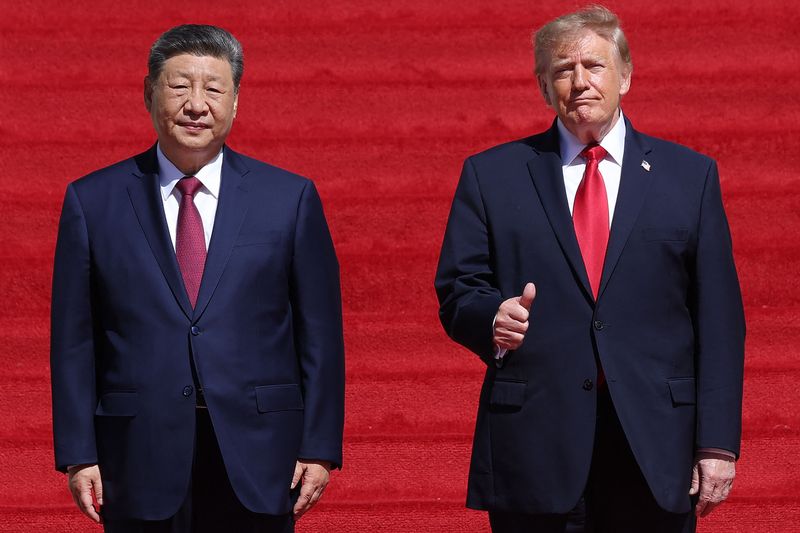
[Financial News] An analysis suggests that Chinese President Xi Jinping is seeking to shake up the United States' Asian security strategy through carefully calculated remarks at his summit with U.S. President Donald Trump. Japan's government was thrown into confusion after Xi highlighted the historical fact that the United States and China were allies during World War II to check Japan, prompting Tokyo to move urgently to determine Washington's intentions.
According to foreign media reports, including The New York Times, on the 25th (local time), Xi revealed a clear strategy during his visit to the United States. Although he enjoyed an unusually warm reception, he sought to steer Trump's views toward China's position on key security issues involving Taiwan and Japan.
■ China Emphasizes Its World War II 'Alliance' in Bid to Drive a Wedge Between the United States and Japan
At the summit and state banquet, Xi repeatedly emphasized that the United States and China had been 'allies' that fought together against Japan during World War II. He described Japan as a 'fascist' and 'militarist' aggressor, reinforcing its image as an unreliable enemy on the global stage.
This is interpreted as a typical divide-and-conquer strategy aimed at driving a wedge between the United States and Japan, its key ally. Akio Takahara, a visiting professor at Tokyo Woman's Christian University, said, "China's message is, 'We are on the good side, trying to change the world order, while they—Japan—are on the bad side, so the United States should cooperate with us.'" He noted that if the claim is repeated, it could place a significant diplomatic burden on Japan.
■ Japan Rattled; Takaichi Makes Urgent Call to Trump
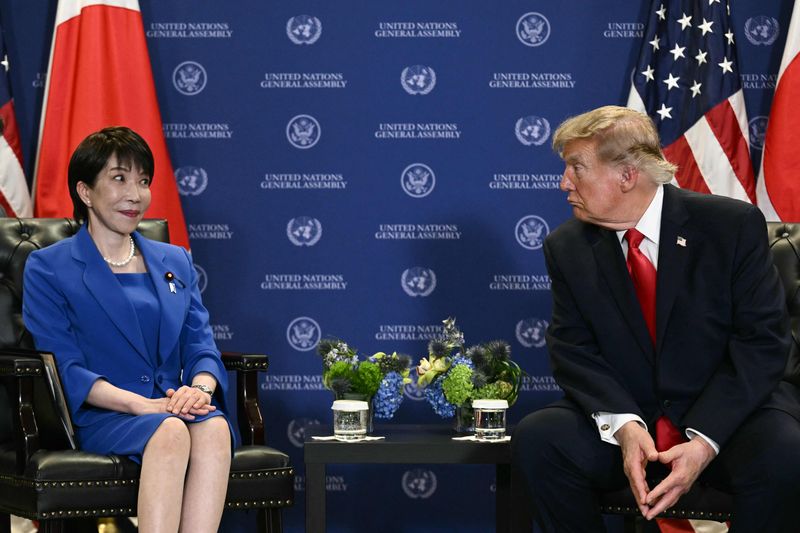
Japan's government was particularly taken aback when not only Xi but also Trump referred to China as a 'World War II ally' in his welcoming remarks.
Japanese Prime Minister Sanae Takaichi held an emergency press conference on the night of the 26th and announced that she had spoken with Trump by phone for 20 minutes. Takaichi said, "I told President Trump that, while the U.S. and Chinese leaders had looked back on the history of fighting together as allies during World War II, the United States and Japan had now become 'the most trusted allies' of each other."
Officials from Japan's Foreign Ministry and other government agencies have sought to downplay the significance, saying, "The substantive results of cooperation between the United States and China are close to zero." Local media, including Yomiuri Shimbun, warned of the risk that Trump could be drawn into China's propaganda campaign, calling it "deeply regrettable that the U.S.-China summit was used as a platform for China's anti-Japan propaganda."
■ Xi Seeks to Establish Opposition to Taiwan Independence as a Given, Pressuring Trump to Hold Off on Arms Sales
Xi's carefully crafted language was also evident in the Taiwan issue. He pressured Trump, saying, "We hope that the United States will maintain the correct position of opposing Taiwan independence and handle the Taiwan issue with caution."
Craig Singleton, senior director of FDD's China Program, said Xi's use of the word 'maintain' was intended to create the impression that Trump had already accepted China's red line on Taiwan. Traditionally, the United States has said that it 'does not support' Taiwan independence, but it has avoided explicitly declaring that it 'opposes' it, as China demands.
Experts interpreted Xi's remarks as carrying a warning that approving the $14 billion (approximately 18.6 trillion won) arms sale to Taiwan currently being held up by the Trump administration could disrupt the atmosphere of détente between the two countries.
■ No Substantive Agreement, but China's Propaganda 'Victory'; Probing for Weaknesses to Continue
NYT assessed that although the summit produced no concrete agreement on key issues such as trade imbalances and technology restrictions, Xi secured a clear victory in propaganda terms. People's Daily, the Chinese Communist Party's official newspaper, prominently covered Trump's red-carpet welcome and a celebratory military flyover on its front page, portraying Xi as a global leader on an equal footing with the U.S. president.
Matt Pottinger, who served as deputy national security adviser during Trump's first administration, said, "Xi sees frequent meetings with the U.S. president as an opportunity to probe for weaknesses in the American position." The two leaders are expected to continue testing each other's positions at the Asia-Pacific Economic Cooperation (APEC) summit in Shenzhen, China, in November and the Group of Twenty (G20) summit in the United States in December.
[email protected] Park Ji-hyun Reporter