South Korean Women's Basketball Overwhelms Japan Without Jisu Park and Park Ji-hyun—11 Players Forge Gold for the First Time in 12 Years [Nagoya Asian Games]
- Input
- 2026-09-26 21:32:09
- Updated
- 2026-09-26 21:32:09
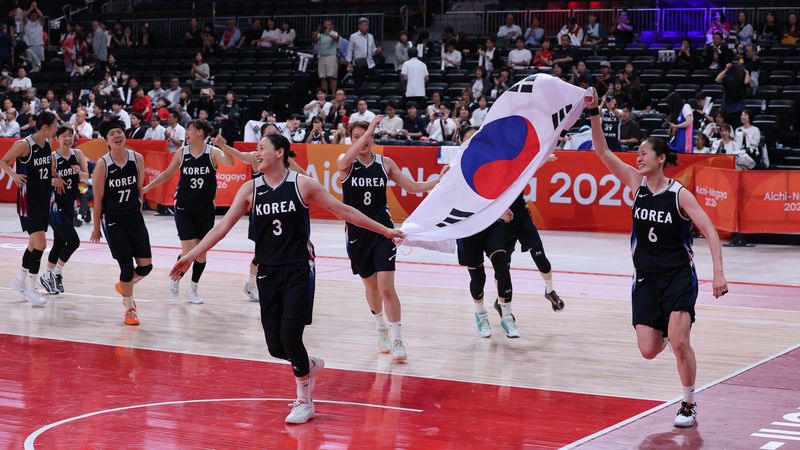
[Financial News] It was truly a miracle straight out of a comic book. Two undisputed aces were absent, leaving an 11-player roster that could not even be filled to capacity. To make matters worse, the opponent in the final was Japan, South Korea's longtime nemesis, in the heart of enemy territory. Yet the fighting spirit of the Taegeuk warriors defied every setback and sent the national flag soaring over Nagoya.
South Korea's women's national basketball team, led by head coach Park Soo-ho, defeated host Japan 75-70 in the final of the 2026 Aichi-Nagoya Asian Games at Aichi International Arena in Nagoya on September 26 to claim the long-awaited gold medal.
South Korean women's basketball thus reclaimed the top spot in Asia for the first time in 12 years, since winning gold at the 2014 Incheon Games. It was the team's fifth Asian Games gold medal overall and marked the first men's and women's basketball title sweep in 12 years, following the men's team to the top of the podium.
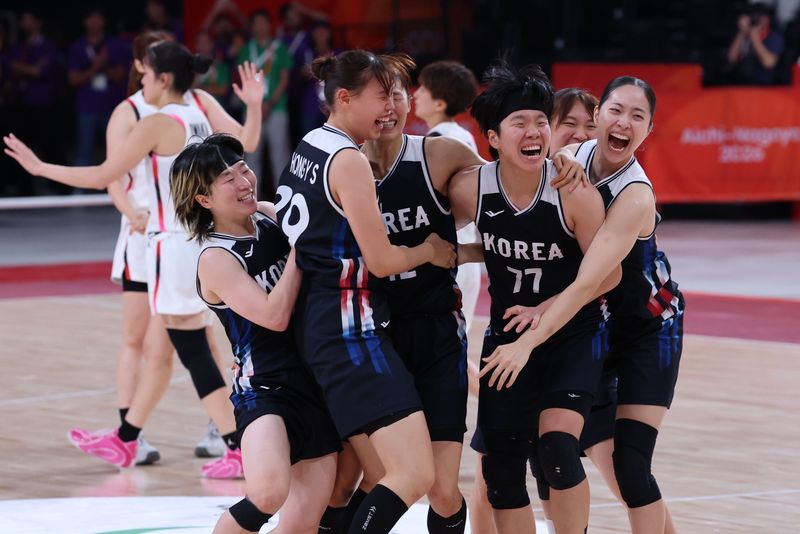
Ahead of the tournament, concerns about the women's national team outweighed expectations. Jisu Park (KB Stars), the central pillar of South Korean basketball, was unable to join the team at the last minute while recovering from ankle surgery. Park Ji-hyun (Los Angeles Sparks), who plays in the Women's National Basketball Association (WNBA), also missed the tournament because of her club schedule. Missing both of its biggest weapons, South Korea made the bold decision to compete with only 11 players instead of filling its 12-player roster. It was a desperate gamble in which the team's physical disadvantage was obvious.
Yet the 11 underdogs grew even stronger by uniting as one. Rather than focusing on filling out the roster, Park Soo-ho trusted the cohesion the team had painstakingly built since the summer. Led by Heo Ye-eun (KB Stars), Kang Lee-seul (Woori Bank), Haeran Lee (Samsung Life Insurance) and Lee So-hee (BNK), South Korea made fast transition play, fluid passing and deadly perimeter shooting its secret weapons.
South Korea's offense had been explosive from the group stage and continued its relentless run. After defeating Malaysia 106-40, Mongolia 88-61 and Taiwan 73-59 in succession, the team overwhelmed Indonesia 101-59 in the quarterfinals.
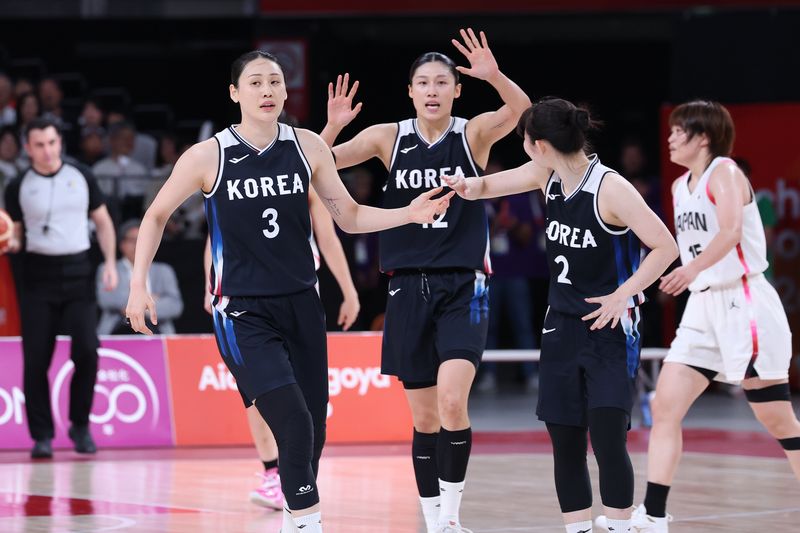
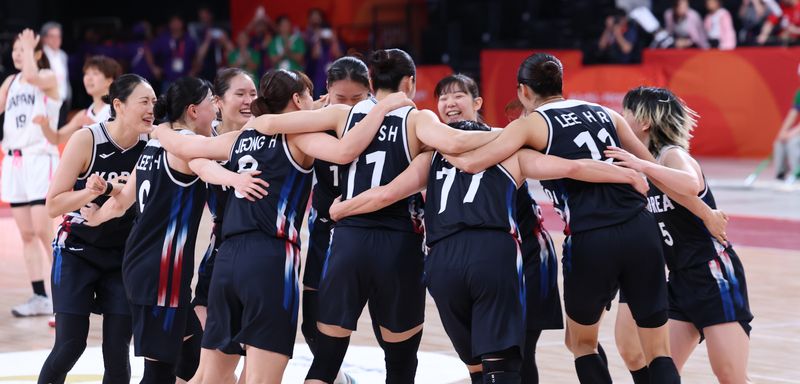
The highlight was the team's run of knocking off one opponent after another in the knockout stage. In the semifinals on September 25, South Korea ended its six-game head-to-head losing streak against China with suffocating defense and perimeter shooting against a Chinese team anchored by the 220-centimeter giant Zhang Ziyu. Then came the long-awaited final. Despite its complete disadvantage after seven straight recent losses to Japan, and despite the one-sided support for the host team on its home court, South Korea never backed down. It pressed Japan with its trademark speed and mobility before securing a thrilling 75-70 victory.
This victory ushered in an unforgettable renaissance for South Korean basketball in Nagoya. Of the four gold medals available in the basketball events at the Asian Games, South Korea swept three: men's 5-on-5, men's 3-on-3 and women's 5-on-5.
South Korean basketball, which had faced painful criticism over its declining international competitiveness, has sent a powerful signal of a complete revival across both the men's and women's game.
Neither the absence of its aces, nor the home-court advantage enjoyed by the host nation, nor its brutal losing streaks could stop their golden charge. South Korea's national anthem, echoing through Nagoya Arena, sounded more grand and impassioned than ever.
[email protected] Jeon Sang-il Reporter