Europe’s Auto Industry in Crisis Seeks a Lifeline in Defense [Yoon Jae-jun’s World View]
- Input
- 2026-09-28 05:00:00
- Updated
- 2026-09-28 05:00:00
[Financial News] European automakers are increasingly turning to the defense industry as they face a severe deterioration in performance and excess capacity. With their position weakened by the delayed transition to electric vehicles and the aggressive market penetration of Chinese automakers offering low-priced models, they are seeking to turn surging defense budgets across Europe, fueled by recent security crises, into a new opportunity for growth.
On the 25th, local time, the BBC and other foreign media outlets reported that auto industries in Europe, including those in the United Kingdom and Germany, are seeking a lifeline in defense.
Ford UK, the British arm of Ford Motor Company, is seeking to enter the military vehicle market to overcome the unprecedented crisis facing automakers. Ford formed a consortium with defense specialists General Dynamics and Ricardo to bid for the Ministry of Defence of the United Kingdom’s (MoD) army vehicle replacement program. The project involves supplying about 9,000 military vehicles over the next five to seven years to replace existing Land Rover-based vehicles. Lisa Brankin, chair of Ford UK, said, "As manufacturers, we cannot afford to miss this exceptional opportunity created by the surge in demand from the defense sector." Jaguar Land Rover (JLR) has also established a separate division dedicated to defense projects and is bidding for the Ministry of Defence of the United Kingdom’s next-generation military vehicle program.
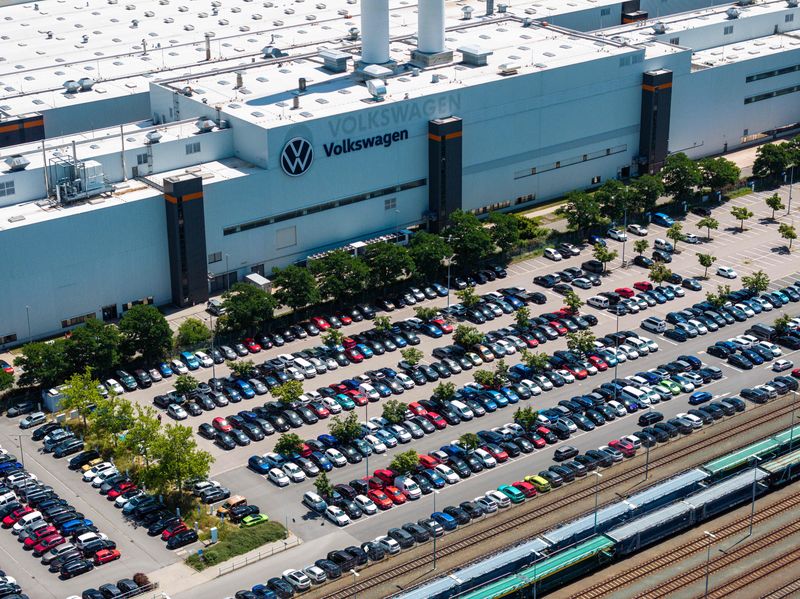
German automaker Volkswagen is pursuing plans to convert its underutilized Osnabrück plant into a defense-manufacturing hub. The company is reportedly working with Israeli defense contractor Rafael under an agreement to produce components for the Iron Dome air-defense system. Mercedes-Benz has also begun developing drone-defense and operation systems based on its G-Class and Sprinter vehicles in cooperation with AI drone startup Titan Technologies.
French automaker Renault has also signed a strategic agreement with defense giant Thales Group and begun producing military drones, targeting output of 1,000 units per month. French military authorities plan to use Renault’s mass-production system to reform the country’s stalled defense supply chain.■Producing Defense Equipment Rather Than Leaving Factories IdleThe European auto industry’s interest in defense is driven by sharply declining plant utilization and worsening profitability. Its position in China, once a lucrative market, has deteriorated rapidly, while Chinese brands such as BYD and Geely Automobile have entered the European market with low-priced electric vehicles (EVs).
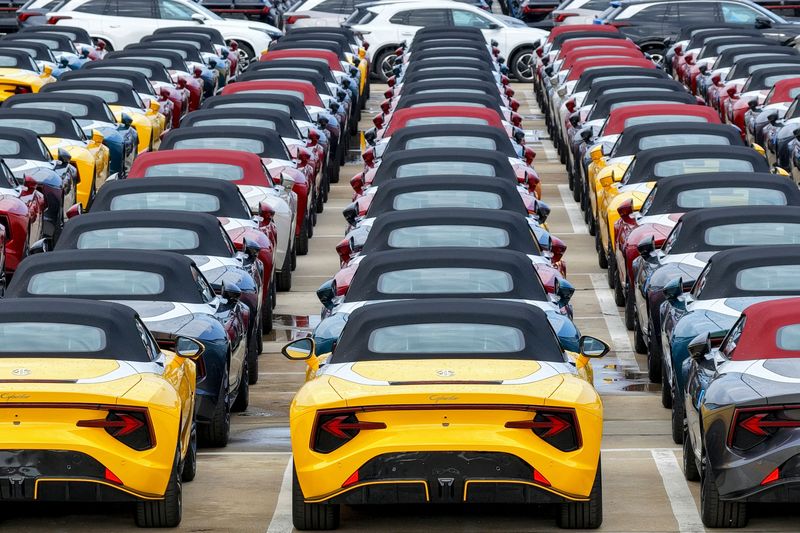
According to the European Automobile Manufacturers’ Association (ACEA), idle production capacity at Western European auto plants currently amounts to 2.5 million vehicles a year. Volkswagen is pursuing layoffs involving up to 100,000 employees over the next several years and is considering closing major production hubs, including its Dresden plant and the Zwickau plant, where more than €1 billion was invested in EV production. JLR has also decided to cut 4,000 jobs in the United Kingdom to reduce costs.
Mike Hawes, director of the Society of Motor Manufacturers & Traders (SMMT), said, "UK vehicle production has fallen to half its level of a decade ago." He added, "For auto supply-chain companies with excess factory capacity, the defense industry can serve as a lifeline by helping them diversify their customers."■Workers Oppose Conversion to Defense ProductionHowever, many observers say that reorganizing auto production lines for defense manufacturing cannot be a perfect solution.
For one thing, there is a significant structural difference between automaker production systems optimized for mass production and the defense industry, which focuses on small-volume, high-variety manufacturing. Sigrid de Vries, secretary general of ACEA, noted, "The defense industry may help ease the problem of idle capacity to some extent, but it cannot fully fill the enormous gap left in the mass-consumer market of the auto industry."
The ethical reservations of workers and labor unions are another hurdle. Germany’s metalworkers’ union, IG Metall, expressed skepticism, saying that converting to defense production cannot be a fundamental alternative for preventing mass layoffs.
Lars Hirsekorn, a union official who worked at Volkswagen for 30 years, said, "Management is ethically blackmailing employees by saying, 'We will close the plant if you do not produce defense materiel.'" He added, "Workers’ opposition and hardships over being mobilized to produce weapons of war have reached an extreme level."■Considering Whether to Join Hands with Chinese RivalsHowever, the prevailing view is that a shift to defense cannot become a perfect lifeline for Europe’s auto industry.
Sigrid de Vries, secretary general of ACEA, said, "The production capabilities, logistics, and advanced technologies held by the auto industry are well suited to strengthening Europe’s defenses." She continued, "Unless the continent is at war, defense orders cannot fully replace the absence of the civilian mass market." Ford’s contract for 9,000 military vehicles has likewise been described as "a drop in the ocean" compared with a plant that once produced 90,000 vehicles a year.
As a result, an ironic situation is emerging in which companies choose to "sleep with the enemy" to shoulder the enormous fixed costs of idle factory equipment. Stellantis acquired a 20% stake in Chinese EV maker Leapmotor and began contract manufacturing at its European plants. Nissan is also considering contract manufacturing for Chery Automobile at its Sunderland plant in the United Kingdom.
Until the early 2000s, Western automakers viewed China as a land of opportunity. Volkswagen at one point generated half of its total net profit from the Chinese market, thanks to the purchasing power of the country’s rapidly expanding middle class.
As the Chinese government fostered the auto industry and competition in the domestic market intensified, Chinese automakers began turning their attention to overseas markets.
The auto industry, once the pride of European manufacturing, now faces the unconventional choices of shifting to defense production and cooperating with Chinese companies. However, critics say that even surging defense spending will not be enough to fully revive the manufacturing glory of the past.
[email protected] Yoon Jae-jun Reporter