[Exclusive] Nine out of 10 cardiac arrest patients did not regain cardiac function before arriving at the hospital [The Current State of the Cardiac Arrest Response System]
- Input
- 2026-09-28 15:09:45
- Updated
- 2026-09-28 15:09:45
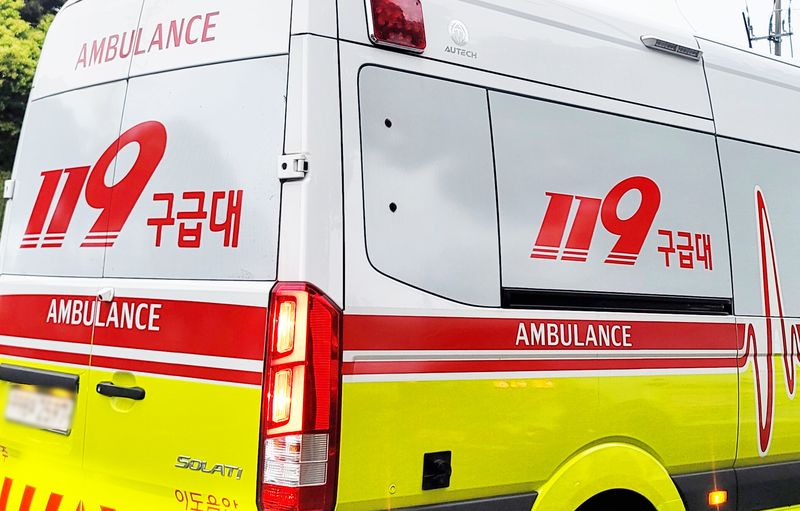
[Financial News] Nine out of 10 cardiac arrest patients transported by the 119 Emergency Medical Service were found not to have regained cardiac function before arriving at a hospital. In particular, the pre-hospital resuscitation rates for children aged 10 or younger and older adults aged 71 or older remained in the 6% range, with disparities also seen across regions.
According to the 'Cardiac Arrest Transport Status' data submitted by the National Fire Agency (NFA) to the office of People Power Party lawmaker Kang Myung-gu on the 28th, 17,782 of the 164,358 cardiac arrest patients transported by the 119 Emergency Medical Service from 2021 through August had regained spontaneous circulation before arriving at a hospital. They accounted for just 10.8% of the total, meaning that only about one in 10 patients were resuscitated before reaching a hospital.
The overall pre-hospital return-of-spontaneous-circulation rate rose slightly, but disparities by age and region remained. The annual rates were 9.9% in 2021, 10.0% in 2022, 10.8% in 2023, 11.0% in 2024, 11.5% in 2025, and 12.3% in 2026 (January–August), an increase of 2.4 percentage points over five years.
When the average annual resuscitation rates from 2021 through August were calculated by age group, the rate was 6.72% for children aged 10 or younger and 6.53% for those aged 71 or older, lower than for other age groups. The average rate for people in their 20s through 60s was generally in the mid-to-high teens.
Regional disparities were also pronounced. From 2021 through August, Ulsan had the lowest average annual rate at 7.43%, while South Gyeongsang Province (8.15%), Busan (8.30%), South Jeolla Province (8.53%), and North Chungcheong Province (9.77%) also remained in single digits. By contrast, Seoul and Incheon Metropolitan City recorded double-digit rates of 11.53% and 12.10%, respectively. Sejong City had the highest rate at 19.32%, which was 2.6 times the rate in Ulsan.
Kang Myung-gu said, "Because every minute can determine life or death in a cardiac arrest, the initial response before arriving at a hospital is more important than anything else. Although the resuscitation rate continues to improve, regional and age-based disparities remain significant. We must carefully review the response system, focusing on older adults and areas with low resuscitation rates."
He continued, "To ensure that the golden window is not missed, guidance on cardiopulmonary resuscitation (CPR) from the 119 service must begin earlier, and a field-centered emergency response system must be established so that anyone can use CPR and an automated external defibrillator (AED) in an emergency."
[email protected] Kim Ye-ji Reporter