President Lee Wraps Up U.S.-Mexico Trip with Diplomatic Gains, Faces a "Personnel Test"
- Input
- 2026-09-27 21:14:40
- Updated
- 2026-09-27 21:14:40
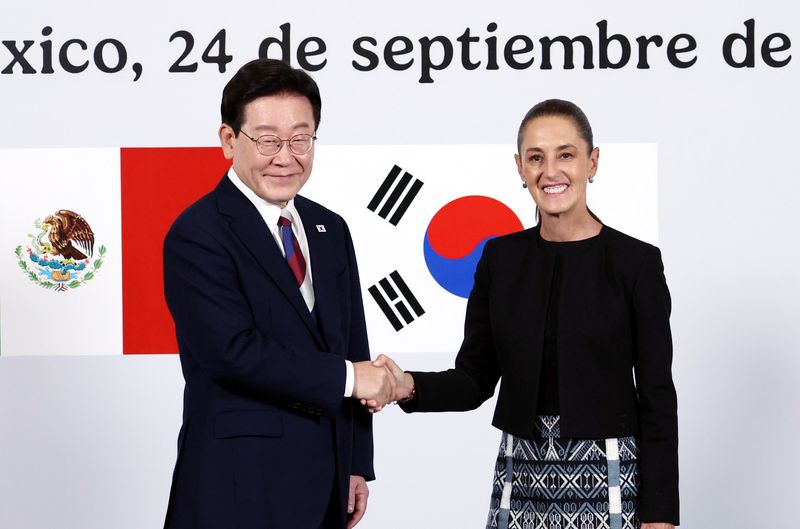
[Financial News] President Lee Jae Myung expanded his diplomatic reach through his five-night, seven-day trip to the United States and Mexico, covering issues ranging from trade, supply chains and defense to a vision for peace on the Korean Peninsula. During his state visit to Mexico, he raised the need to discuss a trade agreement and concluded seven-year negotiations to revise the investment protection agreement, strengthening the institutional foundation for economic cooperation. In New York, where he traveled to attend the UN General Assembly, he held a surprise summit with President Donald Trump and agreed to accelerate follow-up consultations on key South Korea-U.S. security issues, including the transfer of wartime operational control, nuclear-powered submarines and shipbuilding cooperation. However, swiftly completing appointments to key Cheong Wa Dae aides is considered a priority if the gains from the trip are to translate into momentum for his administration.
President Lee departed on the 21st, completed his UN General Assembly schedule in New York, concluded his state visit to Mexico, and returned to Seoul Airport on the 27th via Anchorage.
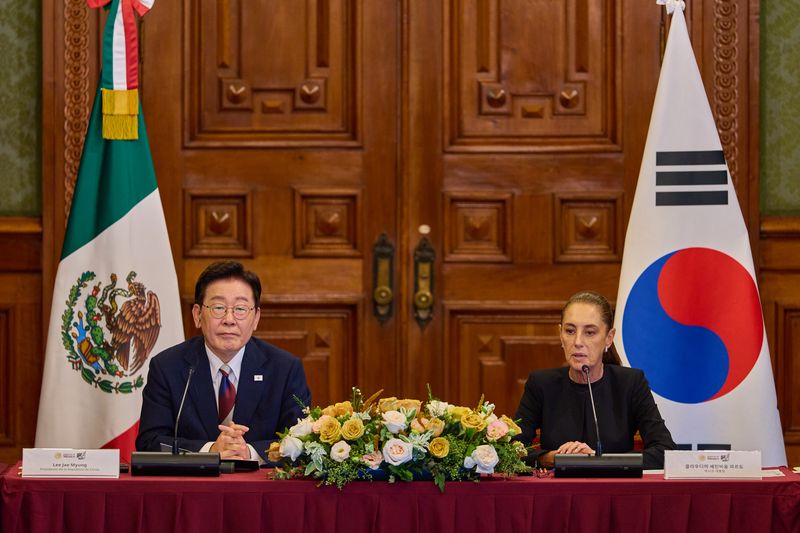
President Lee became the first South Korean leader in 16 years to make a state visit to Mexico, where he held a summit with President Claudia Sheinbaum. The two countries adopted the 2026–2030 Korea-Mexico Joint Action Plan, a mid- to long-term roadmap for bilateral cooperation, and signed 17 memorandums of understanding covering the economy, science and technology, defense and public security.
The two leaders agreed that a trade agreement between the countries was necessary to expand trade and investment, and decided to continue joint research by their trade authorities. They also concluded negotiations to revise the investment protection agreement after seven years. The countries will establish a $100 million on-lending facility between their export-import banks to improve financial access for Korean companies operating in Mexico and local companies purchasing Korean goods and services.
The two countries also expanded cooperation in energy and resources. They agreed to establish a new intergovernmental dialogue channel to discuss crude oil and critical resources. With the importance of energy supply chains growing amid instability in the Middle East and elsewhere, South Korea secured a channel for cooperation to diversify its sources of crude oil imports.
The countries will also expand cooperation in defense and advanced industries. Based on their defense cooperation memorandum of understanding, they will broaden exchanges in education, training and research and development while exploring ways for South Korea to contribute to Mexico's military modernization. President Lee also proposed local production of Korean defense technologies in Mexico and the possibility of jointly entering third-country markets on that basis.
In an earlier interview with Mexican media, President Lee directly mentioned the Korean-made light attack aircraft FA-50 as a potential cooperation model for Mexico's air force modernization program. Attention is focused on whether this will lead to discussions on an actual purchase.
The business community also lent its support to economic diplomacy in Mexico. At a Korea-Mexico business forum attended by major business leaders, including Chey Tae-won, chairman of the Korea Chamber of Commerce and Industry and SK Group chairman, and Koo Kwang-mo, chairman of LG Group, President Lee identified the USMCA and other factors as challenges in the North American trade environment. He nevertheless proposed, "There is a saying that 'a crisis is an opportunity.' Let's organically combine Mexico's excellent manufacturing base and local parts ecosystem with Korea's advanced technological competitiveness."
The proposal was aimed at combining Mexico's manufacturing base with South Korea's advanced technology to jointly target markets worldwide, beyond North America. Cultural industries such as K-pop, K-beauty and K-food also emerged as areas for expanded cooperation. President Lee reinforced cultural exchanges between the two countries by watching a K-pop performance by Stray Kids with Mexican teenagers.
In New York, President Lee unexpectedly arranged a South Korea-U.S. summit, bringing bilateral security issues back to the negotiating table. President Lee and President Trump held talks for about 30 minutes and assessed progress in discussions on strategic investment in the United States. They also agreed to continue follow-up consultations in Washington as soon as possible on the transfer of wartime operational control, nuclear-powered submarines, the nuclear agreement and shipbuilding cooperation. President Trump also reaffirmed his willingness to engage in dialogue with North Korea, referring to his relationship with North Korean leader Kim Jong Un.
However, President Lee faces a host of domestic issues after returning from the trip. He must first decide whether to accept the resignation of Chief of Staff Kang Hoon-sik and appoint a successor to the vacant policy chief position, completing appointments to key Cheong Wa Dae aides. After a series of ministerial nominees failed to take office, President Lee has pledged to review the personnel system, making the follow-up appointments a test of the direction of his administration's renewal efforts. He must also address the investigation into an explosion suspected to have been caused by a landmine in the Korean Demilitarized Zone (DMZ) and the political dispute between the ruling and opposition parties over North Korean soldiers held as prisoners of war who were repatriated from Ukraine.
[email protected] Choi Jong-geun Reporter