"Land Won’t Sell, Shopping Baskets Are Empty, and Young People Are Leaving" — Local Discontent Erupts at Chuseok
- Input
- 2026-09-27 13:46:13
- Updated
- 2026-09-27 13:46:13
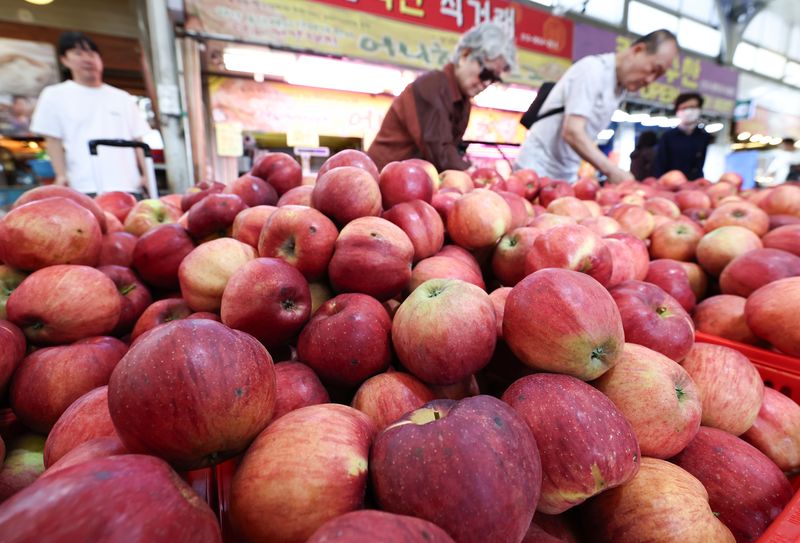
"The Chuseok holiday shopping boom is a thing of the past. The warmth is gone." Although Chuseok, traditionally a peak shopping season, has ended, citizens, merchants, farmers, and job seekers interviewed across the country could do little more than sigh. High prices have visibly curtailed holiday spending, while farmers in rural areas complained that even those who want to sell their farmland are finding it difficult to do so. Young people in regional areas, deeply concerned about jobs, were still looking only toward the Seoul metropolitan area.
A roundup of Financial News reporting from before and after Chuseok showed that shoppers at traditional markets in Daejeon and Pyeongtaek, Gyeonggi Province, were notably buying only what they needed, even when customers came in. In Hoengseong, Gangwon Province, elderly farmers lamented that they could not dispose of their farmland. In Gunsan, North Jeolla Province, young people said they wanted to stay in the area but were applying to companies in the Seoul metropolitan area because of the lack of jobs.
■One Head of Napa Cabbage Costs ₩9,000, and Wallets Stay Tightly Shut
At a traditional market in Daejeon, consumers were cautious about opening their wallets, to the point that the term "Chuseok peak season" seemed meaningless. With the price of one head of napa cabbage hovering above ₩9,000, the burden of filling a shopping basket has grown. More households have also begun preparing simpler ancestral ritual tables and holiday meals.
On Sept. 25, the first day of the Chuseok holiday, a merchant at Yongun Market in Dong-gu, Daejeon, said prices had risen so much that three heads of napa cabbage cost ₩28,000. Shoppers examined goods for a long time before leaving or bought only small amounts of what they needed.
The merchant lamented, "Prices have soared absurdly high—three heads of napa cabbage cost ₩28,000—and, on top of that, a culture of not preparing large holiday meals has taken hold, so the market has completely lost its warmth. People merely look around without readily opening their wallets, so the phrase 'holiday shopping boom' is now a thing of the past."
On Sept. 24, the day before Chuseok, customers lined up outside a shop selling freshly made jeon at Tongbok Market in Pyeongtaek, Gyeonggi Province. The savory smell of oil filled the market alleys. Yet the level of spending felt by merchants was different from the past.
Rather than filling their shopping baskets generously as they once did, customers selected only enough food to eat. Merchants said that, as prices have risen, more households are holding simpler ancestral rites, while the continued shift toward smaller nuclear families has also reduced the amount of holiday food they prepare.
A (55, female), who runs a jeon shop, said, "People used to buy a lot at once during the holidays, but these days they buy only small amounts, just enough to eat. We should at least be able to earn some money during the holidays, but customers seem to be closing their wallets more and more." A added, "Prices keep rising while people buy less. It is truly frustrating from a merchant's perspective."
In Gyeonggi Province, concerns about local government finances were added to the burden of high prices. After Gyeonggi Province Governor Choo Mi-ae referred to a "de facto default" and a "fiscal crisis," the fact that an additional supplementary budget bill was not passed before Chuseok also made financial worries a topic of conversation among residents.
Some parents with elementary and middle school children even worried that payments for school meals and other expenses could be disrupted starting in October. Citizens interviewed at the market said that while grocery prices had jumped ahead of the holiday, their salaries had not changed significantly.
Song Hyeon-ju (47, female), who was shopping for Chuseok, confessed, "This Chuseok, I find myself buying only small versions of everything. I chose small songpyeon and small assorted jeon, but even so, I think I am spending more than I did last year." Song added, "The most disappointing thing is that there has been no good news ahead of the holiday." Song said, "I hope the war in Iran ends, oil prices fall, and the stock market rises, bringing good news."
A citizen interviewed at Namgwangju Market in Dong-gu, Jeonnam-Gwangju Integrated Special City, said, "Every year, I buy grilled shark from my regular shop for the ancestral ritual table. What cost ₩50,000 per fish last year rose to ₩60,000 this year—an increase of ₩10,000." The citizen added, "I truly felt the high prices that I had only heard about."
A merchant selling dried seafood also complained, "Customers are scarce because of the economic slowdown, and wholesale prices have risen, so there is nothing left even when we make sales."
Residents of the special city also unanimously said of the administrative integration of Jeonnam-Gwangju, "For now, we cannot tell what has changed," while adding, "We hope it develops into an artificial intelligence, energy, and cultural capital as South Korea's first integrated special city."
Regarding the creation of the Honam semiconductor cluster, they voiced hope that "with the site issue having made significant progress, water and power supplies will also proceed without disruption, allowing the first mass production planned for 2030 to go ahead as scheduled."
Regarding the nationwide farmland survey, they emphasized, "The government must fully reflect rural realities so that elderly and tenant farmers do not suffer disadvantages," adding, "It must ease concerns about falling farmland prices and other issues."
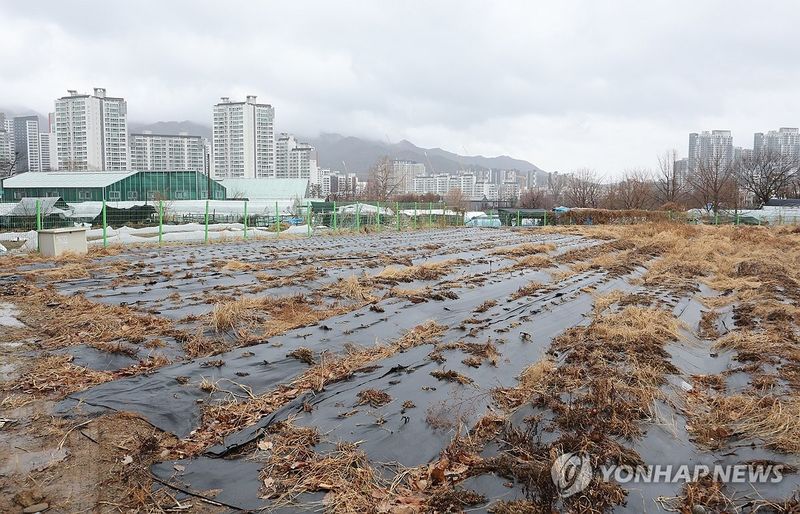
■Farmland That Cannot Be Sold Even When Owners Want to Sell
In rural Gangwon Province, elderly farmers were more frustrated by the lack of a practical way to dispose of their land—even if they wanted to stop farming immediately—than by high prices. They were also skeptical of the government's nationwide farmland survey.
Han, a Hoengseong resident in his 70s, said, "They say they will weed out speculation, but I have never heard a specific example of how anyone made a profit by buying farmland in the countryside. Unless it is near a major city, like in Gyeonggi Province, what speculator would invest money in rural Gangwon land that is losing population rapidly and attracts no one's interest, hoping to make a profit?"
Han criticized the nationwide farmland survey, saying, "Conducting a nationwide sweep every time in the name of catching speculators is like burning down a thatched cottage to catch fleas. It is desk-bound administration." He argued that the pressing problem in rural areas was not speculation but farmland that could not be sold even when its owners wanted to sell it.
For elderly farmers, farmland is both an asset and a job they can no longer manage. Even if their bodies are no longer what they used to be and they want to stop farming, they must continue shouldering the land if no one is willing to buy it.
Han said, "Most farmers in their 60s and older in the countryside can no longer farm because the work is too physically demanding, but land prices have fallen so they cannot sell even when they want to. The government says they can entrust the land to the Agricultural Land Bank or sell it, but the Agricultural Land Bank in Gangwon already has a mountain of farmland applications. We were told it has no money and does not know when it will be able to buy them."
Han added, "I do not know whether the government even understands this reality. I hope this nationwide survey becomes an opportunity to properly examine conditions in rural areas."
In Gunsan, North Jeolla Province, jobs were a major Chuseok concern for young people. Staying in their hometown could reduce housing and other living expenses, but when they look for companies where they can find employment, they ultimately have no choice but to turn their attention to the Seoul metropolitan area.
■An Unwelcome Chuseok Amid Job Concerns
Lee, 30, who is preparing for employment in Gunsan, said with a laugh, "Chuseok is not entirely welcome. Many relatives gather during the holidays, and many of them worry about me." Lee said they were studying with the goal of finding a job at a major company or a public corporation and were naturally applying to companies in the Seoul metropolitan area as well.
Lee said, "If I stay here, many practical problems, such as housing and adapting to the local community, would be resolved, so I want to remain here. But quality jobs are still concentrated in the Seoul metropolitan area." Lee continued, "I know the government and local authorities are pursuing various policies to help young people settle in regional areas, but I have not heard of any program that personally interests me. For job seekers, good jobs are the top priority."
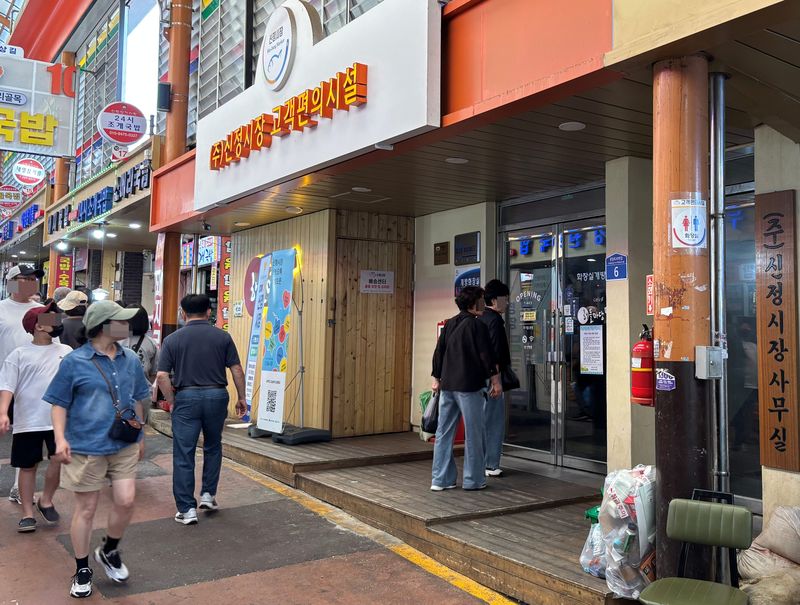
■A Public Restroom Closed During Chuseok
At Sinjeong Market in Nam-gu, Ulsan, long lines continued all day in front of stores selling ancestral-rite and ibaji ceremonial foods. As more households bought prepared holiday dishes rather than making them at home, customers flocked to stores selling jeon, donggeurangttaeng meat patties, and fried foods.
Some ordinary restaurants have been making and selling holiday foods instead of their usual menus during Lunar New Year and Chuseok for several years. The owner of a Korean restaurant that began selling holiday foods three years ago said, "We have mainly made and sold jeon, donggeurangttaeng, and fried foods. Sales have increased every year, so this year we have hired two additional workers."
At a barley-rice restaurant in the market, customers flooded in at once because it had only one day off before Chuseok, and the prepared food sold out before the lunch hour ended. The owner laughed and said, "Because we had only one day off before Chuseok, many customers came all at once, and we sold out of food before lunchtime was even over."
The owner, however, immediately added, "Except during the holidays, we get fewer customers than before."
An unexpected inconvenience also occurred at the crowded Sinjeong Market. One of the market's two public restrooms was closed and unavailable because it was managed by the Sinjeong Market Merchants' Association.
An official in the duty room at the Nam-gu Office, Ulsan Metropolitan City, said, "We called the merchants' association several times, but could not reach anyone." While no clear explanation had been given for the closure or when the restroom would reopen, market merchants said they believed it had been closed because the restroom was clogged.
■Consumer Sentiment Recovers, but the Construction Market 'Plummets ↓'
In Jeju Province, consumer sentiment recovered to the benchmark of 100 after just one month, but the economy still felt sluggish on the ground during the Chuseok holiday. Jeon Man-ho (53), who works in insurance, said, "When I meet people, I hear more often that spending money feels burdensome than that the economy has improved. Insurance also requires households to have enough financial room to purchase new policies or expand coverage, but right now there is a strong tendency to examine existing expenses first rather than create new ones."
In industries linked to construction and development, attention was focused less on consumption than on the "next project." Kim Jae-hong (57), a director at Chungam Enterprise, a construction contractor in Jeju Province, described the situation on the ground, saying, "The construction market is difficult." Kim explained, "New orders are harder to secure than before, and even when we win a project, it is difficult to be optimistic about profitability after taking material, labor, and financing costs into account. Completing the work currently under way is important, but I am more worried about how long future projects will continue to come in."
Construction contractors first spend money on materials, labor, and equipment after securing a project and then recover payment as the work progresses. As a result, new orders, construction costs, and cash flow are important management variables. If the decline in new construction and civil engineering projects continues for an extended period, it could affect not only builders but also related contractors in the electrical and telecommunications sectors.
Yang Seung-cheol (53), a director responsible for environmental impact assessments at Sandeul N, an environmental engineering company, also worried about future projects. Yang said, "New contracts have visibly declined since the housing construction market turned down, and I often hear people around me say that there is less work."
Yang continued, "Design services and environmental impact assessments also generate work only when new construction and civil engineering projects emerge. I am worried about how many new projects will be created in the future, rather than about the projects currently under way."
[email protected] Choi Su-sang, Kang In, Kim Gyeong-su, Kim Gi-seop, Kim Won-jun, Jang Chung-sik, Jeong Yong-bok, Hwang Tae-jong Reporter