“Undercover Police” Crack Down on Digital Sex Crimes, Arresting 2,873 Over Six Years
- Input
- 2026-09-27 09:00:00
- Updated
- 2026-09-27 09:00:00
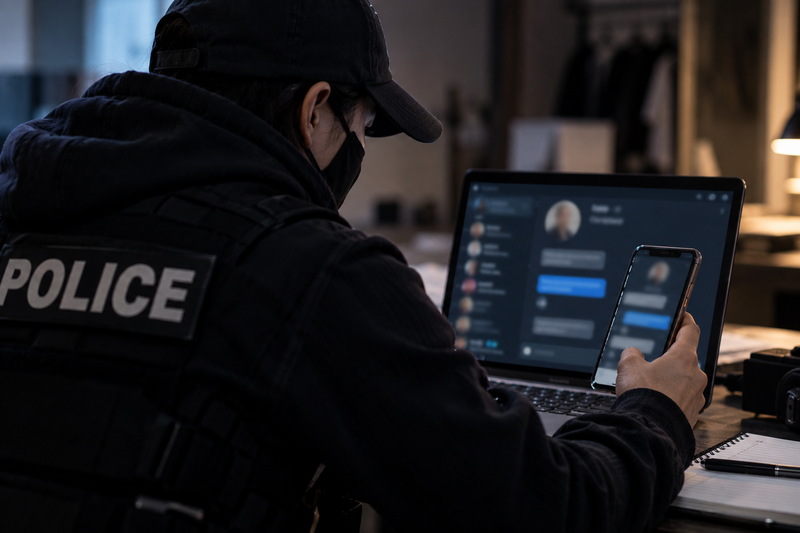
#1. A suspect who posted material on social media to lure children and teenagers for approximately four years and five months, groomed seven victims, and committed 24 counts of statutory rape and 78 counts of producing sexually exploitative material was apprehended by police. Police identified the suspect through an undercover investigation and detained the suspect last month. #2. Police apprehended a suspect who used artificial intelligence (AI) deepfake technology to create fabricated videos and advertised selling them along with victims’ personal information. Officers approached the suspect while pretending to commission the production of such videos, identified the suspect, and tracked the suspect down before arresting and detaining them at a motel in April.
[Financial News] Police have apprehended approximately 2,800 suspects over the six years since introducing an undercover investigation system to track digital sex crimes. The number of undercover investigations has more than tripled this year compared with last year, while probes targeting conversations for the purpose of sexual exploitation are also being strengthened.The National Office of Investigation said on the 27th that police conducted a total of 1,503 undercover investigations from September 24, 2021, when the digital sex crime undercover investigation system was implemented, through last month. They apprehended 2,873 people, including 164 who were detained. The 598 undercover investigations conducted from January to August increased by 419, or 234%, from the same period last year.
The undercover investigation system was introduced in September 2021 following the Nth Room case and the Doctor’s Room case, and its scope was expanded to include digital sex crimes against adults starting in June last year. A provision allowing attempted offenders to be punished for initiating conversations with children and teenagers for the purpose of sexual exploitation took effect last October, enabling police to actively conduct investigations in which officers pose as children or teenagers.
By crime type, distribution offenses—including selling and distributing—accounted for the largest share of the 1,503 undercover investigations conducted since the system was implemented, with 748 cases, or 49.8%. They were followed by conversations for the purpose of sexual exploitation, with 562 cases (37.4%); production and related offenses, with 143 (9.5%); purchasing, possessing and viewing, with 46 (3.1%); and other offenses, with four (0.3%).
Among the suspects apprehended, those involved in distribution offenses, including selling and distributing, accounted for more than half, at 1,561 people (54.3%). They were followed by those involved in purchasing, possessing and viewing, at 615 (21.4%); conversations for the purpose of sexual exploitation, at 425 (14.8%); and production and related offenses, at 270 (9.4%).
Apprehensions related to conversations for the purpose of sexual exploitation rose sharply this year. From September 2021, when the relevant punishment provision was introduced, through last year, a total of 87 people were apprehended through undercover investigations. After a provision penalizing attempted offenses was newly established in April last year and took effect in October, police apprehended 338 people through undercover investigations this year alone, including six who were detained.
Police believe it is necessary to launch investigations at an early stage using undercover methods because conversations for the purpose of sexual exploitation can mark the beginning of online grooming targeting children and teenagers and may lead to sex crimes, including the production of sexually exploitative material, rape and forcible sexual assault.
Illegal websites distributing sexually exploitative material are also targets of investigation. From January to August, police apprehended 32 people at the operator level and detained nine in connection with 66 websites distributing sexually exploitative material and other illegal content. Using undercover investigations, police also detained two people who operated 23 illegal websites. For the 76 illegal websites currently under investigation, police are using undercover methods to track key participants, including operators and developers, as well as distribution routes.
Hong Seok-gi, head of the National Office of Investigation, said, "Digital sex crimes are serious offenses that destroy victims’ daily lives, and anonymity and the closed nature of these crimes can no longer serve as shields hiding them. Undercover investigators are operating at online crime scenes even at this moment, and people must bear in mind that there are no longer any blind spots online."
[email protected] Kim Ye-ji Reporter