"Is 220 cm too short?" South Korea Had No Such Intention, but China Alone Overreacted, Calling It "Humiliating" [Nagoya Asian Games]
- Input
- 2026-09-26 14:00:00
- Updated
- 2026-09-26 14:00:00
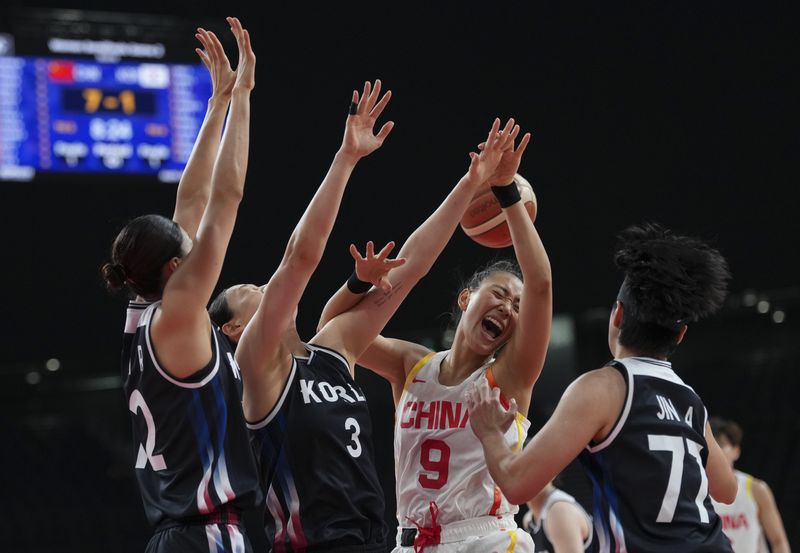
[Financial News] The afterglow of the thrilling comeback victory that brought down the Great Wall had barely faded when another off-court battle erupted.
Led by head coach Park Su-ho, the South Korea women's national basketball team defeated China, anchored by 220-cm giant Zhang Ziyu, 85-80 in the semifinal of the 2026 Aichi-Nagoya Asian Games at Aichi International Arena in Nagoya, Japan, on the 25th. South Korea reached the final for the first time in 12 years since the 2014 Incheon Games, while China suffered the debacle of missing the final for the first time in 32 years since the 1994 Hiroshima Games.
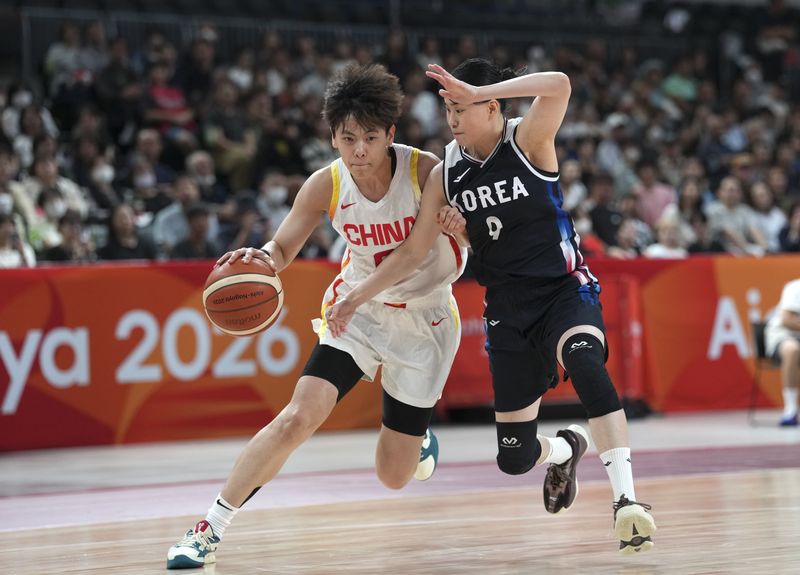
The controversial scene emerged as the players celebrated their victory immediately after the game.
On the 25th, Chinese sports outlet Zhiboba cited a video posted by a Chinese basketball blogger and reported that South Korean players had made a gesture by holding their fingers close together. Chinese media and netizens interpreted the gesture as the so-called "too small" celebration used in basketball to mock an opponent's short stature, reacting sensitively. South Korea had no such intention at all. In China, however, the gesture was arbitrarily interpreted through the lens of an inferiority complex.
The Chinese blogger who posted the video spoke for the dejected feelings of domestic fans with a brief but forceful lament: "Ah... this is truly humiliating." South Korea did not clarify the exact meaning of the hand gesture, but Chinese media, still reeling from the loss, expressed anger by labeling it mockery.
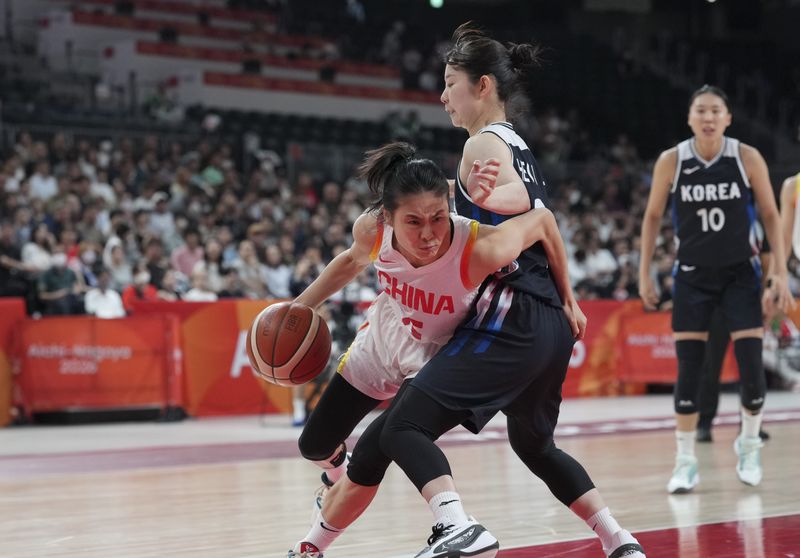
The reason behind China's highly charged reaction is clear. Even before the game, China touted the fact that the teams differed by at least 10 cm in average height and emphasized the presence of its dominant center, Zhang Ziyu, who stands over 220 cm tall. Until halftime, Chinese basketball insiders voiced strong confidence in their height advantage, saying, "The only problem is how to get the ball to Zhang Ziyu."
But the result was the opposite. South Korea countered with speed and outside shooting.
In the second half, Lee So-hee (23 points), Hae-ran Lee (22 points), and Kang Lee-seul (16 points) caught fire and turned the game around. While South Korea sank 12 three-pointers, China attempted 13 and failed to make a single one.
Despite its overwhelming height disadvantage, South Korea neutralized China's strengths. From China's perspective, having its advantages nullified and then being misunderstood over a "too small" hand gesture after the game could only leave its pride shattered.
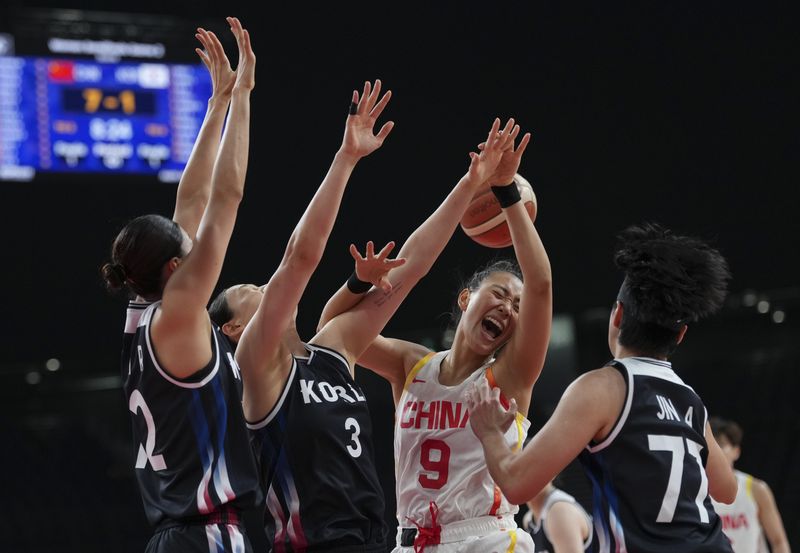
On top of that, the grim reality facing Chinese basketball added fuel to the anger.
Earlier, China's men's 5-on-5 team suffered a crushing 77-97 loss to Japan, while both the men's and women's 3-on-3 teams were sent packing one after another. The women's 5-on-5 team was Chinese basketball's final 'gold medal hope' at the Asian Games.
Chinese outlets including Zhiboba placed the two scenes side by side, saying, "When the men's basketball team lost to Japan, the opponent mocked them with a crying expression, and when the women's basketball team lost, a South Korean player made a 'too small' gesture."
Missing the final for the first time in 32 years, putting on a dismal performance without making even a single three-pointer, and now facing accusations of an inferiority complex. The Great Wall's pride was brutally shattered on the Nagoya court.
[email protected] Jeon Sang-il Reporter