"There Is Nothing to Be Happy About" Cho Gwang-hee, Korea's First Double Gold Medalist, Breaks Down in Tears at Press Conference Over Shocking Reason [Nagoya Asian Games]
- Input
- 2026-09-26 13:00:00
- Updated
- 2026-09-26 13:00:00
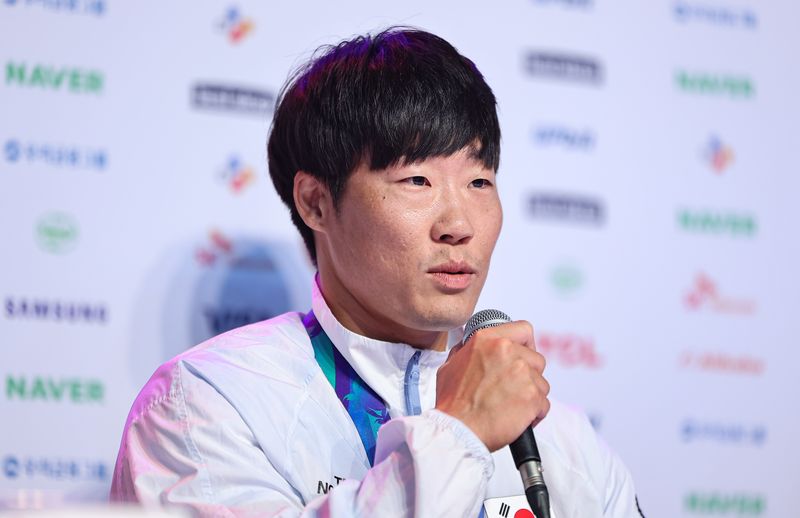
[Financial News] "The hardest time is when I have to give an interview about winning. I'm supposed to speak from the heart, but honestly, there's nothing to be happy about."
At a glorious moment when he should have been celebrated for his triumphant return, the first words from the hero who had become the South Korean delegation's first double gold medalist were shocking. Deep regret and anger that had been suppressed for years, along with the bitter pain of competing in an unpopular sport, came pouring out all at once. The medalists' press conference at Korea House in Nagoya, Japan, on the 26th fell silent in an instant as national canoe team member Cho Gwang-hee of Ulsan Metropolitan City Hall delivered a forceful statement and shed tears.
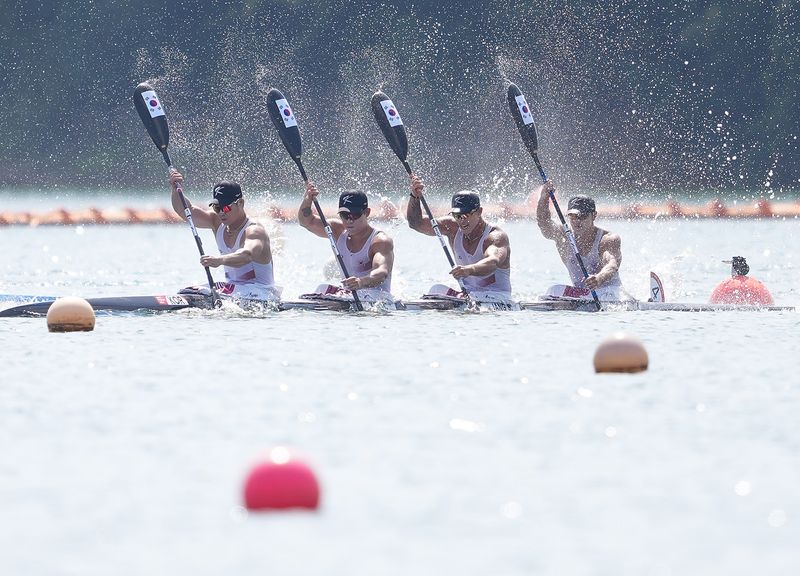
Cho Gwang-hee had already become the undisputed star of the Games. On the 24th, he teamed up with Kim Hyo-bin, Jang Sang-won and Choi Min-gyu to win the first gold medal in Korean canoeing history in the men's K4 500-meter canoe sprint. The following day, he partnered with Kim Hyo-bin to win the K2 event, securing South Korea's first victory in 36 years.
But Cho, whose expression remained gloomy throughout, eventually became overwhelmed as he took the microphone. "We won, but there is so much sorrow in my heart. I remembered the years we endured through sheer grit without any support, so the sorrow is greater than the joy," he said, revealing the grueling training process he had endured.
According to his account, even though teamwork is the lifeblood of the four-person K4 event, national team call-ups were not even properly organized. The athletes had to gather on their own at venues such as Misari and Andong across the country and train independently, each fending for themselves. That was why Cho said in a self-deprecating tone, "The K4 gold medal was truly an unexpected victory, and we won the K2 because of that momentum."
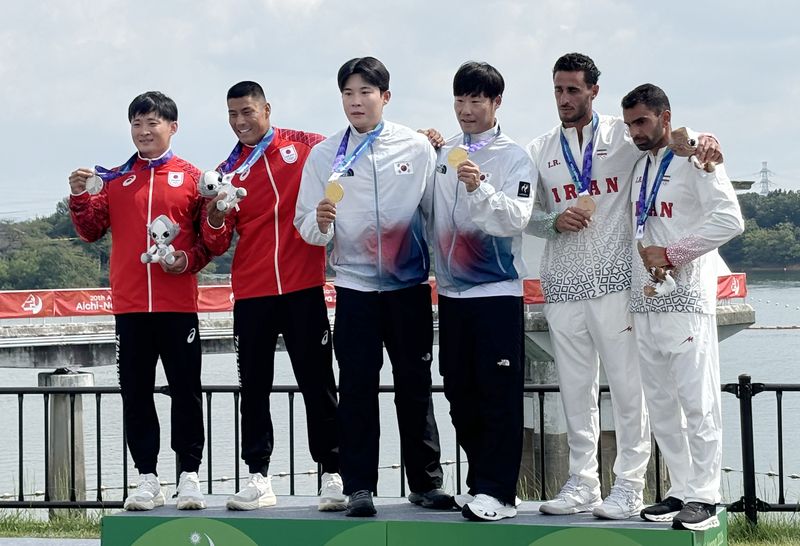
Kim Hyo-bin, who was seated alongside him, also pointed to the poor infrastructure. "The number of days available for training at the athletes' village was woefully insufficient, and even obtaining equipment had its limits," he said. Cho directly criticized the federation, saying, "Please listen carefully to the athletes' opinions." He also shared a bitter behind-the-scenes story: "The indoor training ergometers were more than 10 years old, so I want to thank Korean Sport & Olympic Committee (KSOC) President Ryu Seung-min for providing new ones this time." The gold medal miracle was the result of the athletes' fierce determination and help from outside, rather than systematic support from the federation.
Meanwhile, the press conference was not filled only with somber tears. Choo Ga-eun of Imsil County Office, who won South Korea's first shooting gold medal of the Games in the women's 10-meter air pistol individual event on the 23rd, four days into the competition, reflected on her dramatic redemption.
Choo Ga-eun smiled brightly and said, "I struggled greatly after performing poorly at the Tokyo Olympics five years ago, but returning to Japan and completing a perfect redemption was incredibly relieving and an honor."
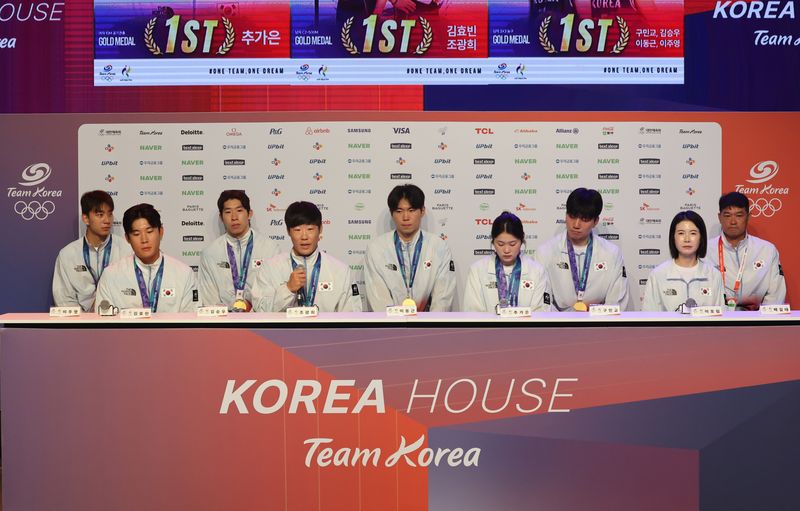
Behind this gold medal was the coaching staff's meticulous "hell training." Lee Ho-lim, a coach of the South Korean shooting team, seemingly anticipated the poor transportation and event operations in Nagoya. During domestic training, the team conducted simulations in which they deliberately took a detour to a shooting range that was normally 30 minutes away, turning the trip into an hour and a half and creating the worst possible conditions. "Reality was harsher than training, but having experienced adverse conditions in advance led to the positive result of a gold medal," Lee explained.
The sports were different, but by overcoming Nagoya's adverse conditions and harsh realities through the athletes' fighting spirit and their coaches' ingenuity, these gold medals have delivered a particularly profound sense of inspiration.
[email protected] Jeon Sang-il Reporter