"A back four is definitely more comfortable," Kim Min-jae's pointed smile... Moreno's choice that erased the 'three-back disaster'
- Input
- 2026-09-26 12:32:01
- Updated
- 2026-09-26 12:32:01
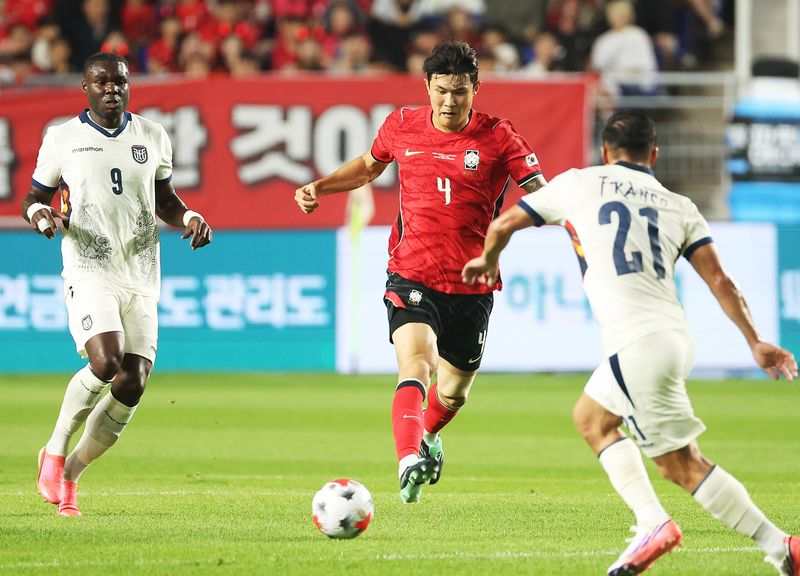
[Financial News] South Korea's painful failure at the 2026 FIFA World Cup was rooted in a 'three-back' system forced onto the team despite the players' characteristics. Robert Moreno, the interim manager brought in to rescue South Korean football from crisis, untangled the complicated knot in the simplest and clearest way possible. He returned the players to the 'basics' they knew best.
Led by Robert Moreno, the South Korea national football team secured a commanding 3-0 victory over Ecuador in a friendly at Suwon World Cup Stadium on the 24th, using a 4-4-2 formation. Hyeon-gyu Oh, Son Heung-min and Lee Dong-gyeong scored in succession in the second half to showcase South Korea's attacking prowess. Yet the true driving force behind the victory was the back four, which kept the defense solid without conceding a goal.
Kim Min-jae, nicknamed the 'Monster,' started at center back alongside Lee Han-beom and helped secure the clean sheet. His post-match expression was brighter than ever, reflecting his deep satisfaction with the newly introduced defensive system.
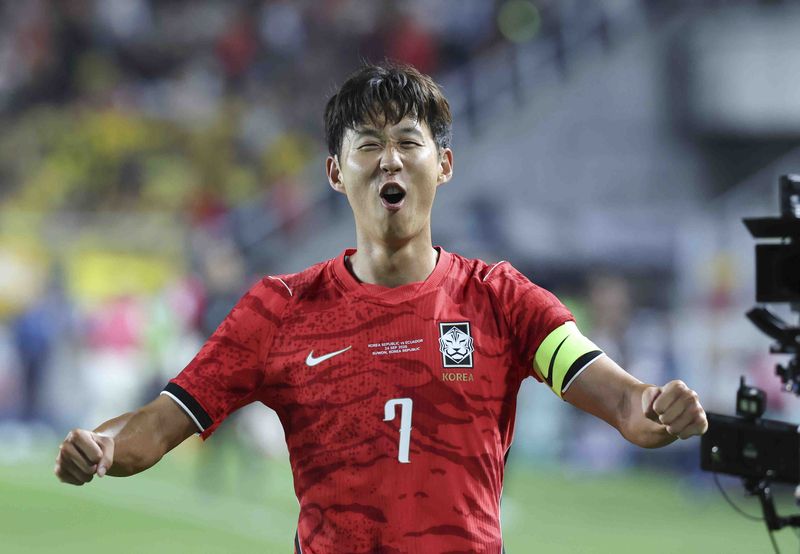
His assessment was brief but pointed. Since most of the players currently with the national team primarily use a back-four system at their clubs, playing with a back four for the national team was much more comfortable, both physically and mentally.
Considering how the defense collapsed and South Korea suffered a disaster after deploying a disjointed three-back system at the World Cup, the central defender's understated remark that "Playing while actively making use of the wide spaces was itself a lot of fun" can be read as an indirect criticism of the rigidity of the previous regime and praise for the new manager's flexibility.
Moreno did, in fact, boldly removed the shackles from the defense. He actively instructed Kim Min-jae and Lee Han-beom to move forward without hesitation whenever they saw open space and to make aggressive forward passes their first option.
That tactical freedom was immediately evident on the pitch. Hyeon-gyu Oh's spectacular opener in the ninth minute of the second half began with a concise, incisive forward pass from Kim Min-jae, who spotted space from deep and played the ball into it. Kim did not simply remain in defense; he also served perfectly as the starting point of the attack.
Son Heung-min's second goal in the 13th minute of the second half also revealed the team's stronger sense of unity. On a free kick from a tight angle, Kim Min-jae led the taller players toward the goal and disrupted the opposing goalkeeper's view before directly urging Son to shoot. It was an intelligent play that helped create the goal.
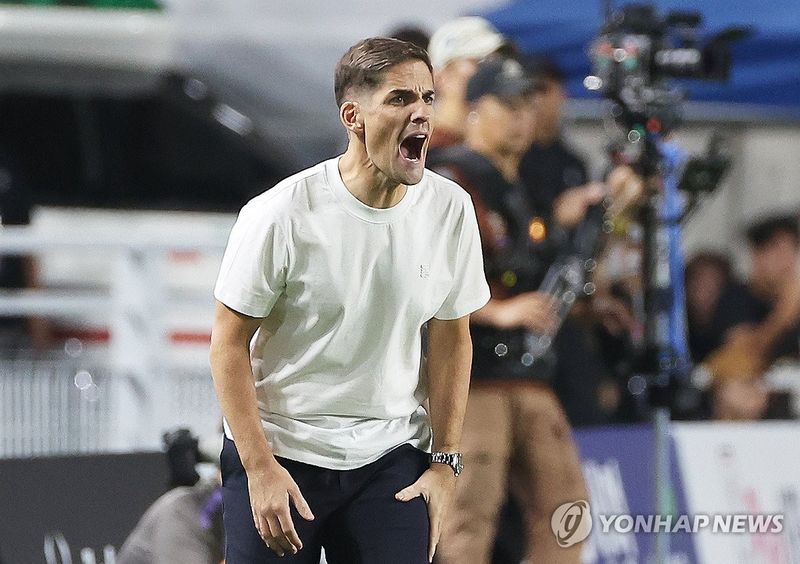
Even during a tense first half that ended 0-0, Moreno's managerial nous shone through. He made quick adjustments in the halftime locker room, including repositioning the full-backs farther forward.
The point is not to follow a manager's tactics blindly, but to create a setting in which players can do what they do best. The 3-0 victory over Ecuador was the valuable result of Moreno's shrewd return to basics: he abandoned forced tactical stubbornness, represented by the three-back system, and created a comfortable stage, represented by the back four, where the players could play with broad smiles.
Having regained the confidence they had lost in a system that fits them, South Korea's players now face a true test against the South American powerhouse Uruguay on the 28th.
[email protected] Jeon Sang-il Reporter