Iran: "Strait of Hormuz to Reopen Within One Week if Conditions Are Met"; Proposal Delivered to United States
- Input
- 2026-09-26 10:27:38
- Updated
- 2026-09-26 10:27:38
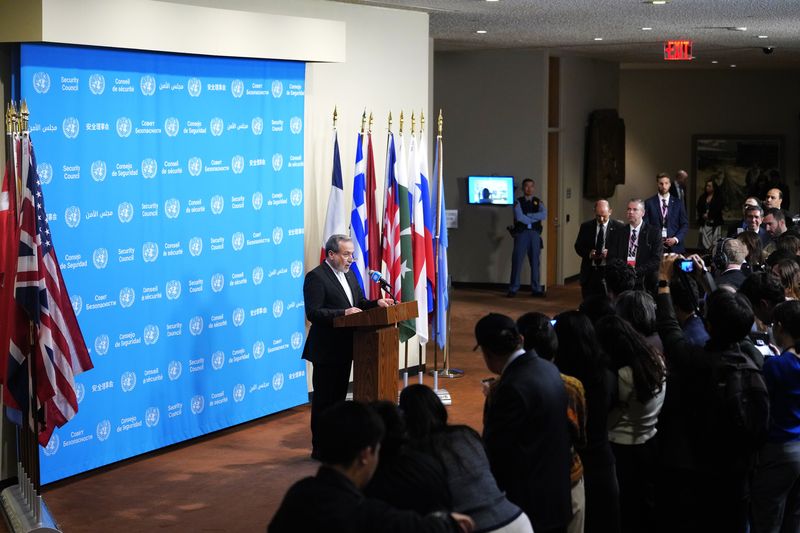
[Financial News] Iranian Foreign Minister Abbas Araghchi, who is attending the UN General Assembly, said he had proposed to the United States a deal that would reopen the Strait of Hormuz within one week.
According to a report by the British Broadcasting Corporation (BBC) on the 25th (local time), Araghchi said in New York, "If the necessary conditions are met, the Strait of Hormuz could reopen and normal navigation could be restored within seven days." He explained that those conditions were already included in the memorandum of understanding (MOU) signed by the two countries last June. He also confirmed that the proposal had been delivered to the United States through Qatar, stressing, "The choice now rests with the United States."
In connection with this, a United States official said that positive discussions, including on the nuclear issue, were underway through an intermediary. However, the official added, "The United States controls the Strait of Hormuz and is in a very strong position, so there is no need to rush."
Earlier, the United States and Israel launched surprise airstrikes against Iran on February 28. Iran responded by attacking Israel, United States military bases in the Persian Gulf region, and countries allied with the United States. In the process, the Strait of Hormuz, a key chokepoint through which approximately 20% of global crude oil and liquefied natural gas (LNG) shipments pass, was blockaded, sending global energy prices sharply higher.
The 14-clause MOU signed on June 18 included a ban on Iran possessing nuclear weapons, a halt to all military operations, the lifting of the United States' maritime blockade and sanctions relief, and Iran's cooperation in ensuring the safe passage of merchant vessels. However, it lost its effectiveness after both sides resumed their attacks.
According to market research firm Kpler, the average daily number of vessels transiting the Strait of Hormuz has recently fallen to about 18. On some days, the figure has dropped as low as nine, indicating that passage remains restricted.
In addition, the Houthi rebels in Yemen, an ally of Iran, recently seized Mokha Port, a strategic location on the Red Sea coast, and intensified attacks targeting Saudi Arabia's crude oil exports. This has further heightened instability in global maritime logistics around the Bab-el-Mandeb Strait.
[email protected] Yoon Jae-jun Reporter