"Mom, I Don't Want to Die" — The Cry That Has Remained in His Ears for 76 Years
- Input
- 2026-09-29 07:00:00
- Updated
- 2026-09-29 07:00:00
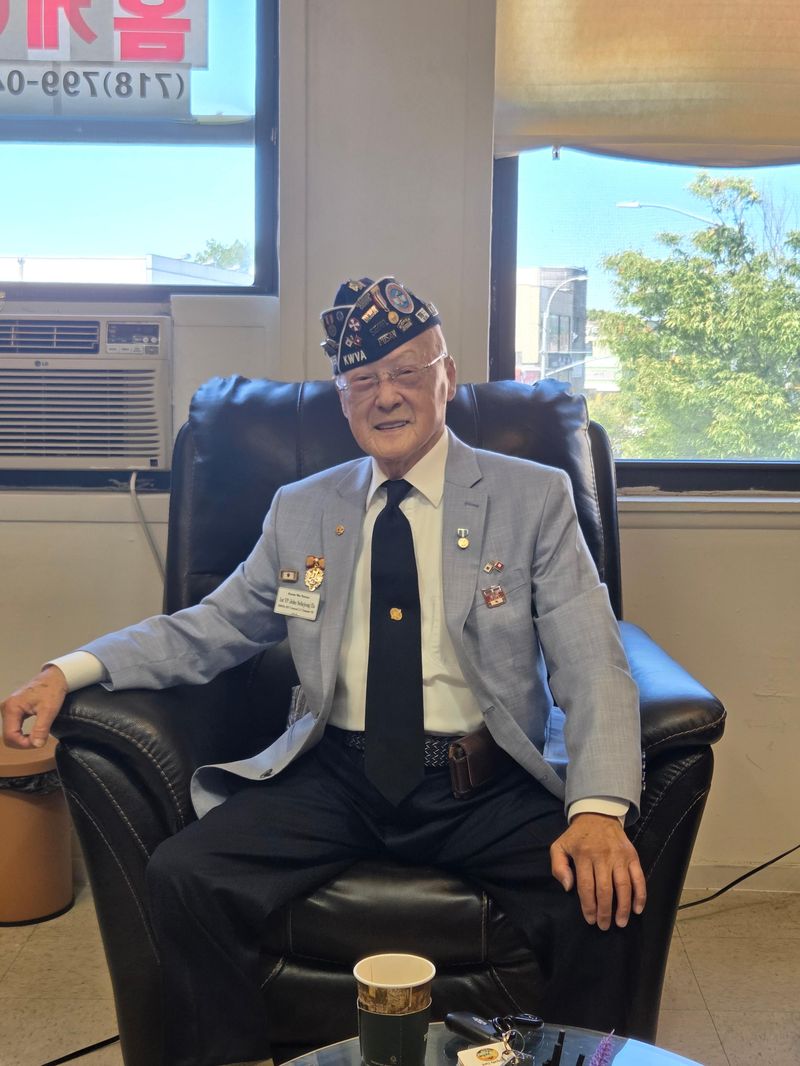
"Mom, I don't want to die. Please save me."
Although 76 years have passed, that voice still remains in Ha Se-jong's memory. It came from a field hospital near Munsan, Gyeonggi Province, during the Korean War. A young U.S. soldier covered in blood was carried in. As doctors and nurses rushed around, the soldier did not call for a doctor. He called for his mother.
"He was looking for his mother. He kept shouting, 'I don't want to die. Please save me.' But there was nothing we could do. He was covered in blood.... Then he went quiet. He was dead."
Ha, who watched the scene from just beside him, was only 17. He was a boy who had been assigned to interpretation and translation duties with a U.S. military unit because he could speak a little English. Although he did not carry a rifle and fight on the front lines, he traveled through a battlefield where shells were flying. At the field hospital, he watched young soldiers not much older than himself die.
When Ha was interviewed on the 17th, he spent two hours recalling events from 76 years ago. His memories were vivid, from the moment Seoul was occupied by North Korean forces to two evacuations, the North Korean army's mobilization of students, the January 4 Retreat, life in Busan, and his work as a KATUSA interpreter at a field hospital. For him, the Korean War is not an event in a history book. It is the sound of tanks shaking the streets of Seoul at dawn, windows shattered by machine-gun fire, and trucks carrying his friends that he watched from among the acacia trees behind his school. It is also the voice of a young soldier who searched for his mother until the last moments of his life at a field hospital.
Tank sounds at 4 a.m.... A bloodied family
At around 4 a.m. in late June 1950, 16-year-old Ha Se-jong was asleep at his home in Myeongnyun-dong, Seoul, when he awoke to a deafening noise. The sounds of motorcycles and tanks shook the alley. He knew the war had begun, but broadcasts reported that South Korean forces were holding back the North Korean army. The broadcasts also urged people to stay home rather than evacuate, so his family remained in Seoul.
"We thought we were winning. We felt reassured."
But the sounds heard before dawn told a different story. The moment Ha's grandfather opened the outer shutters and looked outside, machine-gun fire came in. "They just sprayed us with machine guns." Bullets and shrapnel poured into the house, and the windows shattered. His grandfather was injured in the face, and Ha was also wounded. His grandmother suffered a serious injury to her forehead.
"We were just covered in blood. It was absolute chaos."
His grandfather told the family, "If we stay here, we'll all die. At least you children should get away." Ha's father had died when he was three. His grandparents remained at home, while his mother, Ha, and his younger sister, who was a year younger, set out as refugees. They did not know where to go. They had no choice but to follow the direction in which the crowds were moving.
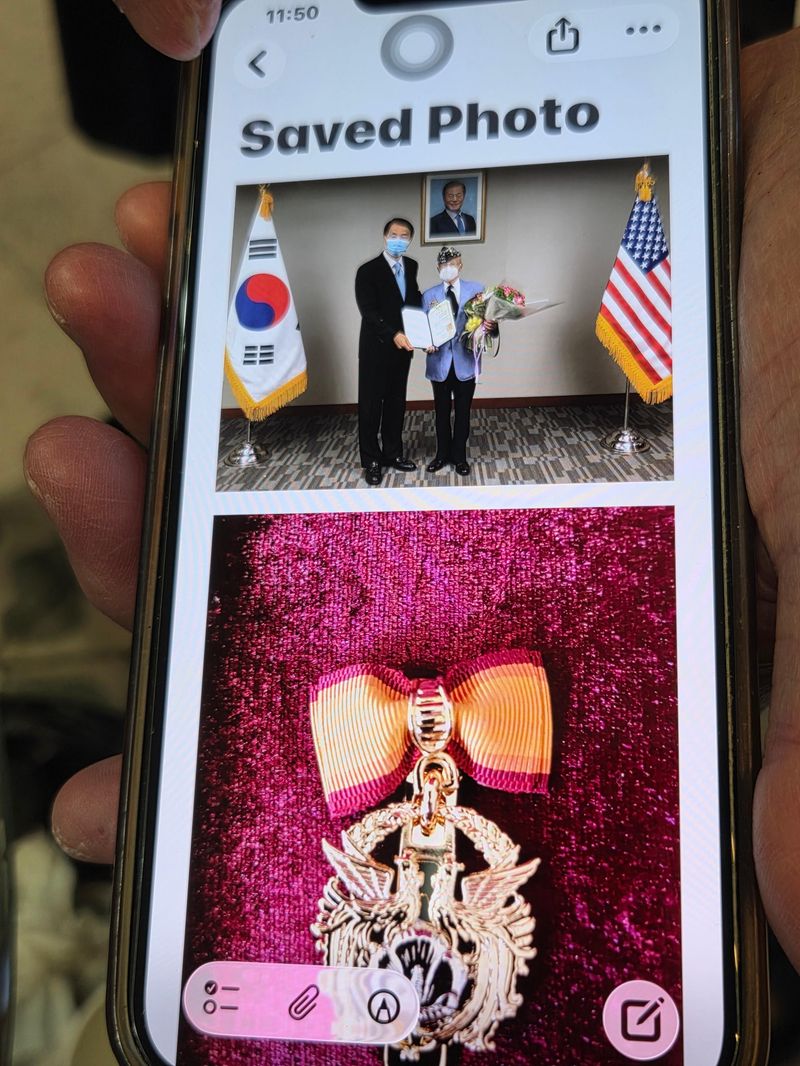
"I had to get my mother and sister across" — A 16-year-old boy steps forward at the Han River
The route out of Seoul was already packed with people. Ha's family walked past the Naksan area toward Ttukseom. Hundreds of soldiers and refugees moved in the same direction. Ha remembers the situation as being so crowded that "people could have been trampled to death."
It took a day to reach Ttukseom. They had nothing to eat. They picked vegetables such as cabbages from fields along the road and gathered unripe tomatoes. "When I tried one, my mouth puckered shut. It was so astringent." But they had to eat anything that could ease their hunger.
They finally reached the Han River, but this time they had no way to cross it. Refugees who had arrived earlier crowded the sandy shore, and several rafts were waiting by the riverbank. Those who could swim tied ropes around their bodies and swam ahead to pull the rafts, while others pushed from behind.
Sixteen-year-old Ha stepped forward. "I thought that if I tied the rope around myself and swam, I could get my mother and sister onto the raft. So I said I would do it." The adults tried to stop him because he was still a young student. With the help of others, Ha, his mother, and his sister were eventually able to cross the Han River.
They arrived in what is now the Samseong-dong and Bongeunsa Temple area. At the time, the area was covered with low mountains. They thought they had survived, but soon heard that North Korean forces had already moved farther south. They were told it was dangerous to go any farther and that they should turn back. In the end, the three risked their lives crossing the Han River again and returned to their home in Seoul.
An order to report to school.... Five or six trucks outside
Returning to Seoul did not make them safe. After North Korean forces took control of the city, Ha lived in hiding. Then, in early July, trucks drove around the neighborhood telling students to report to school. Ha, who attended Bosung School, also went.
The auditorium was packed with students. They were lined up by grade, from the first year of middle school through the third year of high school. Students through the third year of middle school were sent home, but the high school students were kept there. Ha was on the borderline between the third year of middle school and the first year of high school, and he sensed that something was wrong.
Ha noticed that the older students supervising the others were wearing markers. He asked a student beside him to get him one. He slipped out through the back with a friend. The teacher in charge seemed suspicious when he saw Ha, but did not stop him.
Outside the school stood five or six trucks. Instead of running away immediately, Ha and his friend hid in an area thick with acacia trees behind the school. A short while later, high school students began filing out of the auditorium where Ha and his friend had been standing moments earlier.
"They loaded all the first-, second-, and third-year high school students onto the trucks and took them away."
The students climbed into the trucks, which then disappeared. Ha remembers that many of the students attending school with him at the time were taken away and never returned. Just minutes earlier, he had been standing in that line himself.
Ha remained in hiding for about three months. But he could not stay inside his home forever. When authorities in the neighborhood ordered him to come out, he had to obey, and they could come to his house if he refused. Ha said he also personally witnessed a 'people's trial' in Seoul under North Korean occupation. He declined to discuss exactly what he saw, saying, "I won't talk about political matters." His description of that period was brief: "I went through a lot for those three months."
Seoul was recaptured, but the war was not over. After Chinese forces entered the war and the front moved south again, Ha's family left Seoul once more in late December 1950. It was their second evacuation. This time, it was the dead of winter rather than summer.
After crossing the Han River and heading south, the family managed to board a truck carrying refugees' belongings and other cargo. But when they reached Chupungnyeong, snow and cold prevented the truck from moving properly. In the end, everyone had to get out and walk. "It was incredibly cold. The truck couldn't go, so we all got out and walked."
The family crossed the mountain pass alongside the truck loaded with belongings, reached Daegu, and then continued down to Busan. The boy who had walked from Seoul to Ttukseom several months earlier now crossed Chupungnyeong in the middle of winter and traveled to the southern tip of the Korean Peninsula.
One English test changed the war for a 17-year-old boy
In Busan, schools that had evacuated there were reopening. Ha went to find his school and enrolled. Proving that he was a student was also important. During the war, a student ID meant more to young men than simply proof of school enrollment.
During the enrollment process, someone asked Ha how much English he had studied. When he said that he had only studied it for several years at school, the person told him to take an English test. Not long after the exam, he was informed that he had passed. He was assigned to interpretation and translation duties with a U.S. military unit.
Ha said he did not even know what KATUSA was at the time. "I asked, 'What is a KATUSA?'" With help from an older student at Bosung School, he initially translated documents in an office. He went to school in the morning, then went to the U.S. military base after classes to translate and accompany U.S. troops as an interpreter.
As U.S. military and U.N. troops continued arriving in Busan, Ha was also assigned to transportation-related duties. He interpreted how many soldiers from each country had arrived and which units they were to be sent to. He also processed related documents and obtained signatures. Soldiers arriving in Busan traveled by train to the front.
He also interpreted at distribution sites for civilian relief supplies. On one side, young soldiers from foreign countries boarded trains bound for the front. On the other, refugees who had lost their homes and food in the war waited for relief supplies distributed by the U.S. military. Seventeen-year-old Ha saw both faces of the war as he moved between soldiers and civilians.
Munsan field hospital.... "I could hear only one word"
One day, a U.S. military officer told Ha to follow him. Ha did not even know where they were going. They arrived at a field hospital near Munsan, Gyeonggi Province. He was instructed to interpret there as well.
But when the doctor began speaking, Ha could not understand anything. "The doctor was talking, but I didn't understand a word." He carried a thick dictionary with him, but when the doctor spoke in long sentences, only one familiar word would reach his ears. He held on to that word and tried to guess the overall meaning.
Ha had to relay wounded soldiers' words to the doctors and then convey the doctors' words back to the wounded soldiers. He recalled, "At first, my English was terrible. I knew how to say things like, 'This man is hurt' and 'He's going to die.'" After interpreting for several months, he gradually began to understand more English.
But at the field hospital, Ha learned something before he learned English: how easily a person could die. Wounded soldiers arrived without pause, while doctors and nurses moved frantically. Cries of pain rang out from every direction.
A young U.S. soldier was brought in that day as well. He was covered in blood from head to toe. The soldier kept screaming. Then he began looking for his mother instead of a doctor.
"Mom, I don't want to die. Please save me."
Ha watched the scene from right beside him. "There was nothing I could do for him. He was covered in blood, and I didn't even know what had happened.... Then he died." At that moment, Ha realized that he, too, could die. "My body turned ice-cold. I didn't know when I might die like that myself."
Ha was not a combat soldier. But as he moved through the battlefield, he saw dead people and witnessed vehicles and soldiers hit by shells. Artillery shells flew all around him. He said, "Even if you weren't fighting as a soldier, shells were still flying around you."
A war that did not end when the gunfire stopped
The Korean Armistice Agreement was signed on July 27, 1953, but Ha's work did not end immediately. The task of organizing U.S. troops and equipment remained. He remembers continuing to perform interpretation-related duties until around October that year. It had lasted about two and a half years.
Although he had left the battlefield, he could not easily escape the memories of war. After moving to the United States, he once kicked in his sleep without realizing it while sleeping beside a friend. He said the nightmares, which had seemed to fade for a time, returned after he began meeting Korean War veterans again in 1989.
"It lasted for about 20 years."
Ha emphasized that he had not been a combat soldier who fired a gun or killed anyone. But he saw his family come under gunfire in Seoul and watched his friends being loaded onto trucks. He went through two evacuations and traveled through battlefields where shells were flying. At the field hospital, a soldier not much older than himself died before his eyes while searching for his mother.
The war also changed the course of Ha's life. A U.S. military officer who had served with him, looking at South Korea's mountains devastated by the war, advised him to study in the United States and return to plant trees. Those words became the catalyst for Ha to attend college after the war and later go to the United States to study.
Life in the United States was not easy either. He paid his tuition by washing dishes at a restaurant, and when he ran completely out of money, he sometimes searched school trash cans for discarded food. One rainy night, a campus police officer found him doing so. Instead of punishing him, the officer bought him Chinese food and asked the school for help. Ha was subsequently able to eat at the school cafeteria.
But 76 years later, what remains most vivid for Ha is neither his success in the United States nor the life he led afterward. It is the scenes he personally saw and heard in 1950 and 1951.
The sound of tanks shaking the streets of Seoul at dawn, windows shattered by machine-gun fire, his bloodied grandfather and grandmother, and the Han River, where he stepped forward to pull a raft so his mother and sister could cross, all remain in his memory. He also remembers the trucks carrying students that he watched from behind the acacia trees and Chupungnyeong, which he crossed on foot in the middle of winter.
And there is the final cry of the young U.S. soldier dying at the Munsan field hospital.
"Mom, I don't want to die."
The war stopped in 1953. But the war in the memory of Ha Se-jong, who was 16 at the time, did not end.
[email protected] Lee Byung-chul, correspondent Reporter