Could the International Court of Justice Elect Its First South Korean Judge? A Three-Way Race in Asia
- Input
- 2026-09-26 10:31:04
- Updated
- 2026-09-26 10:31:04
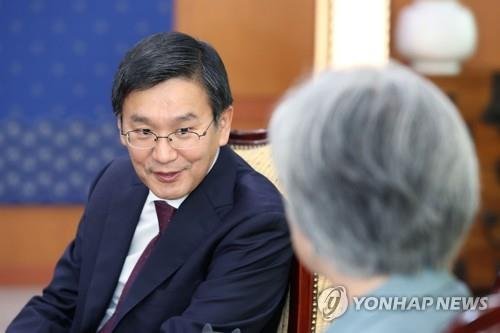
According to the Ministry of Foreign Affairs (MOFA) on the 26th, former International Tribunal for the Law of the Sea (ITLOS) President Jin-Hyun Paik will run in the ICJ judicial election scheduled for November 3. Candidates from eight countries are competing for five seats whose incumbents are completing their terms.
The ICJ is the United Nations' (UN) principal judicial organ. It settles legal disputes between countries and issues advisory opinions on legal questions at the request of the UN General Assembly, the Security Council and other bodies.
It differs in jurisdiction and character from the ITLOS, which handles disputes concerning the interpretation and application of the UN Convention on the Law of the Sea, and the International Criminal Court (ICC), which investigates and tries individuals accused of serious international crimes such as genocide and war crimes.
South Korea has been involved with the ITLOS and the ICC since their early years and has produced judges for both institutions. However, it has yet to have a judge on the ICJ, which was established in 1945. MOFA attributed this in part to South Korea's late admission to the UN in 1991 and the long-standing practice of allocating seats by region that developed during that period.
Former President Paik served as an ITLOS judge from 2009 to 2023, including as president from 2017 to 2020. He is currently a professor emeritus at Seoul National University and an adviser to the International Law Center at the Korea National Diplomatic Academy (KNDA). He is also the only South Korean lifetime member of the Institute of International Law (IDI).
Still, the outcome is difficult to predict. Although the rules do not formally assign seats by region, Asia is expected to receive one seat given the practice of regional balance. South Korea, Singapore and Jordan are competing for it. To date, Asian seats have been allocated to regions including South Asia, the Middle East and Southeast Asia.
Jordan's Mahmoud Daifallah Hmoud, a sitting ICJ judge, is seeking reelection. He has chaired the International Law Commission (ILC) and also served as a UN ambassador for several years. His incumbency gives him an advantage, particularly because sitting judges rarely lose reelection bids.
Singapore has nominated Rena Lee, its ambassador for international law. Lee led negotiations for about five years as chair of the intergovernmental conference on Marine Biological Diversity of Areas beyond National Jurisdiction (BBNJ), building recognition on the international stage. Her candidacy is also considered advantageous because she is a relatively young woman in her 50s.
South Korea, by contrast, lacks a clear regional base from which to expect support, such as the Middle East and Arab world or ASEAN. It can only rely on the international recognition that former President Paik built during his 14 years as an ITLOS judge.
The government has supported the candidate's efforts to secure votes. On the 14th, it held a promotional event for members of the diplomatic corps in South Korea, chaired by Foreign Minister Cho Hyun.
[email protected] Kim Tae-il Reporter