"Are They Really the National Team? 10,000 Shots Became a Laughingstock"—China Erupts in Unprecedented Fury After Suffering Humiliation at South Korea's Hands for the First Time in 32 Years [Nagoya Asian Games]
- Input
- 2026-09-26 09:39:45
- Updated
- 2026-09-26 09:39:45
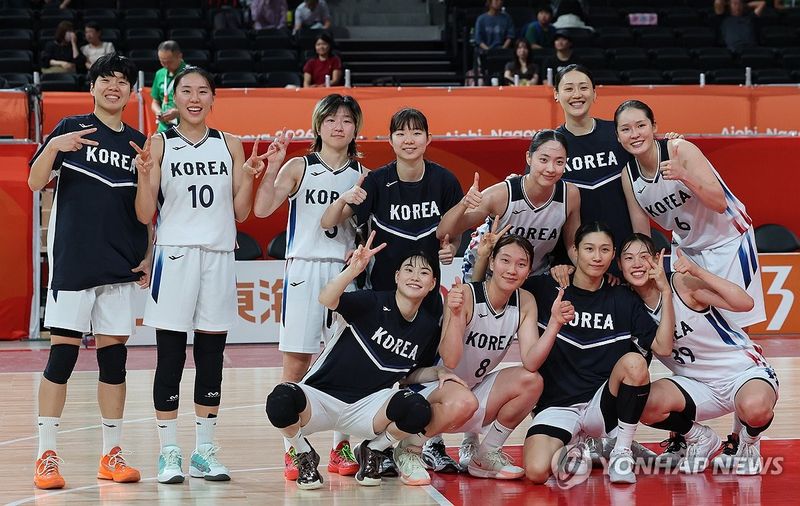
[Financial News] It was a shocking defeat. Chinese media were left stunned.
South Korea's women's national basketball team brought down China, the "Great Wall," and reached the Asian Games final for the first time in 12 years.
South Korea, led by head coach Park Soo-ho, defeated China 85-80 in the women's basketball semifinal at the 2026 Aichi-Nagoya Asian Games on the 25th at Aichi International Arena in Nagoya, Japan.
It was South Korea's first appearance in the Asian Games women's basketball final since the 2014 Incheon Asian Games, where it won the gold medal.
China's result was shocking. It failed to reach the Asian Games final for the first time in 32 years, since the 1994 Hiroshima Games. Since beginning its participation in the Asian Games in 1974, China had won six gold medals, four silver medals, and two bronze medals before this tournament. This was its first failure to reach the final since 1994.
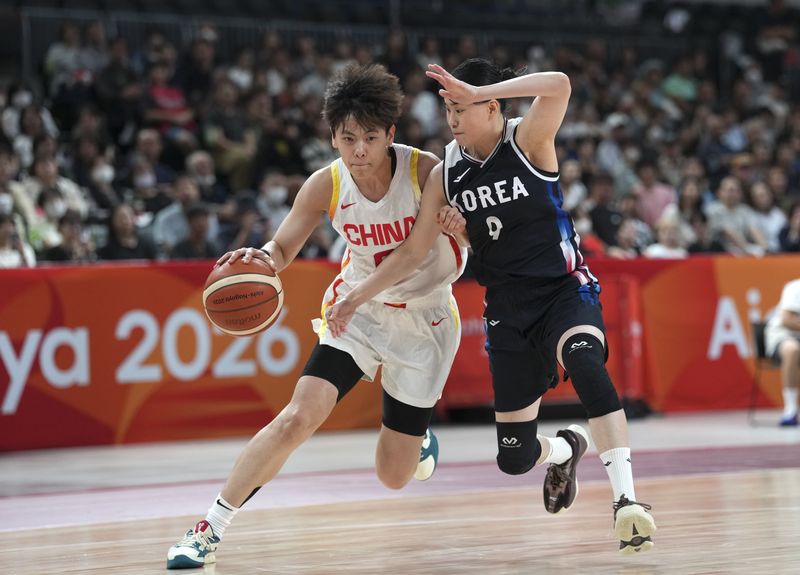
Chinese media focused on one number immediately after the game: 13 attempts and zero makes. That was China's three-point shooting line for the day.
South Korea attempted 41 three-pointers and made 12. China took 13 shots from beyond the arc but failed to make a single one. South Korea, in particular, neutralized China's height advantage by hitting a series of perimeter shots in the fourth quarter, when the game was on the line.
What hurt China even more was the so-called "10,000 shots" training program pursued by coach Gong Luming. Chinese outlet Zhiboba revisited comments Gong had made in the past immediately after the game. Gong had explained last year that he introduced a "10,000 shots training plan" for the Chinese women's national team to help it adapt to the development of modern basketball. He had also revealed that the players had achieved their target.
Yet in the Asian Games semifinal against South Korea, the result was zero makes on 13 three-point attempts. The "10,000 shots" program consequently came under scrutiny in Chinese basketball circles. A Chinese basketball media insider criticized the national team's perimeter offense, saying, "There was absolutely no sign of any effect from the 10,000 shots training program."
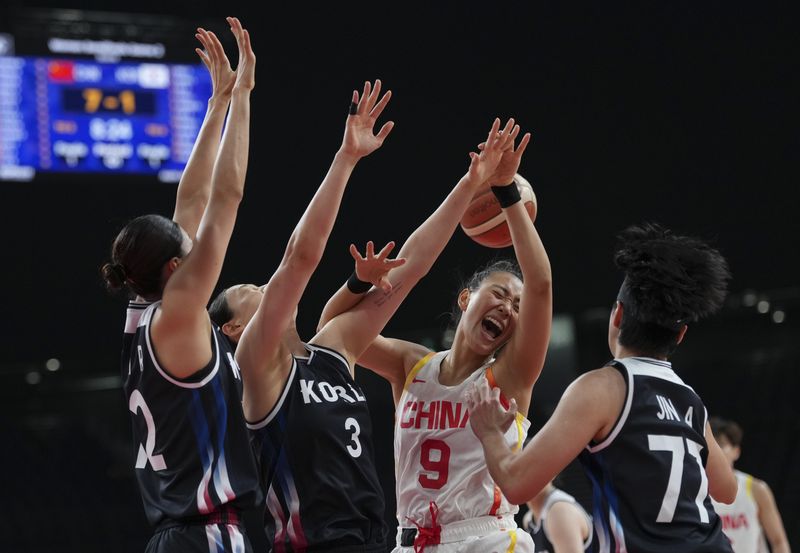
The insider added that despite the national team's long-term training and shooting sessions, China's perimeter game went completely silent in the real game, where it faced intense pressure. The contrast between the two teams from beyond the arc was stark: South Korea made 12 of 41 attempts, while China went 0-for-13. South Korea's three-point shooting percentage was 29.3%; China's was literally 0%.
Even 220cm could not stop them. China also had overwhelming height. Its extremely tall center, Zhang Ziyu, used her height of more than 220cm to attack South Korea in the paint. China held a commanding advantage in the rebounding battle as well. South Korea, however, offset China's height advantage from the perimeter.
South Korea began mounting a serious comeback in the third quarter, with Heo Ye-eun's perimeter shots changing the momentum. Lee So-hee's three-pointer put South Korea ahead, and Kang Lee-seul joined the scoring in the fourth quarter. In a crucial stretch, Lee Hae-ran hit a three-pointer to make it 78-74. With 1 minute and 50 seconds remaining, Lee So-hee sank another perimeter shot to extend the lead to 81-76.
Zhang Ziyu recorded 22 points and seven rebounds, but China had no answer for South Korea's perimeter shooting. Even before the game, voices in China had warned that South Korea's outside attack needed to be contained. Chinese commentator Lian Rui noted that South Korea had shown strong three-point production in the tournament and identified Kang Lee-seul, Heo Ye-eun, and Lee Hae-ran as players to watch.
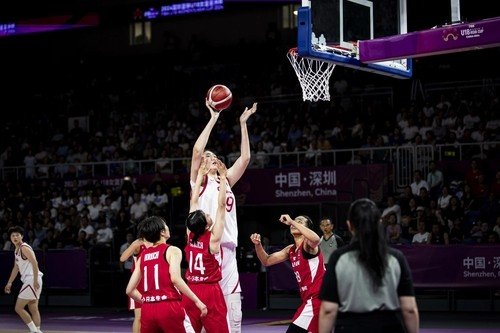
The concern became reality. Chinese media also linked the women's team's loss to the earlier collapse of the men's team. Zhiboba went so far as to describe it by saying, "They lost in the same way." An even more painful record was set: after the women's team lost to South Korea, Chinese basketball failed to win a gold medal in any of the four basketball events in which it competed at these Asian Games.
China finished fourth in men's 5-on-5 basketball, sixth in men's 3-on-3, and fifth in women's 3-on-3. Then its final gold-medal hope, the women's 5-on-5 team, also lost to South Korea and failed to reach the final. The contrast with eight years ago was stark. At the 2018 Jakarta-Palembang Asian Games, China won all four gold medals in men's and women's 5-on-5 and 3-on-3 basketball. Eight years later, at the 2026 Nagoya Games, that total fell from four to zero.
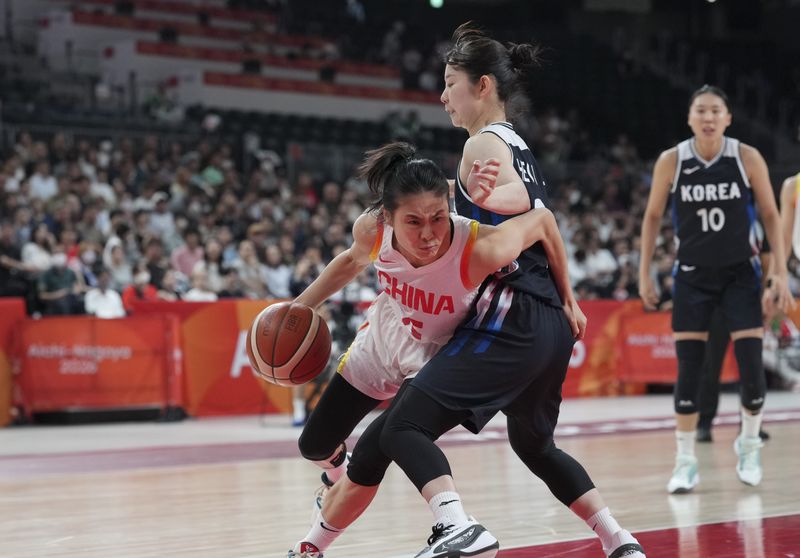
Before the tournament, China's women's national basketball team was regarded as the last source of pride for Chinese basketball.
That sense of desperation was already evident in Chinese basketball circles ahead of the game against South Korea. After the men's 5-on-5 team and both 3-on-3 teams posted disappointing results, a Chinese basketball media insider said, "The women's team is now the only one left with a chance to win a gold medal in basketball at the Asian Games." South Korea, however, stopped even that final hope.
[email protected] Jeon Sang-il Reporter