Jeju Disaster-Prevention Budget Proposal Set at 43.3 Billion Won... 2.1 Billion Won in Design Costs First for Three New Projects
- Input
- 2026-09-26 08:37:09
- Updated
- 2026-09-26 08:37:09
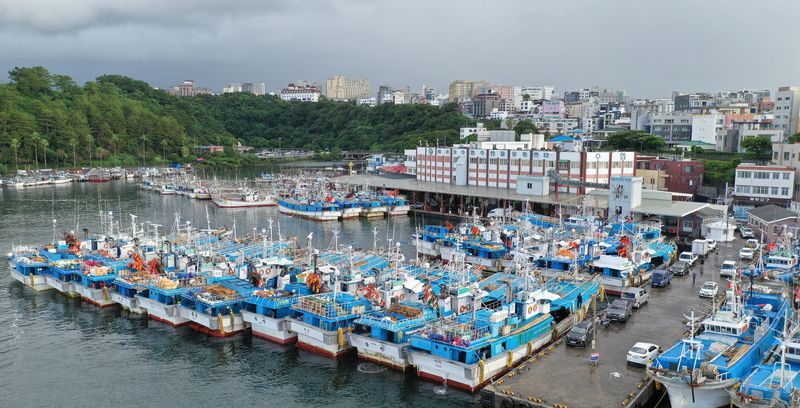
【Financial News Jeju—Reporter Jeong Yong-bok】 Next year’s 43.3 billion won in Jeju disaster-prevention project funding has been included in the government budget proposal. The amount is 9.9 billion won higher than this year, and three locations—Susan 1 in Seongsan-eup, Wasan in Jocheon-eup and Cheonjiyeon-ro in Seogwipo—have been added as new project sites.
According to Jeju Special Self-Governing Province on the 26th, the 2027 government proposal for disaster-prevention projects totals 43.3 billion won, up 29.6% from this year’s 33.4 billion won. National and local funds will each cover half of the cost to improve disaster-risk areas and expand disaster-prevention facilities across 22 districts.
By project category, 20.572 billion won will be allocated to 11 natural-disaster-risk improvement districts, while 10.006 billion won will go to two comprehensive storm- and flood-damage improvement projects for residential areas. Three steep-slope collapse-risk areas will receive 5.252 billion won, and 7.5 billion won will be allocated to six stormwater runoff reduction facilities.
The most notable feature of next year’s projects is the addition of three new sites. Stormwater runoff reduction facilities will be installed in Susan 1 in Seongsan-eup, Seogwipo City, and Wasan in Jocheon-eup, Jeju City. The collapse-risk area on the steep slope along Cheonjiyeon-ro in Seogwipo City will also be improved. Stormwater runoff reduction facilities are disaster-prevention structures that temporarily store or disperse rainwater that accumulates over a short period during heavy rainfall, thereby reducing flood damage.
The three new projects have a combined total cost of 42.6 billion won. Susan 1 accounts for the largest share at 29 billion won, followed by Wasan at 12.6 billion won and the Cheonjiyeon-ro steep-slope improvement project at 1 billion won. However, the full 42.6 billion won will not be spent all at once next year. The government proposal includes 2.1 billion won in design costs initially. The projects will proceed sequentially, beginning with design work and followed by district designation, various administrative procedures and construction.
The Cheonjiyeon-ro project site is the steep slope known as “Seogwi N2 (Cheonjiyeon-ro),” which is managed by the Jeju Disaster and Safety Countermeasures Headquarters and located in Seogwi-dong, Seogwipo City. It is currently registered as a Grade B steep-slope site.
The expansion of Jeju’s disaster-prevention projects is also in line with the government’s policy of increasing investment in natural-disaster prevention.
In the Ministry of the Interior and Safety’s 2027 budget proposal, funding to improve disaster-risk areas rose by 89.1 billion won, from 1.0688 trillion won this year to 1.1579 trillion won next year. An additional 43 billion won was earmarked for installing stormwater runoff reduction facilities to reduce flooding in low-lying urban areas during heavy rainfall.
Jeju Special Self-Governing Province plans to carry out administrative procedures, including design work and district designation, so that the new projects can begin early. It will also review the progress of existing projects.
Follow-up efforts to secure funding for 2028 projects will also begin. In line with the Ministry of the Interior and Safety’s policy of expanding comprehensive improvements in areas vulnerable to storm and flood damage, the province will identify new candidate sites and prepare feasibility studies and district designations. However, the 43.3 billion won in disaster-prevention funding may be adjusted during the National Assembly’s review and approval process, and the final budget will be confirmed in December.
Jo Sangbeom, head of Jeju Special Self-Governing Province’s Safety and Health Office, said, “We are also launching major new improvement projects,” adding, “I will see the process through to the end so that the projects’ benefits reach residents where they live as quickly as possible.”
[email protected] Jeong Yong-bok Reporter