"The rise in yields on United States Treasury securities (U.S. Treasuries) is far from over"
- Input
- 2026-09-27 03:00:00
- Updated
- 2026-09-27 03:00:00
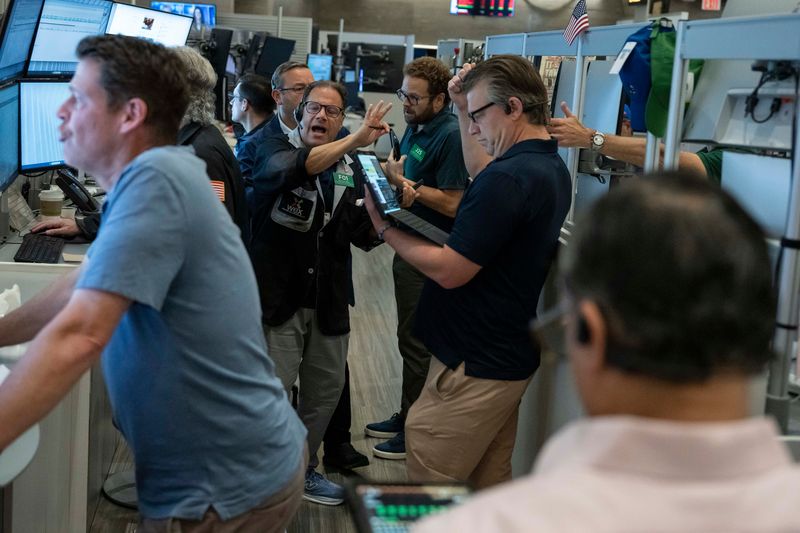
The rise in yields on U.S. Treasuries is cause for concern.
The yield on 30-year Treasuries, a benchmark for long-term interest rates, breached 5.5% for the first time in 22 years on the 25th (local time). The 10-year yield, which serves as a global benchmark, also broke above 5.2% to hit its highest level in 19 years.
The Financial Times (FT), citing market experts on the 25th, reported that the U.S. economy's fundamentals are stronger than in the past, making it difficult to cool an overheating economy through ordinary increases in Treasury yields. It concluded that the rise in yields is far from over.
Strong Fundamentals
Robert Tipp, PGIM's global head of bonds, said the U.S. economy is "responding relatively less sensitively" to rising interest rates than it has in the past. He added that it was "something different from before" and that "with abundant assets, high interest rates have become less threatening than in the past." Household and corporate assets have grown substantially during the pandemic, helping cushion the shock of rising interest rates.
Several economic indicators confirm this.
The September purchasing managers' index (PMI) released by S&P Global on the 23rd showed that U.S. business activity had accelerated at its fastest pace in five years.
In particular, an AI-driven stock-market and investment boom is propelling the U.S. economy. According to Atlanta Fed GDPNow, the Federal Reserve Bank of Atlanta's real-time estimate of gross domestic product (GDP), U.S. economic growth is projected to reach an annualized 5.1% in the third quarter.
Four More Rate Hikes
As the U.S. economy shows stronger growth than expected, inflation is also picking up.
The personal consumption expenditures (PCE) price index, the Federal Reserve's preferred inflation gauge, rose 3.7% year over year in July. The index has remained above the Fed's 2% target since 2021.
With prices refusing to fall and the economy remaining strong, expectations are growing that the Fed will accelerate its rate hikes.
Seb Barker, chief market strategist (CMS) at hedge fund Marshall Wace, said, "The market is revising its outlook toward higher Fed rates for longer."
Analysts say both 'bad' inflation and 'good' inflation are behind the outlook for 'higher rates for longer.' Bad inflation is supply-shock inflation caused by oil-price increases triggered by the Iran war, while good inflation is demand-driven inflation sparked by AI investment.
With U.S. government debt surpassing $40 trillion, both types of inflation are putting upward pressure on interest rates.
Trevor Greetham, head of multi-asset investing at Royal London Asset Management (RLAM), said, "The Iran war has reversed the inflation dynamics, turning the disinflationary trend into an upswing," adding, "Economic activity remains strong ... fiscal policy is not fixing the roof while the sun is shining." Inflation is rising again as the Donald Trump administration neglects efforts to reduce the fiscal deficit despite strong economic conditions, while the Iran war adds to price pressures.
Before the Federal Open Market Committee (FOMC) meeting on the 15th and 16th, financial markets had expected three rate hikes, including the 0.25-percentage-point increase. Amid the changing outlook, they now expect the benchmark rate to rise four more times by this time next year.
Treasury Yield Increases Are Far From Over
As various economic conditions drive Treasury yields higher, expectations that the overheating economy will cool are also fading. Concerns are mounting that increases of this magnitude will not be enough to curb rapid inflation.
Mike Riedel, a fund manager at Fidelity International, said, "The debate has been heated over whether U.S. Treasury yields have reached a level that will begin cooling an overheating economy," emphasizing, "Economic indicators are answering clearly, 'We are still far from that point.'"
Financial markets now view a 5% Treasury yield as the new benchmark, or the 'new normal.'
Rising bond yields increase corporate borrowing costs and put pressure on stock markets by squeezing profit margins. The semiconductor sector, which requires massive capital investment, is particularly vulnerable. However, supported by AI demand, the sector is expected to walk a tightrope between tailwinds and headwinds for the time being.
[email protected] Song Kyung-jae Reporter