Iran openly brings nuclear development into public debate... Will it withdraw from the NPT after North Korea?
- Input
- 2026-09-26 07:00:00
- Updated
- 2026-09-26 07:00:00
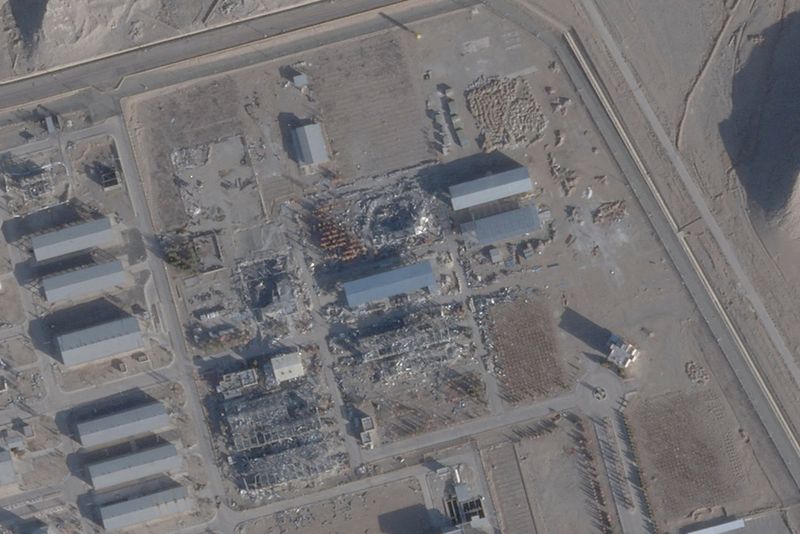
[Financial News] Iran, which had engaged in denuclearization negotiations with the United States for decades, is reportedly considering formally declaring its nuclear development program. Hardliners who experienced the war involving Iran this year are openly calling on the leadership to withdraw, arguing that the NPT failed to protect Iran.
Iranian hardliners open public debate on nuclear armament
On the 25th (local time), The Wall Street Journal (WSJ), citing officials, reported that Iran, which had claimed to pursue denuclearization at least nominally, was openly discussing plans to withdraw from the NPT and pursue an official nuclear program, like North Korea.According to Iranian media outlets including Press TV, Iranian lawmaker Hossein Ali Haji-Deligani said he had submitted an emergency bill calling for withdrawal from the NPT to the parliamentary leadership on the 20th, together with other lawmakers. He explained that preparations had been completed to present the bill to the plenary session, but approval from Iranian Parliament Speaker Mohammad Bagher Ghalibaf was required before deliberations could begin. Haji-Deligani referred to the International Atomic Energy Agency (IAEA) Board of Governors referring Iran to the United Nations Security Council (UNSC) on the 10th for violating its nuclear nonproliferation obligations, the first such referral in roughly 20 years. He argued, "We may have to withdraw from the NPT if we are to manage our own affairs."
In connection with this, Mohsen Rezaee, secretary of Iran's Supreme National Security Council (SNSC), argued in a statement issued last August, "If the NPT cannot prevent attacks on Iran, why should we refrain from building nuclear weapons?" According to the WSJ, Iranian officials who arrived in the United States this month to attend the 81st United Nations (UN) General Assembly warned that although Iran's nuclear weapons policy had not changed, it could change. In an interview on the 19th, Rezaee said, "Iran will adhere to its policy of banning nuclear weapons," but added, "Whether Iran withdraws from the NPT depends on U.S. actions."
The NPT, which entered into force in 1970, is the world's largest arms-control regime, with 191 member states. Its three main goals are 'preventing nuclear proliferation, disarmament, and the peaceful use of nuclear energy.' Iran ratified the NPT in 1970, under the Pahlavi monarchy before the Islamic Revolution. North Korea is the only country to have joined and later withdrawn from the NPT, while India, Pakistan, and Israel, which are known to possess nuclear weapons, have never joined it. Article IV of the NPT guarantees states parties the right to research, produce, and use nuclear energy for peaceful purposes. In past nuclear negotiations with the West, Iran argued that its right to enrich uranium was consistent with that provision.
'Pretend to make them' versus 'actually make them'
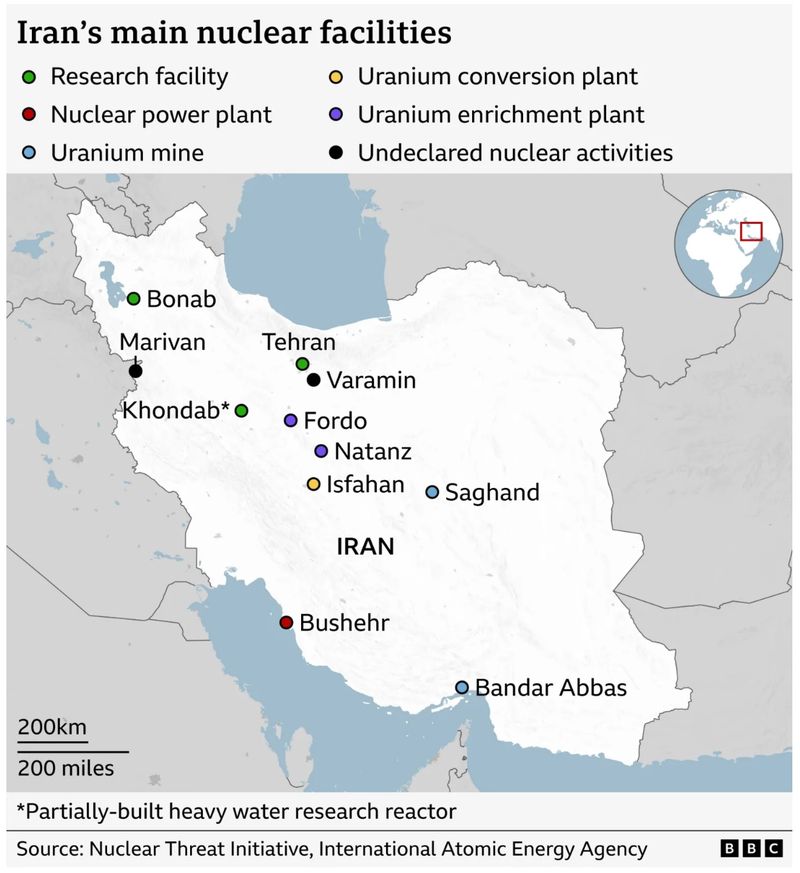
The Government of the Islamic Republic of Iran, established after the monarchy was overthrown in 1979, outwardly maintained the NPT. Ayatollah Seyyed Ali Khamenei, Iran's former supreme leader who was killed in a bombing during U.S. and Israeli attacks last February, issued a religious edict, or fatwa, in 2003 banning weapons of mass destruction (WMDs). In 2010, he also stated in a document, "WMDs such as chemical and biological weapons, including nuclear weapons, pose a serious threat to humanity," and added, "I am willing to do my utmost to counter them." In Iran, a theocratic state, a fatwa issued by the supreme leader functions as a powerful principle of state policy until it is directly revoked.The WSJ reported, citing UN data, that Iran's nuclear weapons program had focused on acquiring the technology to produce nuclear weapons at least until 2003. In recent years, however, Iran has also increased its production of nuclear-weapons material. The IAEA estimated that Iran possessed 440.9 kilograms of uranium enriched to as much as 60% before the first joint U.S.-Israeli airstrikes last June. If further enriched to above 90%, that amount would be enough to produce 10 nuclear weapons.
According to assessments by U.S. intelligence agencies, Khamenei sought to build Iran's capability to produce nuclear weapons and threaten neighboring countries while refraining from actually making them, in order to avoid giving the United States and Israel a pretext for military action. In Iran, calls for withdrawal from the NPT emerged in 2023 as Israel clashed with pro-Iranian forces in the region, including Hamas and Hezbollah, but remained limited.
Some critics accused Khamenei's strategy of ultimately failing to deter Iran's enemies and producing the worst possible outcome by instead provoking U.S. and Israeli military action. Hamidreza Azizi, a senior analyst at the Belgian think tank International Crisis Group (ICG), said that high-ranking officials such as Rezaee appeared to favor producing nuclear weapons. He noted that the debate over Iran possessing nuclear weapons was now primarily "a question of whether we can, rather than whether we should."
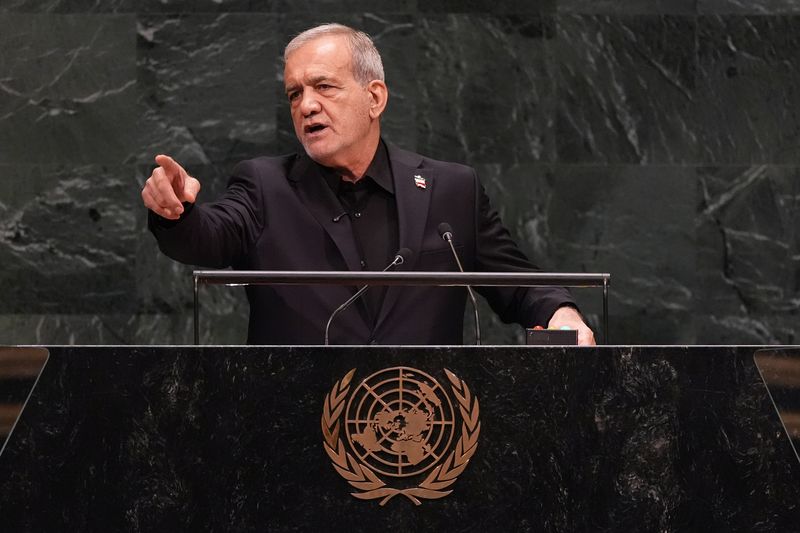
Meanwhile, Iranian President Masoud Pezeshkian, who is considered a moderate, said "Absolutely not" when asked whether he wanted nuclear weapons in an interview with Fox News on the 24th. He again cited Khamenei's fatwa and emphasized that Iran was willing to dilute uranium enriched to 60%.
[email protected] Park Jong-won Reporter