President Lee, Who Met with Chey Tae-won and Koo Kwang-mo: "USMCA Uncertainty Is an Opportunity in a Crisis"
- Input
- 2026-09-26 03:45:24
- Updated
- 2026-09-26 03:45:24
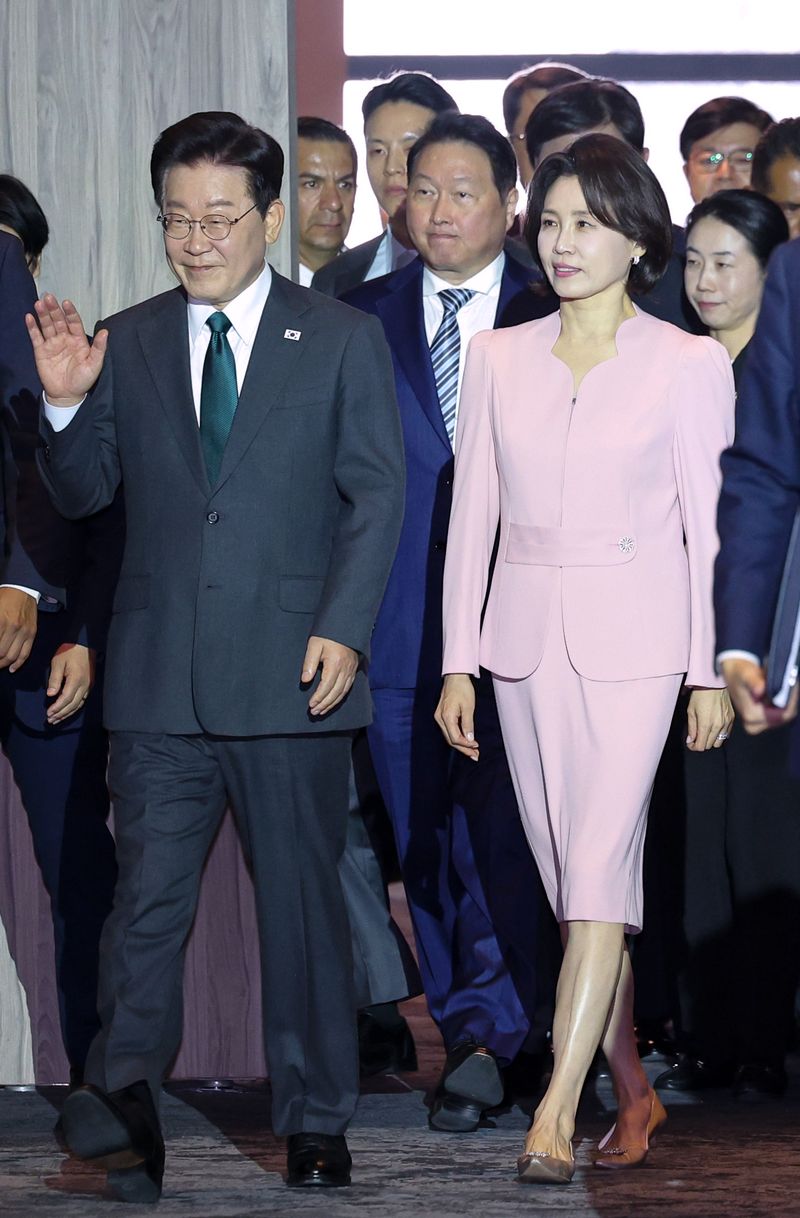
In a congratulatory address at the Korea-Mexico Business Forum held at the World Trade Center in Mexico City that day, President Lee proposed three directions for expanding economic cooperation between the two countries: "strengthening cooperation in investment, advanced industries and supply chains," "expanding cooperation in future industries and energy," and "strengthening exchanges in the cultural and creative industries."
President Lee first described Mexico as unequivocally a key pillar of North American supply chains and a global production hub for advanced manufacturing industries such as automobiles, electronics and aerospace. He added, "For our companies, Mexico is more than just a production base; it is an important strategic partner connecting North America with global markets. If Mexico's robust manufacturing capabilities and excellent access to the North American market are combined with Korea's proven technological and innovative capabilities and industrial competitiveness, it is clear that broader and more prosperous growth opportunities will open up for both countries."
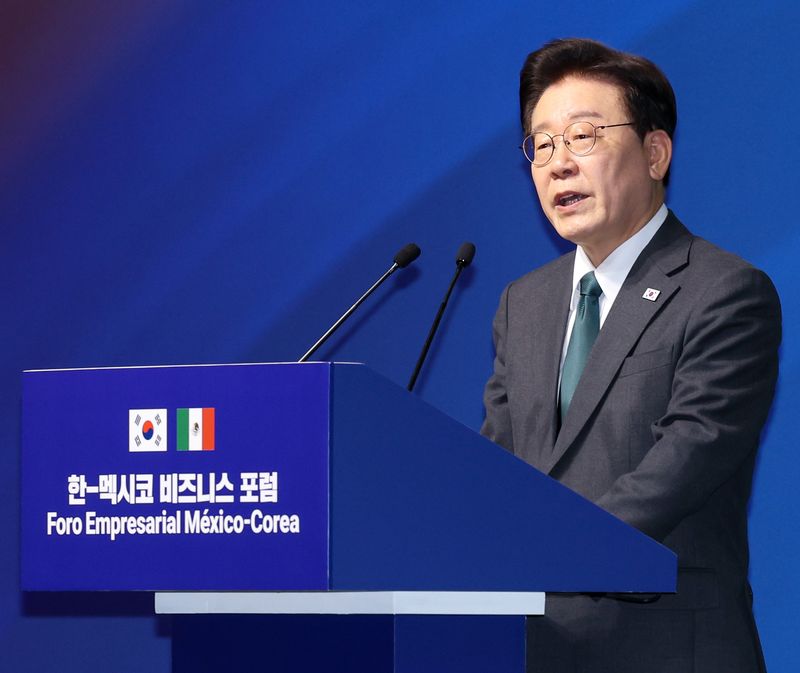
He repeatedly emphasized the need to conclude a trade agreement between the two countries. President Lee said, "Despite these remarkable achievements in cooperation, the economic relationship between the two countries has yet to advance to a comprehensive trade agreement. As uncertainty in the global trade environment deepens more than ever, I believe we need to further strengthen the institutional foundation in a more stable manner so that companies can confidently expand their businesses."
He continued, "Given the complementary industrial and economic structures of the two countries, a Korea-Mexico trade agreement would clearly provide a solid foundation for advancing economic cooperation to the next level. I hope the governments of both countries will promptly resume related discussions and create a mutually beneficial cooperation framework that firmly supports the challenges undertaken by businesspeople."
He viewed trade uncertainty surrounding USMCA as an opportunity for companies from both countries to enter global markets together. President Lee said, "The uncertainty in the North American trade environment, including USMCA, is clearly a challenge. However, if companies from both countries join hands and pool their strength, it can also become a golden opportunity to gain an early foothold in global markets."
He emphasized, "There is a saying: 'A crisis is an opportunity.' I hope companies from both countries will organically combine and further strengthen Mexico's excellent manufacturing base and local parts ecosystem with Korea's advanced technological competitiveness, allowing them to expand together into global markets beyond North America."
He also said cooperation should be expanded into future industries and energy. President Lee stated, "Our two countries should build on the successful experience firmly established in traditional manufacturing and boldly broaden the scope of cooperation into future industries such as biotechnology, healthcare and beauty, as well as digital innovation sectors such as energy, power and infrastructure."
He also noted that Korean companies are currently investing in AI data centers, power systems and electric vehicle-related production facilities in Mexico. President Lee emphasized that Korean companies are also collaborating with Mexican companies on energy projects, including a low-carbon methanol project, and that combining Mexico's industrial advancement policies with Korea's manufacturing and technological capabilities could simultaneously enhance Mexico's industrial competitiveness and support Korean companies' entry into global markets.
He presented the cultural and creative industries as another new pillar of cooperation. Referring to Mexico's interest in K-pop, K-dramas and K-food, as well as the popularity of Mexican food and culture in Korea, President Lee explained, "Now, based on this cultural affinity and people-to-people exchange, we should further expand exchanges and cooperation in the cultural and creative industries, spanning content, food, fashion, beauty and tourism."
He added, "Advanced technology industries are important, but as these industries and society develop in the future, cultural industries will receive far greater attention. If the creativity and cultural appeal of both countries are combined with business, attractive markets will open up for companies, and high-quality opportunities for new challenges will be provided to young people in Korea and Mexico."
President Lee also cited the cultural affinity between the two countries as an asset for economic cooperation. He said, "Koreans who hum Bésame Mucho and La Cucaracha enjoy tacos and tortillas in their daily lives. Mexicans enjoy samgyeopsal and bulgogi, and sing along to K-pop. The willingness to deeply understand and respect each other's cultures will be the strongest foundation for cooperation above all else."
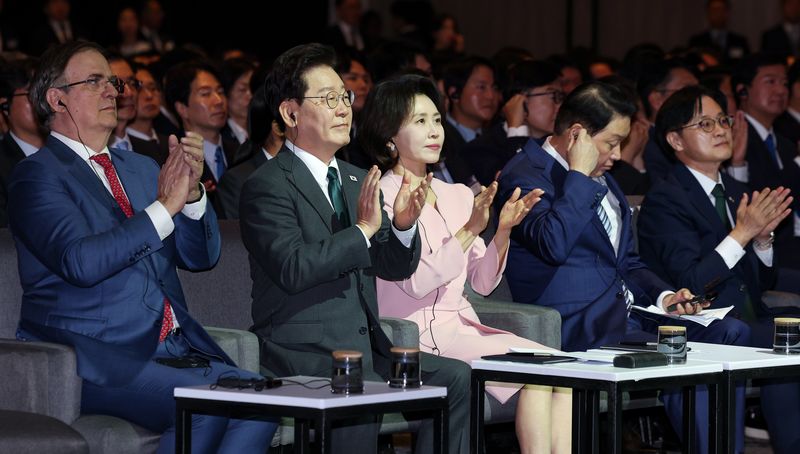
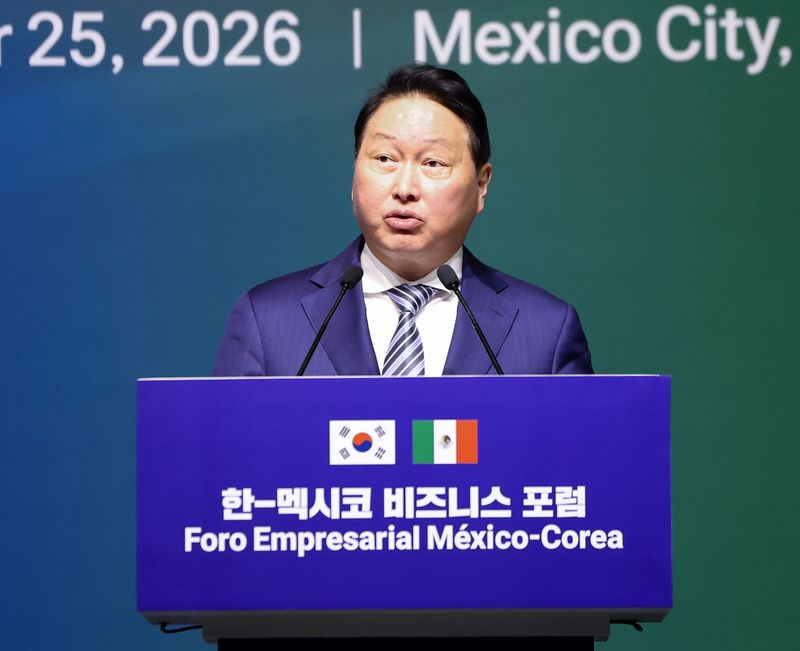
The forum was attended by 51 Korean business leaders, including Chey Tae-won, chairman of KCCI and SK Group; Koo Kwang-mo, chairman of LG Group; Koo Ja-eun, chairman of LS Group; Roh Tae-moon, president of Samsung Electronics; Song Ho-sung, president of Kia; Lee Kye-in, president of POSCO International; and Soo Yeon Choi, CEO of NAVER. On Mexico's side, 27 government and business officials, including Marcelo Ebrard, Mexico's Secretary of Economy, were present.
[email protected] Choi Jong-geun Reporter