Russia's Ruling Party Wins Record 349 Seats in Wartime Election, Easily Surpassing Constitutional Majority; War Veterans Enter Parliament in Large Numbers
- Input
- 2026-09-25 23:32:15
- Updated
- 2026-09-25 23:32:15
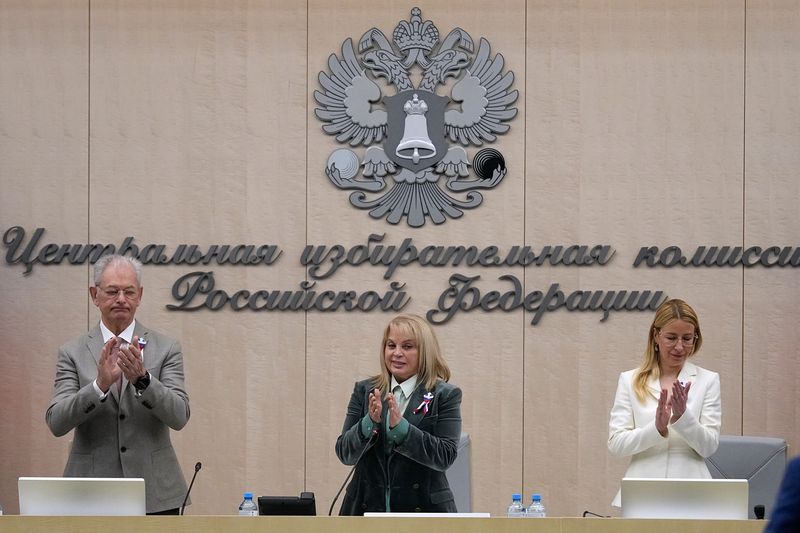
[Financial News] In Russia's first State Duma election since the invasion of Ukraine, the ruling United Russia won a landslide victory, securing 349 of the 450 seats, or about 78%. The result comfortably exceeded the constitutional majority threshold and was seen as further strengthening Russian President Vladimir Putin's ability to wage the war and maintain his grip at home amid a wartime patriotic rally.
According to Interfax and the TASS Russian News Agency on the 25th (local time), Ella Pamfilova, chairwoman of Russia's Central Election Commission, officially announced the final vote count for the lower-house election held from the 18th to the 20th.
Under the final results, United Russia won 140 party-list proportional-representation seats and 209 constituency seats, for a total of 349. This not only far exceeded the two-thirds constitutional majority of 300 seats, but also surpassed the party's previous record of 343 seats in the 2016 election. It was the largest number of seats won by the party since its founding in 2001.
The Communist Party followed with 37 seats, including 32 through proportional representation and five in constituencies. The far-right nationalist-leaning Liberal Democratic Party won 23 seats, including 21 through proportional representation and two in constituencies. The liberal-leaning New People party secured 19 proportional-representation seats, while the center-left A Just Russia won 17 seats, including 13 through proportional representation and four in constituencies. The nationalist Rodina party won one seat, and four independent candidates were elected.
One of the most notable features of this election was the large number of servicemen who took part in the war in Ukraine entering parliament. Pamfilova said 46 participants in the "special military operation" had entered the State Duma, accounting for more than 10% of all seats. Of them, 41 belonged to the ruling party, three to the Liberal Democratic Party, one to A Just Russia and one was an independent.
Dmitry Peskov, the Kremlin spokesman, welcomed the result at a briefing, calling it "a very good thing" and saying, "The experience of our heroes is extremely important, and the results of this vote clearly showed that." The average age of those elected was 53, down from 57 in the previous parliament.
Turnout was also recorded at 59.8%, well above the 51.72% recorded in 2021 and 47.88% in 2016. It was the highest turnout in the past three State Duma elections.
Controversy over the fairness of the election continued. Russian authorities emphasized its legitimacy, saying that 1,126 observers from 133 countries, including the United States, the United Kingdom and South Korea, monitored the election. However, Yabloko, the only opposition party that had opposed the war, was stripped of eligibility for proportional-representation candidates by a Supreme Court ruling last month. The Central Election Commission suspended 17 election officials, including six affiliated with Yabloko, and said the election system had been targeted in 13 DDoS attacks totaling 468 minutes during the election period, all of which were blocked by its security network.
The landslide victory further confirmed Putin's strong domestic position for continuing the war in Ukraine, which has lasted more than four years and six months. As a result, analysts expect Russia either to intensify its military offensive on the Ukrainian front or to take an even harder line on its demands in any future peace negotiations.
[email protected] Park Ji-hyun Reporter