U.S. and China Create a 'Safe Zone' in Tariff War, Agree to Favorable Treatment for Agricultural Products and Medical Devices
- Input
- 2026-09-25 22:42:35
- Updated
- 2026-09-25 22:42:35
According to CNBC on the 25th (local time), Jamieson Greer, head of the Office of the United States Trade Representative (USTR), appeared on CNBC's Squawk Box and said, "We have actually reached agreement with the Chinese side on several issues."
The agreement covers U.S. agricultural products, medical devices and Chinese consumer goods with limited relevance to national security. Greer explained that the Trump administration plans to release "much more detail" on the 28th about the results of the U.S.-China negotiations held in recent weeks.
The key point of the agreement is to separate certain traded goods from future tariff disputes between the United States and China.
Greer said the two countries are pursuing a plan to trade certain goods under 'more favorable terms.' In particular, the goal is to allow the agreed-upon items to be exempted from tariff measures even if the United States or China imposes new tariffs on the other.
However, it has not been disclosed which products are included, how much tariffs will be reduced or when the new terms will take effect.
The negotiations do not ease the competition between the United States and China for dominance in advanced technology.
Greer emphasized that negotiations under the newly launched U.S.-China Board of Trade are limited to "purely trade-related issues." This means that U.S. export controls on advanced technologies such as semiconductors and artificial intelligence (AI) will remain in place separately. He said, "All export controls related to national security issues are excluded from the negotiating table."
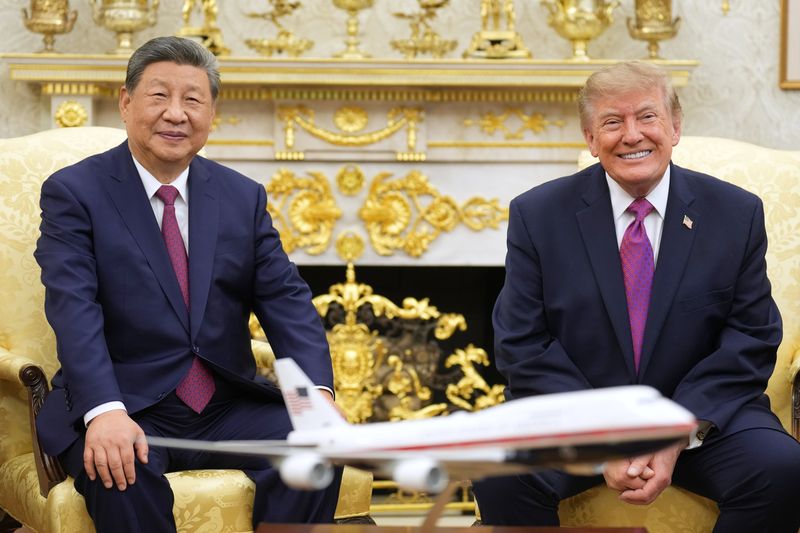
U.S. President Donald Trump and Chinese President Xi Jinping announced the establishment of a Board of Trade to manage trade in non-sensitive items after their summit in Beijing last May. It is intended to keep trade in ordinary goods needed by companies and consumers in both countries stable, separate from their strategic competition.
[email protected] Correspondent Lee Byung-chul Reporter