U.S. Companies Betting on a U.S.-China ‘Truce’ Sharply Increase Orders for Chinese-Made Goods
- Input
- 2026-09-25 22:05:50
- Updated
- 2026-09-25 22:05:50
According to a survey by the New York-based research firm China Beige Book, cited by CNBC on the 25th (local time), U.S.-origin orders received by 1,295 Chinese companies and their shipments to the United States both increased from the previous month and the same period a year earlier between the 1st and 22nd. China Beige Book described the increase as "a surprising result." Analysts attributed it in part to China securing relatively more favorable tariff conditions than other countries.
The change is even clearer in the numbers. In September, the U.S.-origin order indicator—which subtracts the percentage of companies reporting decreases from the percentage reporting increases—stood at 13. That was up 25 percentage points from minus 12 during the same period last year and 10 percentage points from 3 in August.
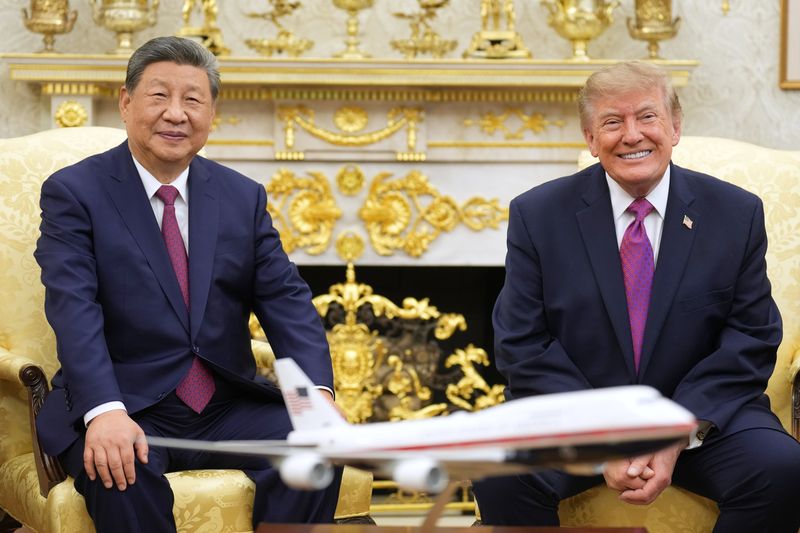
The increase suggests that U.S. companies are betting on stable U.S.-China relations ahead of a summit between U.S. President Donald Trump and Chinese President Xi Jinping. Xi traveled to Washington this week for his first state visit to the United States in more than a decade.
The movement of goods has also accelerated. According to recently released official statistics, Chinese port throughput reached a record high during the week leading up to the summit. This signals that expectations of further improvement in U.S.-China relations are translating from orders into actual trade.
At the summit, President Trump and President Xi agreed to extend their trade truce by two months, through January next year. As a result, current reduced tariff levels will remain in place, while China's restrictions on rare-earth exports and additional port fees on ships will be put on hold.
Additional tariffs that the United States had considered imposing on China's industrial overcapacity are also expected to be postponed until at least after the summit. For Chinese exporters, this means the immediate risk of additional tariffs has declined.
However, the U.S.-China trade conflict is not over. According to Barclays, the effective U.S. tariff rate on Chinese-made products is about 23%, still far higher than the average tariff imposed on other major trading partners. China's overall domestic and export orders also remained below last year's level, while new orders declined from August.
The key question is how long the current ‘truce’ will last. Eurasia Group raised its assessment of the likelihood that U.S.-China relations will remain stable after the trade truce extension to its highest level since President Trump's return to office.
The negotiations between the two leaders are also unlikely to end with this meeting. President Trump and President Xi are expected to meet again at the Asia-Pacific Economic Cooperation (APEC) summit in Shenzhen, China, in November. They could also hold another meeting on the sidelines of the Group of Twenty (G20) summit in Miami, United States, in December, but no follow-up bilateral summit has been officially confirmed.
[email protected] Byung-chul Lee, Correspondent Reporter