"Did Chuseok Steal China's Mid-Autumn Festival?" Kyoungduk Seo: "The Cultural Backgrounds Are Completely Different"
- Input
- 2026-09-25 17:21:00
- Updated
- 2026-09-25 17:21:00
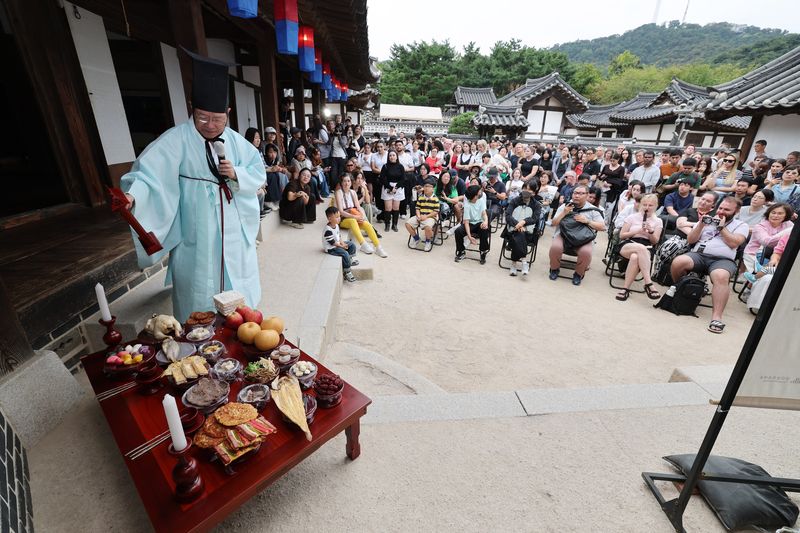
[Financial News] After some Chinese netizens claimed that Korea's Chuseok was borrowed from China's Mid-Autumn Festival, Sungshin Women's University professor Kyoungduk Seo refuted the claim, saying the two holidays have entirely different cultural backgrounds.
On the 24th, Seo wrote on his social media (SNS), "Over the past few years, whenever Chuseok approached, some Chinese netizens have made the baseless claim that 'Korea stole the Mid-Autumn Festival,'" he pointed out.
Seo also brought up the case from last year, when Manchester City Football Club of the Premier League (EPL) released a video commemorating Chuseok.
At the time, some Chinese netizens protested, saying, "You stole our culture," while Chinese media outlets also covered the matter, Seo said.
Seo said the two holidays cannot be regarded as the same cultural tradition simply because they fall on the same date. He said, "Korea's 'Chuseok' and China's 'Mid-Autumn Festival' both fall on the 15th day of the eighth month of the lunar calendar, so the date is the same, but their cultural backgrounds are completely different."
He explained that the rituals associated with the two holidays also differ. Seo said, "Chuseok is a tradition of giving thanks for the year's harvest, performing ancestral rites and visiting ancestral graves," adding, "The Mid-Autumn Festival is a tradition of offering sacrifices to the moon and praying for family harmony."
He said the foods also differ. Seo stated, "The signature foods are also different. Chuseok's representative food is songpyeon, half-moon-shaped rice cakes, while the Mid-Autumn Festival's is mooncakes, shaped like full moons. These are clear differences," adding, "Whenever the Lunar New Year approaches, Chinese netizens make a fuss, saying, 'They stole the Chinese New Year,' and when Chuseok approaches, they make a fuss, claiming that we stole their Mid-Autumn Festival."
A similar controversy had previously arisen over Lunar New Year. Last year, when the official social media account of Tokyo Disney Resort posted the phrase 'Lunar New Year' and Mickey and Minnie Mouse, dressed in hanbok, delivered New Year's greetings in Korean, Chinese and Vietnamese, some Chinese netizens criticized it.
Foreign media also reported that criticism emerged in China earlier this year after G-Dragon, a member of BigBang whose real name is Kwon Ji-yong, referred to Seollal as 'Lunar New Year' at the 'Krazy Super Concert' held in Dubai, the United Arab Emirates (UAE).
Seo stressed the need to acknowledge and respect other countries' cultures. He urged, "Chinese netizens should now stop their cultural hegemonic thinking and acknowledge and respect Korea's unique traditional holidays. Please remember that you must first learn to acknowledge other countries' cultures for your own culture to be respected."
[email protected] Han Seung-gon Reporter