"A Father in Uniform and a Mother Who Cared for the Workplace"... 38 Years in the Police [Number 112]
- Input
- 2026-09-28 15:31:55
- Updated
- 2026-09-28 15:31:55
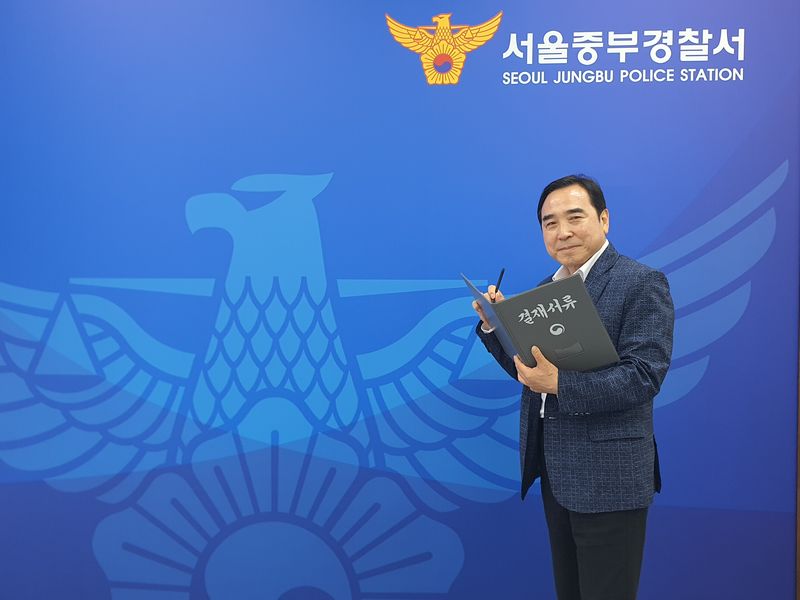
Jo Byeong-don, accounting section chief at Seoul Jungbu Police Station (Senior Inspector; pictured), is set to retire at the end of this year. He spent about 20 of his nearly 38 years in the police service in that role. After beginning his career at the Cheong Wa Dae 101st Security Guard Unit in 1989, he went on to serve at Seoul Songpa Police Station, Gangnam Police Station, Seoul Jungbu Police Station, and Seoul Mapo Police Station. Since becoming accounting section chief at Gangnam Police Station in 2005, his main responsibilities have included police station budgets, contracts, facilities management, and building expansions and renovations.
Jo described the accounting section as "the place that takes care of the police station's household." Unlike investigations or patrols, its work is not highly visible, but it supports the organization from behind the scenes so that police operations do not come to a halt. He said, "Although I do not go out into the field myself, supporting colleagues in the field so they can work without inconvenience is also an important part of police work."
The principle Jo has upheld throughout his career is transparency. Accounting work involves managing budgets funded by taxpayers. Because the job involves repeated contracts, purchases, and construction orders, even minor procedures could not be handled casually. Seoul Jungbu Police Station reports construction and equipment purchases worth 5 million won or more to the Seoul Metropolitan Police Agency, while projects worth 50 million won or more undergo a routine audit. Jo explained, "I tried to look at the budget with the mindset of asking myself what I would do if it were my own money."
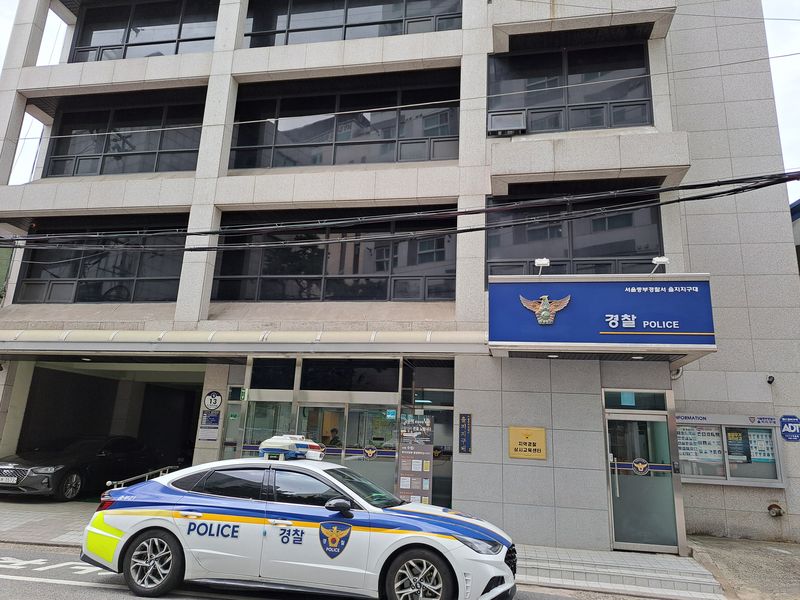
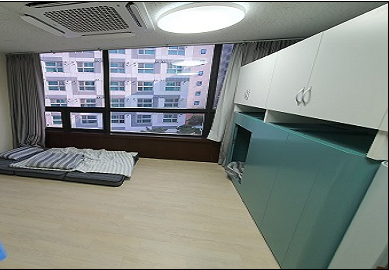
The remodeling of Eulji Police Substation is a representative example of that change. In 2024, Seoul Jungbu Police Station purchased the site and building and transformed the 40-year-old structure into a local police facility with eight above-ground floors and a total floor area of 1,043 square meters. The facility includes separate men's and women's restrooms, changing rooms, capsule beds, a healing house, and a stress-relief room. The aim was to give local police officers returning from dealing with intoxicated people and individuals causing disturbances a private space where they could rest, even briefly.
The remodeling of Seoul Mapo Police Station also remains among his lasting memories. At the time, securing a budget to move to a temporary station was difficult. The police station had to continue operating in its existing building, and construction could not be halted. Container offices were set up in the parking lot, and departments moved one at a time as the work proceeded over two years. Jo recalled, "I have always been grateful and sorry that the employees endured the inconvenience despite the noise and dust," adding, "It was deeply rewarding to see them using the facility comfortably after construction was completed."
He describes himself as the "mother of the police staff." The expression reflects his role of looking after the environment where employees work, much as someone manages a household. At home, he is also a "police father." His eldest son currently works as a police officer at Seoul Songpa Police Station. Jo said, "My son saw me in uniform from the time he was young," adding, "I have never once regretted becoming a police officer, and I have always said it was my calling."
As he prepares to retire, the thing that will remain with him the longest is neither a building nor a project. He thinks first of his colleagues. Even when he hovered between life and death after suffering an acute myocardial infarction two years ago, it was his colleagues who stayed by his side. Jo advised younger officers, "Do not keep running with your eyes fixed only ahead." Rather than focusing solely on promotions or work, he hoped they would also look after their families, colleagues, and the people around them.
Jo summed up his police career by saying, "It was a time when, although I did not attract attention, I quietly fulfilled my role in the position I held so that the police could do their work properly." For him, leaving behind better spaces where junior officers can work is a more meaningful legacy than leaving his name behind.
[email protected] Choi Seung-han Reporter