"I Saved 500 Million Won, but Gangnam Is a Dream"—Which Seoul Apartment Can I Afford with My Own Money?
- Input
- 2026-09-25 15:18:27
- Updated
- 2026-09-25 15:18:27
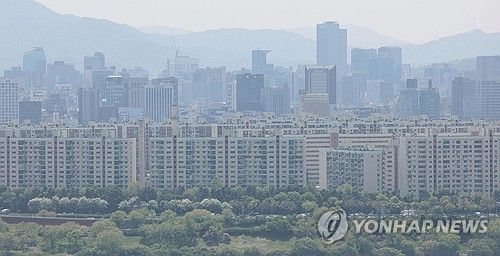
[Financial News] "If you have 500 million won in cash, which apartment in Seoul can you afford?"
When families gather during the Chuseok holiday, housing is one topic that inevitably comes up. This year, Seoul apartment prices have risen sharply and borrowing has become more difficult, shifting the focus from "Which areas will rise?" to "Which home can I afford with my own money?"
In Seoul's apartment market, transactions are increasingly concentrating in mid- to low-priced apartments that buyers can afford with loans, rather than in high-priced homes.
According to data from the Seoul Metropolitan Government, the Ministry of Land, Infrastructure and Transport (MOLIT), and the actual transaction price disclosure system, apartments priced at 1.5 billion won or less accounted for 79.9% of all Seoul apartment transactions in August.
About eight out of every 10 apartments traded in Seoul were priced at 1.5 billion won or less. The share has been rising again after falling to 72.4% in May.
The regional differences are even more pronounced. In August, 99.8% of transactions in Nowon District involved apartments priced at 1.5 billion won or less, while the figure was 100% in Dobong, Gangbuk and Geumcheon districts. In effect, almost all apartments traded in these areas were priced at 1.5 billion won or less.
This is why analysts say Seoul's "homebuying map" is being redrawn around borrowing limits.
Under the lending restrictions, even buyers with the same 500 million won in cash can no longer choose an apartment simply by calculating a fixed percentage of the home's price, as they did in the past. Because the amount they can actually borrow varies according to the home price, income and existing debt, the areas and complexes available to buyers with limited equity narrow quickly.
End-users are also moving toward Seoul's relatively less expensive outer districts. Seoul recorded 3,143 apartment transactions in August as of September 15, when all transactions had been reported, down 46.2% from the previous month. However, Nowon District recorded 415 transactions, the highest among the capital's 25 autonomous districts.
The most notable price gains are also spreading to the outer districts. Actual transaction prices for Seoul apartments rose 14.56% in July from the same month a year earlier. The Seoul Metropolitan Government analyzed that prices continued to rise as end-user demand flowed into mid- to low-priced areas after discounted listings in high-priced districts were cleared.
End-user market trends are also visible by floor area. Actual transaction prices for Seoul apartments rose 2.50% in June from the previous month. Among the different size categories, mid-sized units with exclusive floor areas of more than 60 square meters and up to 85 square meters posted the highest increase, at 1.48%.
A real estate industry official said, "Ultimately, attention in Seoul's apartment market is shifting to the cash that end-users can actually mobilize, separate from the competition over record-high prices for expensive apartments in Gangnam."
The locations of Seoul apartments that buyers can afford vary significantly when loans are added to 300 million won, 500 million won or 1 billion won in cash. Even within Seoul, available residential options are increasingly divided according to a buyer's financial capacity.
Another real estate industry official explained, "With lending restrictions remaining in place, end-users have no choice but to look for homes in a price range they can afford by combining their equity with the amount they can borrow. The recent increase in the share of transactions in mid- to low-priced areas can also be seen as a result of these financial constraints."
[email protected] Kim Kyung-a Reporter