'Not for use during pregnancy' Mounjaro prescribed to pregnant women 325 times in one year
- Input
- 2026-09-24 19:15:26
- Updated
- 2026-09-24 19:15:26
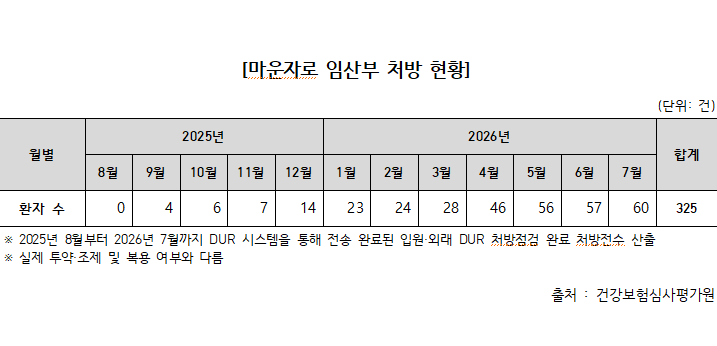
The office of Baek Jong-heon, a lawmaker on the Health and Welfare Committee of the National Assembly representing Geumjeong, Busan, and the People Power Party, said on the 24th that it had confirmed the inappropriate prescriptions after reviewing data recently submitted by HIRA.
Mounjaro was prescribed to pregnant women 325 times in total during the 12 months from its initial launch in South Korea last August through July this year. According to the precautions for use of Mounjaro Prefilled Pen Injection 2.5 mg/0.5 mL provided by the Ministry of Food and Drug Safety's Integrated Drug Information System, the drug's use should be discontinued in pregnant women.
It was also confirmed that more than 100 Mounjaro prescriptions were issued to children under 13 in just one year. Since the drug's safety and efficacy in pediatric patients have not yet been firmly established, prescriptions for young patients require particular caution.
Mounjaro prescriptions among older adults aged 65 and above are spreading even more rapidly. During the same period, more than 36,000 prescriptions were issued to people in this age group. Monthly prescription numbers were also found to have increased every month.
The Ministry of Food and Drug Safety's approved labeling states that clinical trials showed that "greater sensitivity cannot be ruled out in some older adults." Treatment experience in patients aged 85 and older was particularly limited.
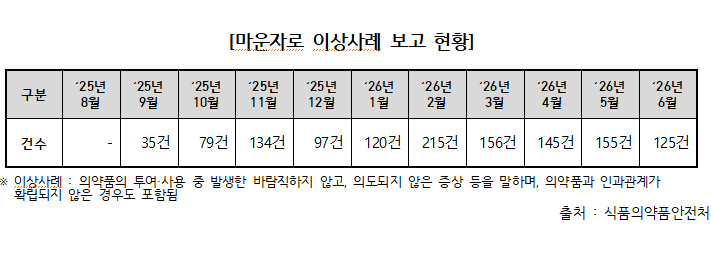
Additional data submitted by the Ministry of Food and Drug Safety to Baek Jong-heon's office showed that 1,261 adverse events involving Mounjaro were reported during the 11 months from its launch in South Korea last August through June this year. Of these, 916 cases were reported this year alone, accounting for 72.6% of the total.
Baek Jong-heon stressed, "If a drug for which the Ministry of Food and Drug Safety has specified that use should be discontinued was prescribed to pregnant women more than 300 times, this is by no means an issue that can be taken lightly. Amid the obesity-treatment craze, one cannot help but question whether the most basic principle of prescribing—protecting patients—is being undermined. The Ministry of Health and Welfare and other authorities should not simply leave the matter to doctors' judgment. They must conduct a full investigation into prescribing practices for high-risk groups and promptly devise countermeasures."
[email protected] Byeon Ok-hwan Reporter