"I Stretched at a Rest Stop and Clawed at My Chest"... The Curse of the Driver's Seat That Knocks Out Breadwinners in Their 40s and 50s on the Journey Home [The Body's Off the Record]
- Input
- 2026-09-24 14:47:25
- Updated
- 2026-09-24 14:47:25
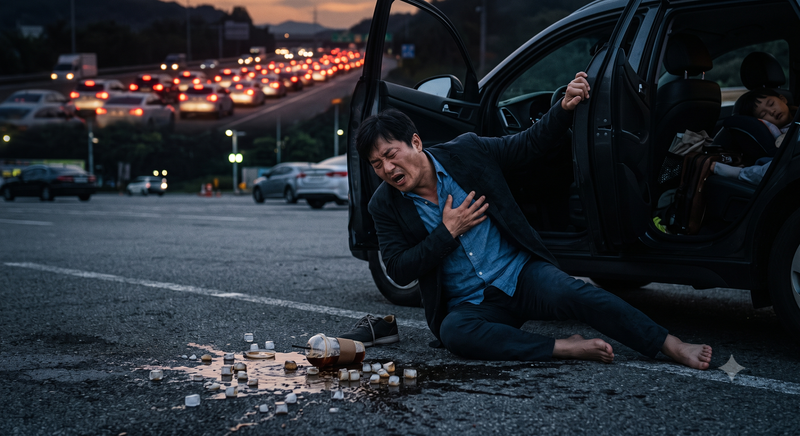
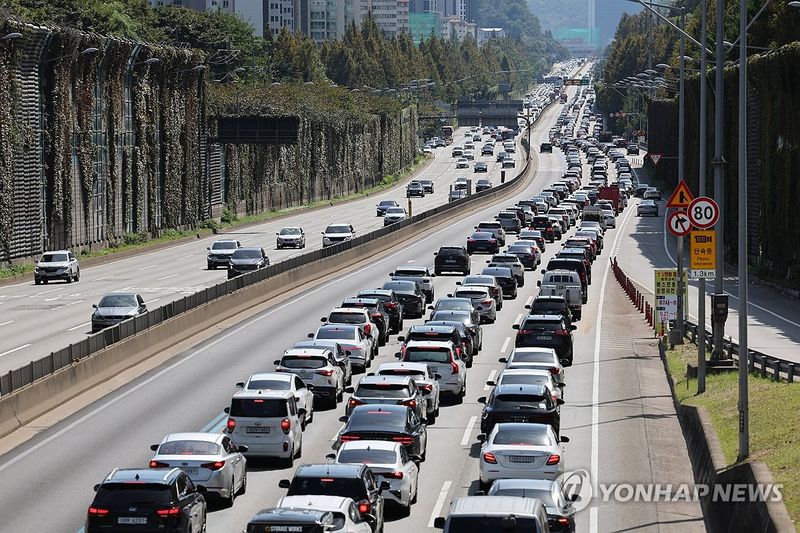
[Financial News] September 24, when the Chuseok holiday break officially began. Amid an endless traffic jam on the roads leading home for the holiday, Korea's breadwinners in their 40s and 50s feel as though a crushing weight rests on their shoulders.
To avoid waking the children fast asleep in the back seat and his wife dozing in the passenger seat, the father battles the steering wheel alone. To fight off the waves of drowsiness, he repeatedly downs a venti-sized Iced Americano packed with ice or a high-caffeine energy drink bought at a rest stop. Unwilling to waste even the time needed to stop for the restroom, he does not drink water and spends hours moving only his ankle between the brake and accelerator pedals.
At last, he reaches the final rest stop near his destination—or the yard of his childhood home—and shifts into park. "Oh, my legs." He opens the car door to stretch his stiff back and legs. The moment he steps outside and takes a refreshing stretch, the tragedy begins.
Suddenly, a sharp, excruciating pain strikes the center of his chest, as if a knife has been driven into it. A terrifying sensation of suffocation overwhelms him, and no matter how desperately he gasps, he cannot draw in enough oxygen. The relief signaling the start of the holiday abruptly turns into a moment of sudden death. The silent killer most feared by the medical community—pulmonary embolism—has struck.
Most people think this horrific sudden death is a condition that occurs only in the economy class of a long-haul flight. But the driver's seat on a gridlocked holiday highway is a far narrower and harsher "incubator for blood clots" than an economy-class seat. The World Health Organization (WHO) has also warned that traveling in a cramped seat for four hours or more, regardless of the mode of transportation, more than doubles the risk of potentially fatal venous thromboembolism (VTE).
The calf muscle, specifically the gastrocnemius, is known as the body's "second heart" because it acts as a pump that drives blood back toward the heart. But if you remain trapped for five hours in a cramped driver's seat with your legs bent and only your ankles moving, the calf muscles do not contract, causing blood to pool in the veins of the lower limbs—a condition known as venous stasis.
The Iced Americano and energy drinks consumed by breadwinners in their 40s and 50s to fight off drowsiness then pull the deadly trigger. When the powerful diuretic effect of high caffeine rapidly removes plasma, or water, red blood cells and platelets become concentrated, turning the blood into a sticky swamp and increasing its coagulability. When stagnant blood encounters extreme dehydration, it forms a hard clot deep inside the calf veins—a deep vein thrombosis (DVT).
The real horror begins the moment he opens the car door at his destination and places his first foot on the ground. As the calf muscles, which have been still for five hours, contract forcefully to begin walking, they shoot upward a clot precariously attached to the vessel wall. The clot travels from the leg along the inferior vena cava, rapidly passing through the heart's right atrium and right ventricle before completely blocking the pulmonary artery, which supplies oxygen to the lungs. This is the horrifying anatomical mechanism of pulmonary embolism: the blood supply of oxygen is cut off, leaving the victim clutching his chest and suffocating on the spot.
"What's the big deal about having some coffee on a long drive?" That careless habit he dismissed had been nurturing a deadly ticking time bomb inside his legs.
On a completely gridlocked journey home, the large amount of Iced Americano you drank to keep going is no different from poison that causes your blood to clot. If you are driving this holiday, get out of the car at every rest stop, walk for at least five minutes, and massage your stiff calves. A journey home fueled by plain bottled water instead of coffee is the only sure way to open the car door in the yard of your childhood home with a smile toward your wife and children.
[email protected] Jeon Sang-il Reporter