Nationwide Births Rise 14.7%, but Jeju Rises 7.2%; July Marriages Also Decline Only in Jeju
- Input
- 2026-09-24 12:49:25
- Updated
- 2026-09-24 12:49:25
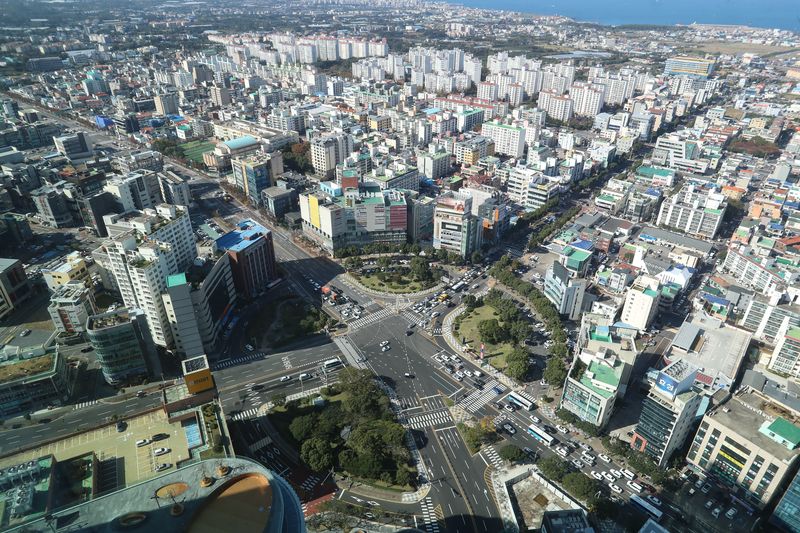
Financial News | Jeju — By Jeong Yong-bok. Births and marriages are rebounding nationwide, but Jeju Province is recovering at a relatively slower pace. Jeju's birth increase from January through July was 7.2%, about half the national rate of 14.7%, while marriages in July declined only in Jeju among the country's cities and provinces.
An analysis of the National Data Agency's "July 2026 Population Trends," released on the 24th, found that 2,069 babies were born in Jeju Province from January through July this year, 139 more than the 1,930 recorded during the same period last year.
The increase was 7.2%. Nationwide, births rose 14.7% during the same period, from 148,228 to 170,079. Jeju's increase was 7.5 percentage points lower than the national rate.
Jeju also had the slowest recovery in births among the cities and provinces. Gyeongsangbuk-do followed with the next-lowest increase at 7.4%, followed by Daegu at 11.3%, Sejong City at 12.3%, and Gangwon State at 12.8%. Births increased by 17.9% in Seoul, 15.7% in Daejeon, and 15.6% in Gyeonggi.
■ July Exceeded the National Rate, but the Cumulative Rebound Was the Weakest

Monthly figures alone show an improvement in births in Jeju. There were 324 births in Jeju Province in July, up 33 from 291 in the same month last year. The increase was 11.3%, slightly higher than the national rate of 11.1% for the same month. Births increased year on year in all cities and provinces in July.
However, in the cumulative figures for January through July, Jeju's increase was the lowest nationwide. The recovery over the past month has not yet made up for the gap accumulated earlier in the year.
Births in Jeju Province fell from 3,989 in 2020 to 3,728 in 2021, 3,599 in 2022, 3,222 in 2023, and 3,156 in 2024. Last year, they rebounded to 3,279, a 3.9% increase.
The upward trend has continued this year, but the scale of the increase remains limited compared with the nationwide recovery in births.
Jeju's crude birth rate was 5.8 in July. The crude birth rate is an indicator showing how many births occur per 1,000 people, calculated by annualizing the number of births recorded in a given month.
■ Nationwide Marriages Rise 9.3%, while Jeju Alone Declines 6.8%
The difference between national and Jeju trends is even clearer in marriages. Jeju recorded 233 marriages in July, down 17 from 250 in the same month last year. The decline was 6.8%.
Nationwide, there were 22,282 marriages in the same month, up 1,890 from 20,392 a year earlier. The increase was 9.3%.
The National Data Agency counted increases in July marriages in 15 cities and provinces, including Seoul and Busan, while Jeju recorded a decline.
Jeju's recovery is also slower than the national trend when viewed cumulatively. From January through July this year, Jeju recorded 1,613 marriages, up 0.9% from 1,599 during the same period last year. Nationwide, marriages rose 6.1% over the same period, from 138,253 to 146,656.
Although marriages declined on a monthly basis in Jeju, the cumulative figure is still rising. That is why it is difficult to conclude that the upward trend in marriages has been reversed based on July's figure alone.
Marriages in Jeju rose 1.4%, from 2,744 in 2024 to 2,783 last year.
■ Natural Decrease Narrows from 83 to 54; Population Deficit Shrinks
The natural decrease narrowed as births increased. In July, 324 babies were born in Jeju Province and 378 people died. Deaths outnumbered births by 54.
In July last year, there were 291 births and 374 deaths, resulting in a natural decrease of 83. The decrease narrowed by 29 over the year.
From January through July this year, Jeju recorded 2,069 births and 2,753 deaths. Deaths outnumbered births by 684.
During the same period last year, there were 1,930 births and 2,770 deaths, resulting in a natural decrease of 840. The natural decrease narrowed by 156 this year.
Jeju's crude death rate was 6.8 per 1,000 people in July, higher than its crude birth rate of 5.8. The natural increase rate was negative 1.0 per 1,000 people.
Nationwide, 24,275 people were born and 28,921 died in the same month, resulting in a natural decrease of 4,647. The natural increase rate was negative 1.1 per 1,000 people. Although Jeju's natural decrease has narrowed, the underlying pattern of deaths outnumbering births continues.
■ August Records a Net Inflow of 97; Population Trends Diverge
Looking only at births and deaths, Jeju Province is experiencing a natural decrease, but recent migration figures show a different pattern.
According to the "August 2026 Domestic Population Movement Statistics" released by the National Data Agency, Jeju's total inflow in August was 5,607, while total outflow was 5,510, resulting in a net inflow of 97.
In August last year, outflows exceeded inflows by 201. Net migration improved by 298 over the year, turning positive from negative. Net migration is calculated by subtracting the number of people who leave an area from the number who enter it. A positive figure means inflows exceeded outflows, while a negative figure means outflows were greater.
However, the July births and deaths statistics and the August domestic population movement statistics released by the National Data Agency have different reference months, so they cannot be added directly to calculate the change in total population.
Taken together, recent indicators show that Jeju's population trend is not moving in a single direction. Births are increasing, but the recovery is slower than nationwide; marriages declined on a monthly basis; and natural decrease continues, with deaths outnumbering births. Meanwhile, recent domestic migration data show that inflows exceeded outflows.
To determine whether Jeju's population is rebounding, it is necessary to look beyond births and consider marriages, deaths, and inflows and outflows together. The key indicators that will determine changes in Jeju's population base are whether the recovery in births and marriages accelerates, the natural decrease narrows, and migration improves at the same time.
[email protected] Jeong Yong-bok Reporter