JDC Wins MOHW Minister’s Award for “Ieum Jobs” for Second Straight Year—Pilot Roles Become Permanent Senior Jobs
- Input
- 2026-09-24 08:43:34
- Updated
- 2026-09-24 08:43:34
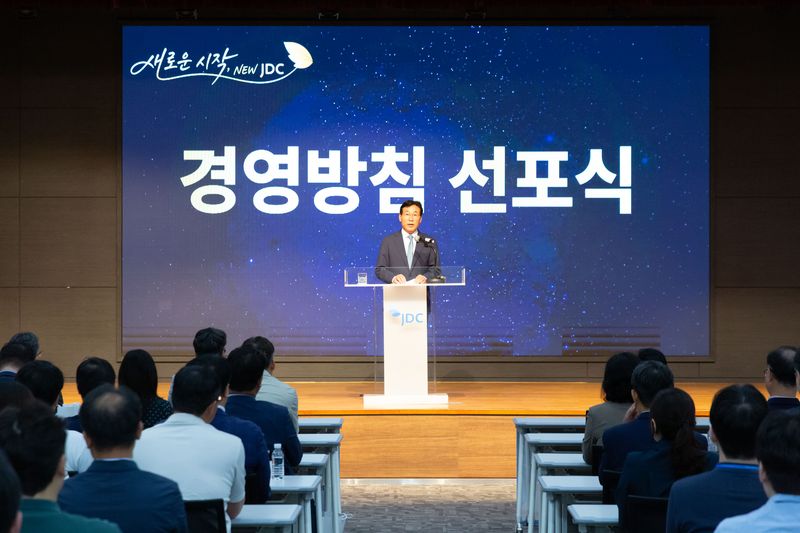
【Financial News | Jeju — Reporter Jeong Yong-bok】 A role piloted through the Jeju Free International City Development Center’s (JDC) senior jobs program has been incorporated into the government’s permanent senior employment program. JDC received the Ministry of Health and Welfare Minister’s Award for the second consecutive year in recognition of its achievement in identifying new roles needed by the community and connecting them to sustainable employment, rather than simply providing one-off jobs.
According to JDC on the 24th, the “Ieum Jobs” program was selected as an excellent institution in the Senior Competency Utilization Leading Model Program at the 2026 Senior Jobs Week Commemorative Ceremony held on the 21st, earning the Ministry of Health and Welfare Minister’s Award. It was the program’s second consecutive win after last year.
The key to “Ieum Jobs” is creating new roles by first identifying community needs, rather than assigning participants to existing positions. The program connects participants’ experience and capabilities to solving local issues and structures roles that show potential during pilot projects so they can be maintained over the long term.
The “Nanum Baeum Support Team,” a pilot role launched last year, was incorporated this year into the Ministry of Health and Welfare’s permanent senior jobs program under the “Senior Competency Utilization” category.
This award is particularly meaningful because a role tested by JDC through its own program led to a permanent government program. It is an example of a model that began as a social contribution employment initiative at a public institution and expanded into the institutional senior jobs system.
This year, JDC also expanded the pool of participants and the range of roles. It newly introduced a quota system for selecting people with disabilities to broaden participation opportunities for groups facing barriers to employment. Through a specialized-role competition, it also began identifying new positions linked to local issues in Jeju Province, including resource circulation, barrier-free tourism and local cultural documentation.

Senior jobs policy is also shifting away from simply supplementing income and toward utilizing people’s careers and expertise. As older adults come from increasingly diverse educational and professional backgrounds, it is becoming more important for public institutions and communities to identify needed tasks and connect them with participants’ experience.
Jeju Province is simultaneously facing population aging as well as challenges involving tourism, the environment and the preservation of local culture. As a result, the continued creation of roles that combine actual local needs with older adults’ experience—such as resource circulation, barrier-free tourism and local cultural documentation—could determine the sustainability of these jobs.
The roles JDC is newly identifying this year also reflect these characteristics of Jeju Province. Improving mobility and tourism environments for people with limited access to tourism, supporting local resource circulation and documenting local lifestyles and culture that could otherwise disappear are all areas where community needs and participants’ experience can be utilized together.
More noteworthy than winning the minister’s award for two consecutive years is the fact that one pilot role led to a permanent senior jobs program. Rather than simply increasing the number of people directly employed by a public institution, the achievement demonstrates the creation of a pathway for designing roles around local needs and expanding them through government programs.
Park Young-ha, head of JDC’s Public Relations and Cooperation Office, said, "Receiving the Ministry of Health and Welfare Minister’s Award for the second consecutive year is recognition that Ieum Jobs has steadily developed as an employment program connecting community needs with participants’ capabilities. We will continue identifying jobs that meet local needs and developing sustainable employment models."
[email protected] Jeong Yong-bok Reporter