Taking a Closer Look at Jeju's 323.25 Billion-Won Industrial Complex Overhaul: 19 New Projects and 111.44 Billion Won in Local Funding Are the Key Hurdles
- Input
- 2026-09-24 08:32:43
- Updated
- 2026-09-24 08:32:43
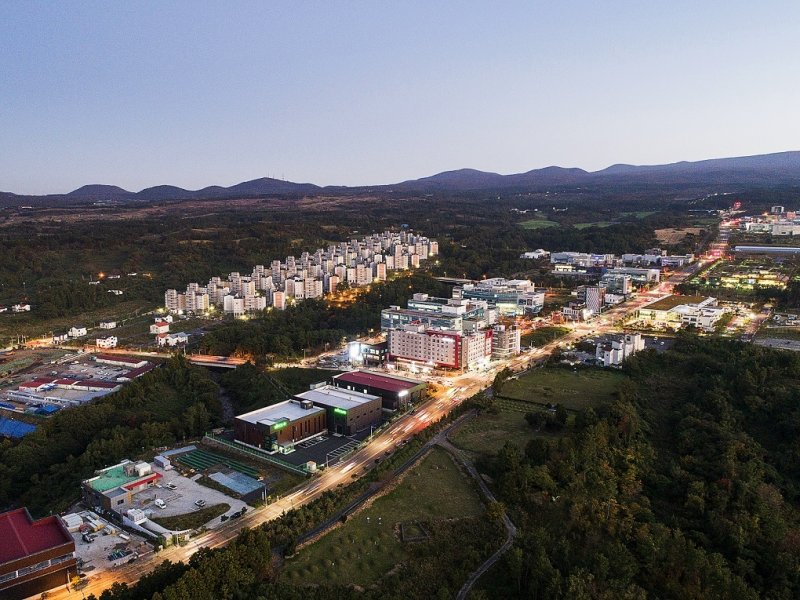
[Financial News, Jeju]—Jeong Yong-bok, reporter. Of the 323.25 billion won planned for Jeju's industrial complex overhaul, 19 projects are new. Planned local funding totals 111.44 billion won, or 34.5% of the total, the highest share among the three candidate regions.
The 323.25 billion won is not a budget secured all at once through the candidate-site selection. The plan includes 14 projects already underway, while the new projects must still go through final designation of the project district, individual public competitions, and annual budget allocations by the central and local governments.
A review on the 24th of the competitiveness enhancement project plans by the Ministry of Trade and Industry, the Ministry of Land, Infrastructure and Transport, and Jeju Special Self-Governing Province shows that Jeju's Competitiveness Enhancement Project for Aging Hub Industrial Complexes comprises 33 detailed projects under three key tasks and six action tasks.
The planned total project cost is 323.25 billion won. By funding source, 187.46 billion won will come from the national government, 111.44 billion won from local governments, and 24.35 billion won from private and other sources.
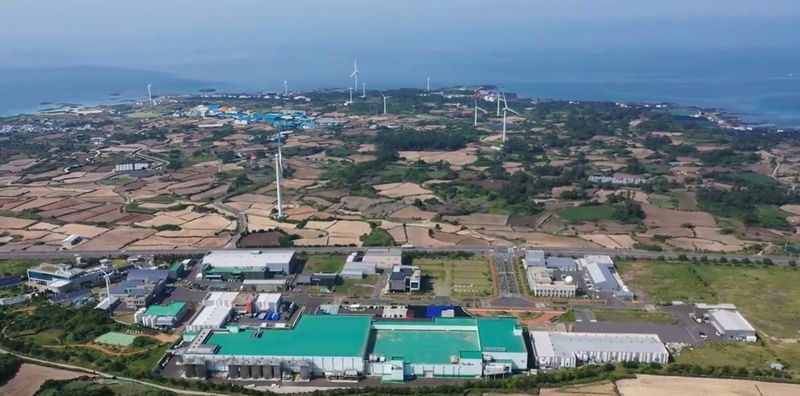
The plan uses Jeju Science Park as its hub and links it with the Yongam Seawater Industrial Complex and the Daejeong, Gujwa and Geumneung Agro-Industrial Complexes. It aims to bring together the energy, manufacturing, biotechnology, corporate support and workforce development functions of five geographically separated industrial complexes into a single industrial ecosystem.
■ Even the 'High-Tech' Industrial Complex Is 20 Years Old and Has Become a Redevelopment Target
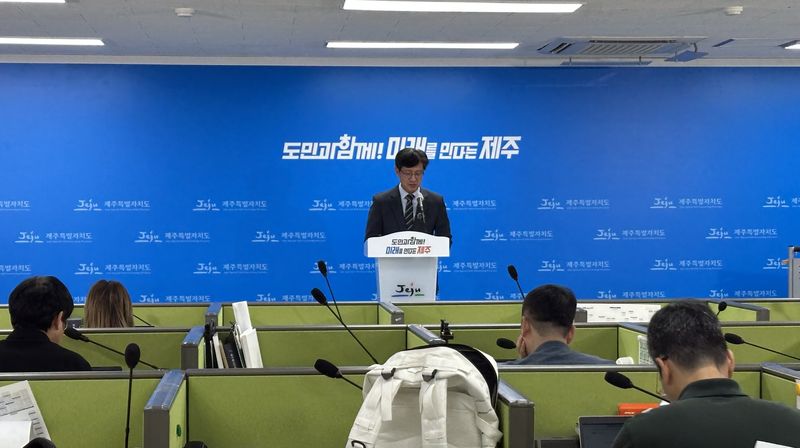
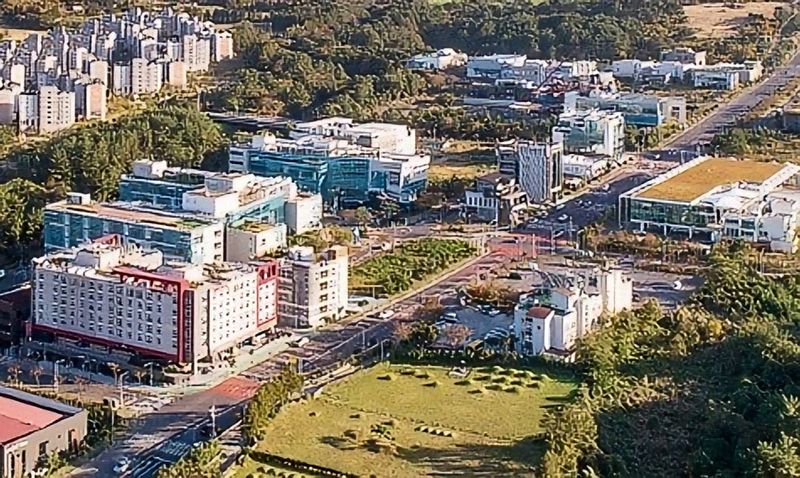
The timing of its development is one reason Jeju Science Park became the hub of the aging industrial complex project.
The government's Competitiveness Enhancement Project for Aging Hub Industrial Complexes targets industrial complexes that have been in operation for at least 20 years. Rather than merely refurbishing infrastructure, it brings together projects from multiple ministries covering manufacturing AI transformation, clean energy, industrial restructuring and upgrades, and improvements to young workers' work and residential environments.
As of 2025, Jeju Science Park is home to 193 companies. Its production value was 1.0505 trillion won, and it employed 3,587 people.
Jeju's plan focuses on applying renewable energy, AI transformation (AX) and clean biotechnology to this industrial base. A RE100 (Renewable Energy 100%) industrial complex is a concept in which companies shift the electricity they use toward renewable energy. AX refers to the transformation of manufacturing, logistics and energy management through the application of artificial intelligence.
Jeju also plans to combine clean biotechnology research and development, corporate support, jobs for young people, and improvements to working and residential conditions.
■ 19 of the 323.25 Billion Won Are New Projects
Of the 33 projects in total, 19 are new and 14 are ongoing.
New renewable energy projects include the construction of energy self-sufficiency infrastructure, RE100 industrial complex infrastructure, a smart energy platform, the rollout of industrial energy management systems, and support for eco-friendly facility infrastructure in industrial complexes.
In clean biotechnology and manufacturing innovation, new projects include the Industrial Cluster Competitiveness Enhancement Project, a full-cycle one-stop support system for the biotechnology industry, a data-based biotechnology research and development center, a smart logistics platform, an AX demonstration industrial complex, a smart processing center for Jeju agricultural products, and smart eco-factories.
Projects for young people include the Youth Employment Leap Incentive, the Manufacturing AX Industry-Academia Innovation Park, win-win workplace innovation consulting, an integrated control center, youth-friendly renovations of aging industrial complex factories, a Youth Culture Complex Center, and ministry-linked development of aging industrial complexes.
By contrast, the creation of a distributed energy specialized complex, the Food Tech Research Support Center, support for biotechnology companies in regional innovation clusters, company-demand-tailored research and development support, smart factory construction and advancement, and the regionally innovation-led university support system are ongoing projects.
Therefore, the entire 323.25 billion won cannot be viewed as investment newly generated by the selection of the candidate site.
To accurately assess the plan's future fiscal impact, it will be necessary to specify how much of the 187.46 billion won in national funding represents newly secured money and how much of the 111.44 billion won in local funding will need to be additionally budgeted.
■ Jeju's Local Funding Accounts for 34.5%, the Highest Among the Three
A comparison of the three candidate regions nationwide clearly shows Jeju's funding structure.
Jeju's total planned project cost is 323.25 billion won, exceeding 312.4 billion won for Munmak, Gangwon Province, and 274.13 billion won for Wanju County, Jeonbuk. It is the largest of the three candidate regions.
The order changes when only national funding is considered. Munmak's planned national funding is 207.2 billion won, 19.74 billion won more than Jeju's 187.46 billion won. Jeju's total project budget is 10.85 billion won larger than Munmak's, but its planned national funding is actually lower.
The difference lies in local funding. Jeju's planned local funding is 111.44 billion won, or about 34.5% of the total. Munmak has 77.7 billion won, or about 24.9%, while Wanju County has 65.47 billion won, or about 23.9%.
Jeju's local-funding share is about 9.6 percentage points higher than Munmak's and about 10.6 percentage points higher than Wanju County's. Private and other funding totals 24.35 billion won for Jeju, 27.5 billion won for Munmak and 33.1 billion won for Wanju County.
Jeju has drawn up the largest project plan of the three candidate regions, but the structure also gives local government a correspondingly large role in financing it.
However, this does not mean that all 111.44 billion won in local funding must be newly raised from now on. Because the plan includes 14 ongoing projects, some of the money may already have been spent or budgeted. The additional local funding burden cannot be determined from the currently available public data alone.
■ It Is Only a Candidate Site; Securing the Budget Starts Now
The hurdle Jeju has cleared so far is candidate-region selection, not final designation of the project district.
The Ministry of Trade and Industry and the Ministry of Land, Infrastructure and Transport plan to refine the plans for the three candidate regions—Jeju, Wanju County and Munmak, Gangwon Province—through expert consulting, then officially designate and announce them as competitiveness enhancement project districts in the first quarter of 2027.
Even after final designation, the 33 projects will not all begin at once. Follow-up procedures remain, including public competitions and reviews by the relevant ministries and budget allocations by the central and local governments.
The increases Jeju Province has projected—22% in production value, 19% in exports and 10% in employment—along with a 5% reduction in greenhouse gas emissions are still targets, not achieved results.
The figure to watch going forward is not the total of 323.25 billion won, but the budget actually secured for the 19 new projects. The amount of the 187.46 billion won in national funding that is reflected in the government budget, together with the year-by-year local funding burden, will be the key indicator of the plan's feasibility.
The plan to bring five industrial complexes under a single project framework will also be put to the test during this process. The 33 projects will not remain fragmented initiatives if Jeju Science Park's corporate and research base, the Yongam Seawater Industrial Complex's biotechnology resources, and the agro-industrial complexes' manufacturing and processing capabilities are actually connected through business activities and supply chains.
The plan's success or failure will also depend on securing funding and implementing the projects. It aims to supply industrial complex electricity through renewable energy, upgrade manufacturing and logistics with artificial intelligence, connect Jeju's resources to the biotechnology industry, and create an environment where young people can work and settle in the region.
Ultimately, what matters more than the 323.25 billion-won figure is the actual investment secured for the 19 new projects. Final designation in the first quarter of 2027 and the subsequent process of securing national and local funding are expected to be the first test of Jeju's industrial complex transformation plan.
[email protected] Jeong Yong-bok Reporter