"Please, value it a little higher"... Pawnshops steeped in ordinary people's hardships, with bargaining over tens of thousands of won still continuing [Recorder of the Low Places]
- Input
- 2026-09-27 06:00:00
- Updated
- 2026-09-27 06:00:00
Fewer people are visiting pawnshops than in the past as online secondhand trading and non-face-to-face lending have become more common. However, those who urgently need money for living expenses, utility bills or medical costs still bring their belongings to pawnshops. We visited pawnshops around Jongno 3(sam)-ga to see how their customers have changed and hear from people seeking emergency cash.
[Financial News] "I urgently need money for my mother's surgery."Pawnshop owners say this is something they still hear from customers from time to time. Although the number of pawnshop users has fallen sharply as online secondhand trading and non-face-to-face lending have become commonplace, people who need cash immediately for living expenses or medical bills still bring gold rings, watches, musical instruments and other belongings to pawnshops.
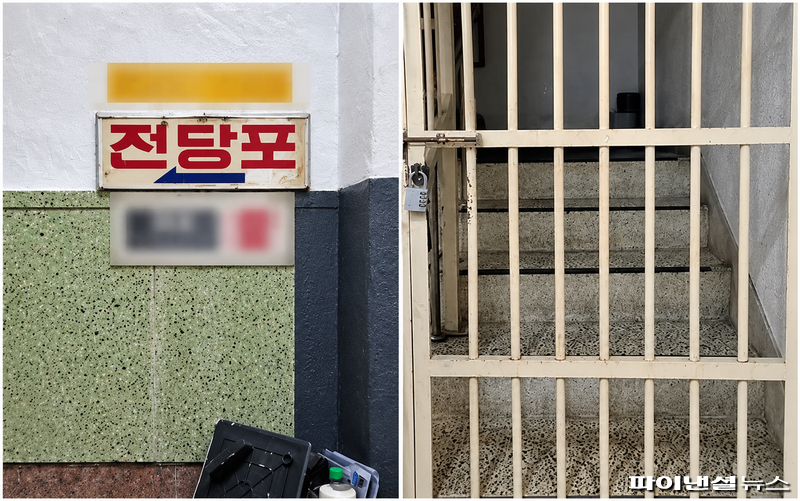
On the afternoon of the 23rd, in the Jongno 3(sam)-ga area of Seoul, pawnshop signs appeared sporadically among alleys lined with jewelry stores, restaurants and mobile phone shops. Many of the pawnshops were located on the second or third floors of old buildings rather than in storefronts along the main road. Customers had to follow small signs attached to building entrances and climb narrow stairways to find the businesses.
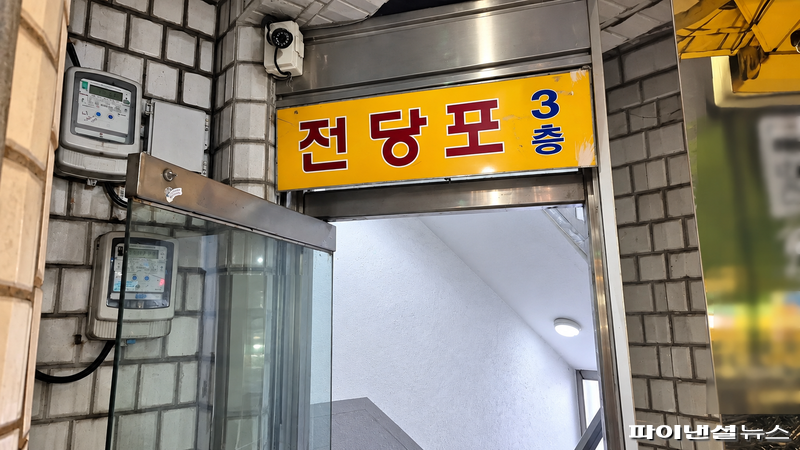
One building had a yellow sign reading "Pawnshop, 3rd Floor." A narrow staircase continued beyond the glass door, and signs for other shops hung side by side on the wall. Another pawnshop several blocks away had already closed in the early evening. A white steel door stood at the entrance to the stairs, secured with a padlock.
A pawnshop lends money after assessing the value of an item a customer leaves as collateral. If the customer repays the principal and interest within the agreed period, the item can be reclaimed. Unlike conventional loans, the value of the pledged item, rather than the borrower's credit or income, determines the loan amount.
Pawnshops unfamiliar to people in their 20s... secondhand trading and bank apps come first
Pawnshops were not a familiar way for younger people to raise emergency cash. People in their 20s interviewed around Jongno 3(sam)-ga said they had never used one. An office worker identified as A, 27, said, "If I urgently needed money, I would probably try listing something on a secondhand trading app first. If that weren't enough, I would check whether I could get a small loan through a banking app rather than think of a pawnshop first."
A university student identified as B, 24, also said, "I know pawnshops still exist, but I've never actually gone inside one. I thought they were places that only took gold or expensive watches, so I didn't know they handled other items as well."
Secondhand trading applications allow users to set their own prices and find buyers, while items can also be sold directly to secondhand-buying businesses. For those who need a small amount of money, financial company apps can be used to check loan eligibility and limits. More channels have emerged for converting belongings into cash or borrowing money without visiting a pawnshop.
The owners interviewed on site also felt the decline in customers. One owner who has operated a pawnshop for 10 years said, "If one or two items come in a month, that's relatively good," adding, "These days, there are hardly any customers."
Some take musical instruments, others gold... Items accepted vary by pawnshop
This business mainly handled musical instruments rather than gold rings or luxury watches. The owner said it accepted many such items because there was a musical-instrument market nearby. "We specialize in musical instruments," the owner said. "We're not experts in watches, so we don't know much about them." Customers looking to leave other items as collateral were directed to other pawnshops near Jongno 3(sam)-ga Station.
As the owner explained, the items accepted varied from one pawnshop to another. Some owners declined items whose market value they did not know well. For goods such as mobile phones and laptops, used prices can be checked relatively easily based on the model and release date. Other items, including watches, jewelry, cameras and musical instruments, require closer consideration of their condition and market demand.
Another pawnshop owner said the business rarely accepted electronic products because their prices continually fell, making them difficult to use as collateral. "Electronic products don't work because their prices keep dropping," he said. "Gold items are about all we take." He said the shop mainly handled pure gold and 14-karat and 18-karat gold products. Cameras were also not accepted. "We don't take things like cameras either," the owner said. "We have some gold items, but people don't have many of them."
The process of leaving an item and borrowing money is relatively simple. When a customer brings in an item, the owner checks its condition and market value before deciding how much to lend. The customer repays the principal and interest within the agreed period and retrieves the item. Unlike secondhand trading, in which an item is sold outright, the customer can reclaim it.
Pawnshops are also subject to the Loan Business Act. The current statutory maximum interest rate is 20% per year. One owner said, "If you borrow 1 million won for a month, the interest is about 16,600 won." That amounts to an annual interest rate of approximately 19.9%. The owner said he had no choice but to carefully assess collateral as well. "Since we lend money based only on the item, we also have to check whether it may be stolen," he said. "We carefully assess whether an item can be accepted as collateral."
Bargaining over differences of tens of thousands of won
For people visiting pawnshops, the important question is how much they can borrow against the item they leave. Even if they paid hundreds of thousands to several million won for a new product, the pawnshop determines the loan amount based on its current market value, condition and likely resale price.
For people who urgently need cash, a difference of tens of thousands of won matters. When they have a fixed amount to spend immediately on living expenses or utility bills, they may bargain to receive even a little more than the owner's initial offer. Because they leave the item intending to reclaim it after raising the money, rather than selling it outright, they are sensitive to its appraised value.
Owners said customers often ask, "Could you value it just a little higher?" When the appraised value falls short of the amount they need, some ask whether they can receive even slightly more or visit another pawnshop.
Although pawnshop users have declined from the past, people in need of emergency cash have not disappeared completely. Those who have difficulty obtaining a bank loan or cannot afford to wait for a buyer on a secondhand trading platform still visit when they need cash immediately for living expenses or utility bills. Some need money for a few days or weeks but do not want to sell their belongings outright.
However, needing money urgently does not mean everyone can use a pawnshop. They must have an item to leave as collateral. One owner said, "People come only if they have something to leave; it's not based on credit, is it?" He added, "Many people have already sold everything they had because they were desperate."
This is also why a difficult economy does not immediately bring more customers to pawnshops. Even those who need money cannot use one if they have nothing to leave as collateral.
"People used to pawn gold rings when they were desperate"... Memories of people in their 50s and 60s
Unlike younger people, those in their 50s and 60s remembered pawnshops as places they visited in the past when they needed emergency cash. C, a man in his 60s, said, "In the past, people would pawn gold rings or watches when they were desperate. They would use the money for a few days and come back to reclaim the items once they had money again."
D, a man in his 50s, also said, "There were times when people took belongings to pawnshops because it was difficult to borrow money immediately from a bank or they urgently needed a small amount. Since they weren't selling the items outright and could reclaim them later, people in urgent situations used pawnshops."
E, another man in his 60s, said, "In the past, it was easy to see pawnshop signs around markets and train stations. These days, there are so few that you would hardly know where to find one unless you deliberately looked for it."
Pawnshop owners had also experienced similar changes. One owner who had operated a pawnshop for more than 15 years said, "Many have closed and disappeared," adding, "Quite a few pawnshops in the area have shut down." He described the pawnshop business as an industry in decline. Still, the owner said, "There are far fewer than in the past, but three or four people still come each month," adding, "People who urgently need money still bring in their belongings."
Customers sometimes share their circumstances while leaving their belongings. The owner said, "When they leave something, they also tell us various stories about their situation." He added, "Many say they need money for a family member's surgery. We can't verify whether that's true, but we hear many heartbreaking stories."
We record earnest stories of life in print. Even if they are rough, we preserve the words gathered from the field as they are. From alleys and markets to someone's workplace, records of the ordinary days we have passed by make their way to our readers. To receive [Recorder of the Low Places] easily, please subscribe to the reporter's page.
[email protected] Han Seung-gon Reporter