Circling Earth Six Times to Deploy 26 Satellites... Musk's Starship Takes First Step Toward Commercialization
- Input
- 2026-09-24 07:30:00
- Updated
- 2026-09-24 07:30:00
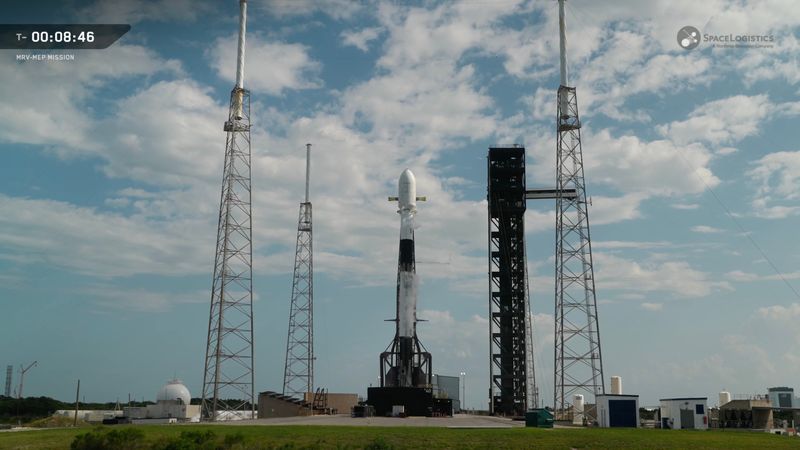
[Financial News] SpaceX, led by Elon Musk, is taking on commercialization through Starship's first orbital flight. The mission will deploy 26 Starlink satellites after circling Earth six times. If successful, it is expected to mark a turning point as technology accumulated through test flights is put to work building an actual satellite communications infrastructure.
According to securities industry sources on the 24th, SpaceX plans to conduct Starship's 14th flight as early as the 28th, subject to regulatory approval. The launch window is from 9:15 p.m. to 10:30 p.m. Korea time. Booster 21 and Ship 41 will lift off from the second launch pad at Starbase in Texas. This will be the third integrated flight of the Starship V3 vehicle.
The central objectives of this flight are orbital insertion and satellite deployment. While the previous, 13th flight was a suborbital mission that checked key functions, the 14th flight will verify the entire process of leaving satellites in orbit and returning the spacecraft after a controlled reentry.
The upper-stage spacecraft will reignite its engines about 25 minutes after launch to enter orbit. It is scheduled to orbit Earth six times at an altitude of 275 kilometers and deploy 26 Starlink V3 satellites. After remaining in orbit for approximately eight hours and 30 minutes, it will decelerate using Raptor engines, reenter the atmosphere, and splash down in the Pacific Ocean west of Chile. The total flight time is expected to be about nine hours and 50 minutes. The booster will perform stage separation and a boostback burn before making a soft landing in the Gulf of Mexico. Neither the booster nor the upper-stage spacecraft will attempt a tower catch on this flight.
Investors are watching for changes in SpaceX's earnings structure as commercial missions expand. Korea Investment & Securities maintained SpaceX as its top pick in the space industry, saying Starship's development progress is expected to expand Starlink's communications capacity and improve investment efficiency.
Most Starship development costs are expensed immediately as space research and development costs. R&D expenses in this area amounted to approximately $3 billion last year and $2.01 billion in the first half of this year. By contrast, launch costs attributable to satellite deployment are recognized as assets and then reflected over time as depreciation expenses in the connectivity segment.
Analysts say that as commercial launches increase and the share of costs recognized as assets rises, consolidated operating income and EBITDA could improve. However, an improvement in accounting earnings does not mean that cash spending will decline. Actual cost savings will require greater payload capacity and vehicle reusability.
The key challenges for reusability are booster reliability and the maintenance burden associated with the thermal protection system. During the 13th flight, signs of icing-related blockages appeared in three center engines near the end of the return burn. Only eight of the 13 engines planned for the landing burn reignited. For the 14th flight, SpaceX has improved the filtration system and reignition software and will attempt another soft landing.
The recovered Ship 40 from the 13th flight will be used to improve thermal protection performance. Direct inspection of the vehicle can reveal the condition of the interiors and attachment points of the tiles, which are difficult to assess using only video and sensor data. Some of the findings have already been incorporated into Ship 41.
Park Gwang-nam, an analyst at Korea Investment & Securities, said, "Investment efficiency could also improve if greater payload capacity and reusability are accompanied by lower launch costs per unit of communications capacity." He added, "As the booster makes increasingly stable returns and the burden of maintaining the thermal protection system is reduced, the economics of full reusability are expected to become more concrete."
[email protected] Choi Doo-sun Reporter