Xi Jinping Begins State Visit to the United States... With Trust in Short Supply, Focus Is on Stable Management [Lee Seok-woo's China 24]
- Input
- 2026-09-24 07:00:00
- Updated
- 2026-09-24 07:00:00
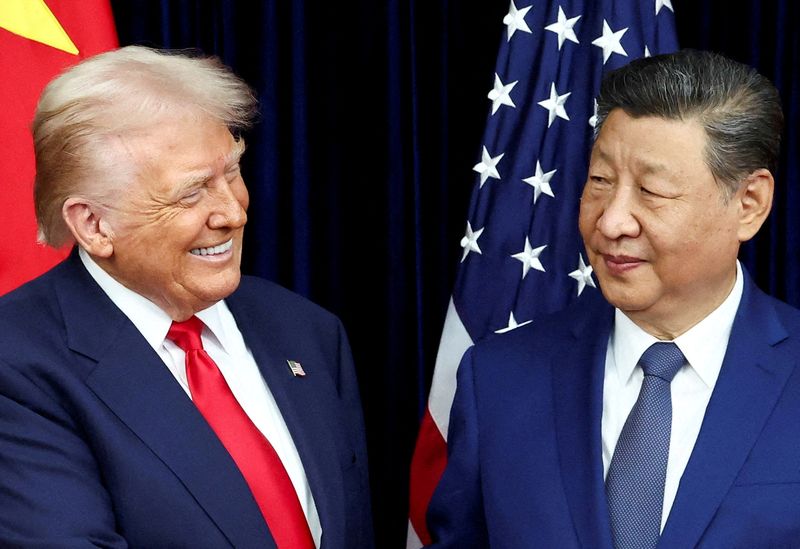
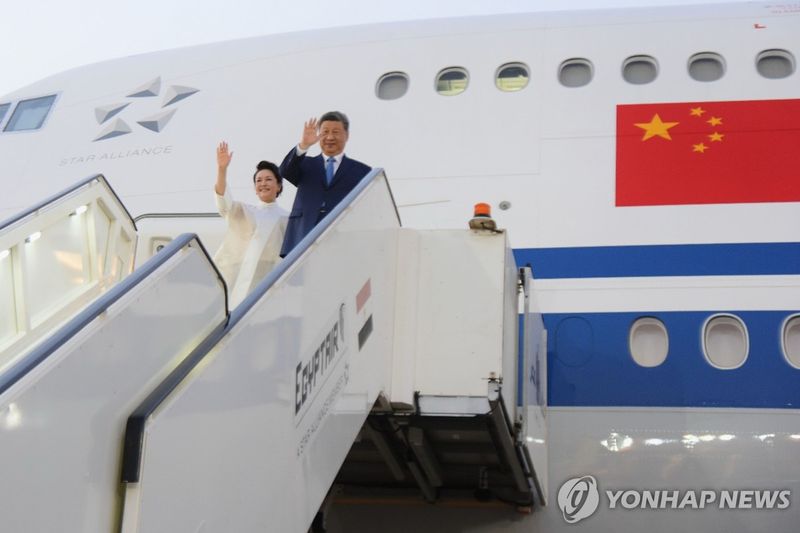
[Financial News] Chinese President Xi Jinping arrived at Joint Base Andrews near Washington, D.C., at 6 p.m. on the 23rd local time (7 a.m. on the 24th Korea time), beginning a three-day state visit to the United States.
U.S. President Donald Trump made an unusual personal appearance at the airport that day to greet Xi Jinping. He welcomed the Chinese leader with an elaborate Arrival Ceremony.
The U.S. side held a military honor guard ceremony and a celebratory flyover featuring one B-2 Spirit strategic bomber and four F-22 Raptor fighter jets.
Xinhua News Agency reported that Xi was accompanied on his U.S. visit by his wife, Peng Liyuan, as well as Cai Qi, a member of the Standing Committee of the Political Bureau of the Central Committee of the Communist Party of China and director of the General Office of the CPC Central Committee, and Wang Yi, a member of the Political Bureau and China's foreign minister.
Xi will continue his state visit through the 25th, beginning on the 23rd.
President Trump will also host a state dinner for Xi that evening. Chief executives of major U.S. information technology (IT) and financial companies are expected to attend.
The following day, the 24th, an official welcoming ceremony and summit meeting will be held at the White House. On the morning of the 25th, Xi is scheduled to attend a tea reception hosted by President Trump at the White House and visit the National Archives in Washington, D.C., together before departing for home.
Xi's state visit to the United States comes 11 years after his September 2015 summit with President Barack Obama. It is also his first visit to the United States in three years, following his meeting with President Joseph Robinette Biden Jr. in San Francisco in 2023.
The face-to-face meeting between President Trump and Xi is their third since the launch of Trump's second administration, following their meeting in Busan last October and talks in Beijing last May. During Trump's first term, the two leaders held a summit at Mar-a-Lago in Florida in 2017.
The visit also serves as a return visit following President Trump's state visit to China last May.
At the time, the two leaders held a summit in Beijing and agreed to establish a "China-U.S. constructive strategic stability relationship." This time, they will sit down together again after just over four months.
Putting the emphasis on 'stable management' to prevent competition from escalating into conflict and confrontation
Ahead of the summit, China has emphasized the need for 'stable management' so that competition between the two countries does not develop into conflict or confrontation. China's Foreign Ministry said the two countries would further enrich the substance of their "China-U.S. constructive strategic stability relationship," strengthen dialogue and cooperation, and appropriately manage their differences.
It also said the two leaders were expected to exchange views in depth on major issues concerning China-U.S. relations and world peace and development during the summit.
At the Washington summit, the most closely watched issue is whether the two countries can first agree to extend their "trade war truce."
The two countries are discussing whether to extend the "tariff truce," which expires on Nov. 10. They are also working to establish an intergovernmental dialogue mechanism to address AI-related risks.
The Taiwan issue is regarded as a key point of contention.
At the meeting, Xi is expected to urge the United States to stop selling weapons to Taiwan, citing the 1982 U.S.-China "August 17 Joint Communiqué."
China is also reportedly asking the United States to halt deliveries of weapons that Taiwan has already ordered.
Trade issues, including tariffs, along with artificial intelligence (AI), critical minerals such as rare earths, and Taiwan are expected to be major agenda items. However, it remains uncertain whether the two sides will find meaningful common ground.
Disagreement over the length of the truce... Likely compromise is a one-year extension of the 'trade truce'
President Trump and Xi reached a "one-year trade truce" in Busan on Oct. 30 last year, exchanging lower tariffs on China for expanded Chinese exports of critical minerals to the United States. The truce ends on Nov. 10.
The two countries have somewhat different positions. According to the Council on Foreign Relations (CFR), China wants to maintain the truce until the end of the Trump administration's term. The United States, by contrast, is reportedly considering an extension of three to six months.
Bank of America Global Research and others believe the two sides are more likely to compromise on a one-year extension, a middle ground between their positions, than allow the talks to collapse completely.
For President Trump, who faces midterm elections, securing visible results in U.S.-China trade, which is directly linked to the domestic economy, is urgent. Xi, too, is likely to choose a settlement over escalation. With Xi seeking a fourth term at next year's Communist Party congress, escalation would be burdensome and offer him no clear benefit.
The U.S. foreign-affairs magazine Foreign Policy assessed, "President Trump is gradually weakening on the domestic political front, while China, which has narrowly avoided a trade war, has no appetite for handling a larger confrontation."
ABC News also reported, "The two leaders may renew the tariff truce and announce additional trade agreements covering agricultural products, aircraft, rare earths and critical minerals, as well as China's commitments to purchase U.S. goods."
However, the two countries have significant differences over the truce framework that has continued for the past year. The possibility that the talks could break down and the trade war resume cannot be ruled out.
The United States is likely to use additional tariffs to pressure China over purchases of U.S. agricultural products and expanded rare-earth exports
The Guardian analyzed, "China wants the United States to make a long-term commitment to remove tariffs that threaten its export-driven economy, but the United States says it will not accept a deal that could weaken its leverage in future negotiations."
In particular, the Trump administration believes that China failed to properly fulfill promises made to the United States at the previous two summits, including commitments to export rare earths and purchase U.S. agricultural products.
A senior U.S. official said on the 18th, "China's supply of rare earths has fallen short of expectations." Jamieson Greer, the U.S. Trade Representative, also said on the 21st, "Since China is restricting rare-earth exports, an extension of the tariff suspension should proceed in stages while verifying whether China is complying with its commitments."
The United States also announced that China had agreed at the May summit to purchase at least $17 billion worth of U.S. agricultural products annually, excluding soybeans. However, according to the Department of Agriculture, China's purchases of U.S. agricultural products excluding soybeans totaled only $3.9 billion from January through July this year.
The United States is therefore highly likely to play the additional-tariff card and urge China to make concessions. The Trump administration concluded that it would recommend imposing a 7.5% tariff on China following an investigation into 'overcapacity' under Section 301 of the Trade Act, but appears to have decided to postpone the measure until the end of the year.
China, however, has repeatedly demonstrated the power of its controls on rare-earth exports to the United States. If an extension of the truce at its desired level proves difficult, Beijing could choose to go on the offensive. China's exports in 2026 are expected to generate a surplus of $1 trillion for the second consecutive year despite tensions between the United States and China.
Little common ground on AI safety
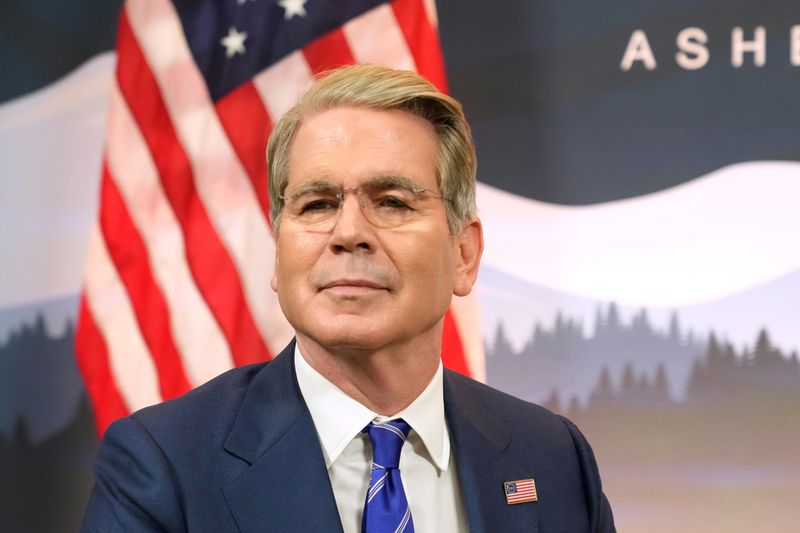
AI safety, which has recently emerged as a central agenda item at summits, is another area where the two countries have little common ground.
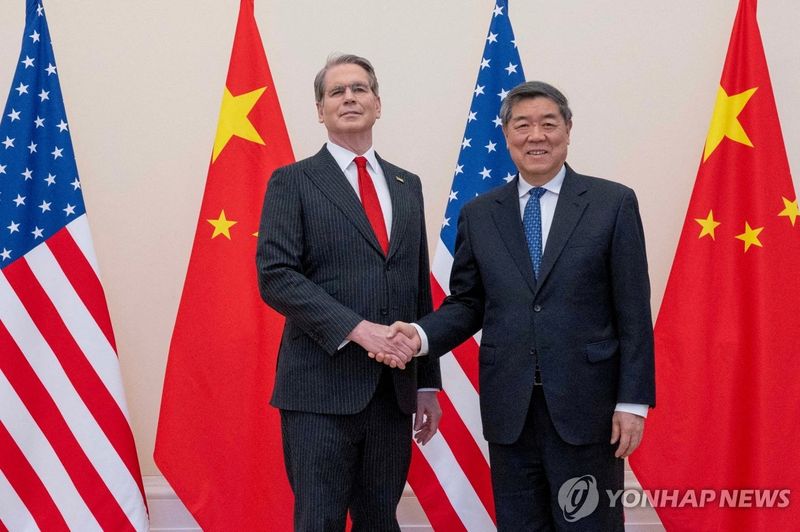
At the meeting between U.S. Treasury Secretary Scott Bessent and Chinese Vice Premier He Lifeng, the final high-level contact before the summit on the 20th, the two sides discussed establishing an 'AI hotline.' It was a U.S. proposal.
The concept is for the two sides to notify each other and respond jointly when an AI incident occurs. Politico and The Guardian have pointed out that it is closer to a simple communications channel between the two countries than an AI safety net. China is reportedly observing the proposal without accepting it for now.
The Washington Post (WP) reported on the 23rd, "Major industry figures believe that leading AI companies need to cooperate with the United States and China, and that an agreement on slowing the pace of development may be necessary." It added, "But Washington and Beijing have sharply divergent views."
While the need for AI regulation has gained strong support in the U.S. big-tech industry and among political leaders, China has objected, viewing it as an effort to restrain its domestic industry. President Trump also opposes calls to slow the pace, but because he makes that argument in terms of maintaining U.S. technological dominance, there is no common ground with China.
President Trump went further on the 21st, stating, "U.S. enforcement agencies, including the Department of Justice, will control AI risks if necessary." He also said, "We are ahead of every country, including China, right now, and we will maintain this momentum going forward," directly revealing his position of countering China's AI development.
Ryan Fedasiuk, a researcher at the American Enterprise Institute (AEI), told WP, "The central issue is the lack of mutual trust. Although attention has focused on AI risks in recent weeks, there are no signs that either country's position has changed." He predicted, "There will be no agreement that could limit either side's development of AI capabilities."
Xi Jinping to focus on Taiwan rather than the war in Iran
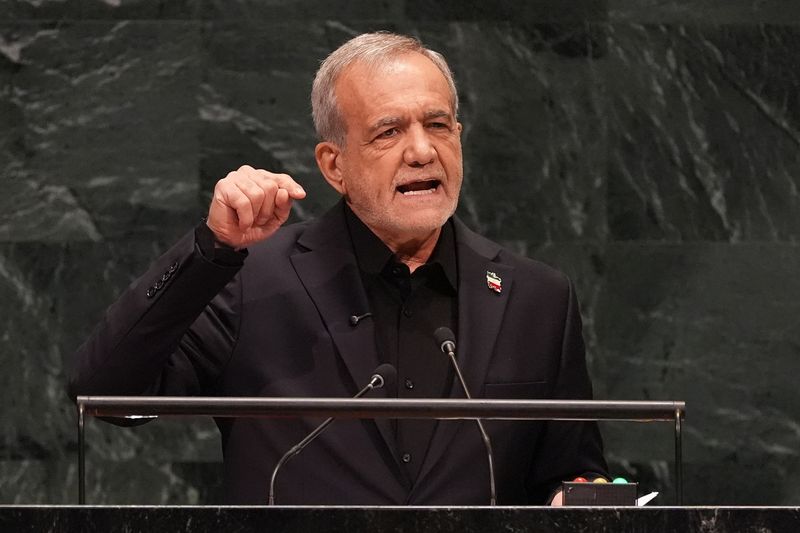
Meaningful progress toward ending the U.S. war against Iran, which has entered its seventh month, also appears unlikely.
For now, neither President Trump nor Xi appears to regard the war in Iran as a major lever. Although U.S. officials concluded that Chinese satellite imagery was used in an Iranian strike on a U.S. base in Jordan that killed three American service members, President Trump has refrained from escalating, saying, "They are simply doing what we are doing," and has adopted a restrained posture.
An anonymous senior White House official previewed the message, saying, "We will emphasize that continuing transactions with the Iranian regime is unacceptable." Politico, a U.S. online political news outlet, assessed that the move would have limited effectiveness, saying, "China has little reason to make concessions. China has strengthened its position as an emerging energy power through the war in Iran."
Xi is also highly likely to focus on Taiwan, where China has a direct stake, rather than on ending the war in Iran. Foreign Policy noted, "There is no reason for Xi to raise this issue—the war in Iran." It added, "If he intended to play the role of mediator, he would have addressed the UN General Assembly, but as he has done consistently since 2015, he will not attend."
Xi is expected to continue pressing President Trump to change the official U.S. position on Taiwan independence from 'does not support' to 'opposes.'
The CFR assessed, "Although the Trump administration appears unlikely to change official policy, the president's unofficial and impromptu remarks can have an impact comparable to a change in the official position." It therefore saw a possibility that U.S. Taiwan policy could become unsettled.
President Trump caused repercussions immediately after the U.S.-China summit last May by flatly denying the U.S. principle known as the 'Six Assurances,' under which Washington does not discuss arms sales to China and Taiwan. He is using as a bargaining chip in negotiations with China a $14 billion arms-sales agreement with Taiwan that Congress had approved in advance in January, without signing it.
Chinese experts emphasize stable management rather than a 'grand bargain'
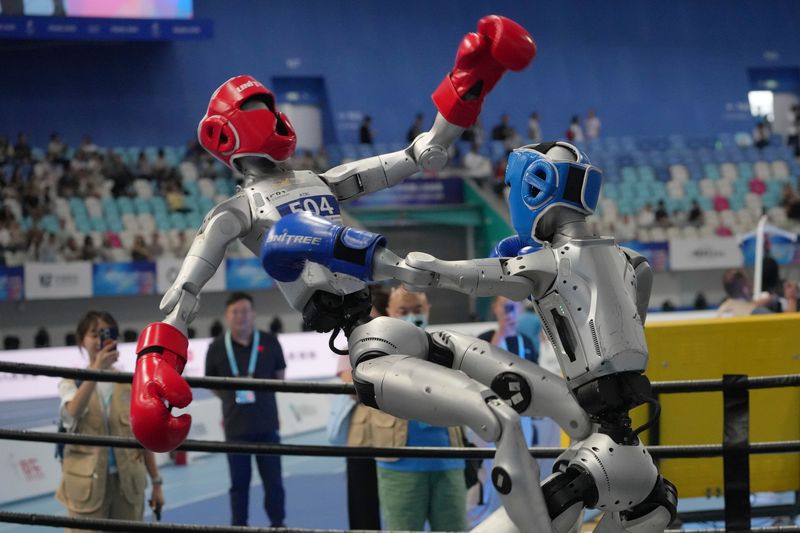
Chinese experts also said that bilateral relations were stabilizing in connection with Xi's state visit to the United States, while warning that the United States should not expect to obtain one-sided benefits from China. This position reinforces the view that the two countries will focus on 'relationship management' at the summit and reduces the likelihood of a 'grand bargain.'
Wu Xinbo, dean of Fudan University's Institute of International Studies and director of its Center for American Studies, said in an interview with The Paper, a Chinese media outlet, on the 23rd, "Maintaining stability through high-level exchanges and communication channels can prevent major volatility from emerging in bilateral relations."
He said that although the two countries may differ in their understanding of the concept of 'strategic stability,' its essence was not whether their understanding was completely identical. He assessed, "In relations between nations, the power game and balance of interests are ultimately most important. Bilateral relations were able to stabilize overall as the United States, amid its competition with China, gained a new understanding of China's strategic capabilities."
Zhu Feng, dean of Nanjing University's School of International Relations, said in an interview with China News Service, "Frequent communication between the leaders of China and the United States is viewed as a positive sign that bilateral relations are stabilizing on a foundation of effectively managing disputes."
Gao Fei, president of China Foreign Affairs University, said, "The two leaders meeting and communicating face-to-face again within a short period is positive for managing differences, promoting cooperation, and building a strategically stable relationship."
China emphasizes a tough stance on Taiwan, the principle of 'equality,' and a balance of interests
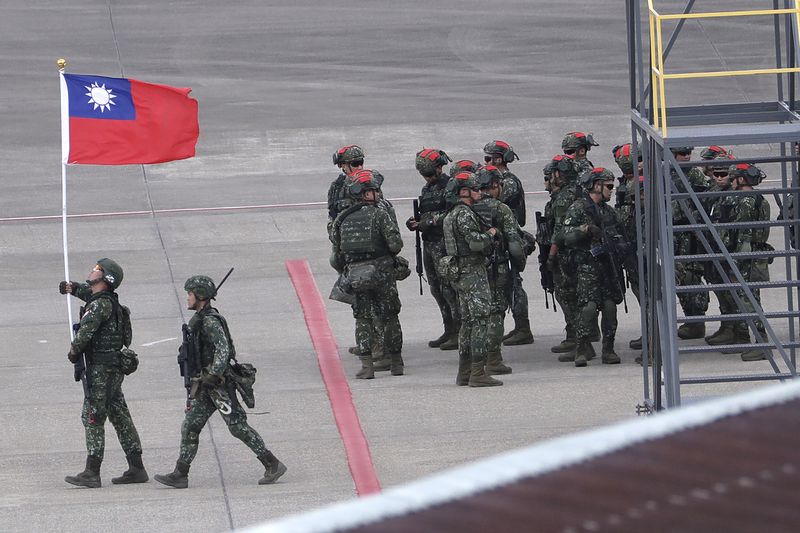
The Chinese side emphasized that 'equality' should be the basic principle in dealing with economic and trade issues.
Wu said, "Economic and trade issues between China and the United States are forming a new model of 'an eye for an eye and a tooth for a tooth.' If the United States takes measures targeting China, China will certainly respond, and the intensity of its response will be no less than that of the U.S. action."
He added, "Even when a deal is reached through negotiations and the United States gains benefits, it must provide corresponding benefits to China." He continued, "The United States should not expect to obtain benefits from China unilaterally."
Compared with the first Trump administration, he said China had secured more policy tools in areas such as rare earths and had made progress despite U.S. pressure on advanced technology. He added, "These realities have made the United States adjust its China policy. If bilateral relations become unstable, U.S. supply chains themselves, particularly those in critical areas such as rare earths, will also be affected."
The experts reaffirmed China's hard-line stance on the Taiwan issue.
Diao Daming, deputy director of the Institute of National Development and Strategy at Renmin University of China, said, "The Taiwan issue is an insurmountable red line in China-U.S. relations. For the United States to respect it is consistent with the positive trend toward developing constructive and strategically stable relations between China and the United States."
Wu emphasized, "As China's overall national strength and military power have grown, its will and determination to safeguard its own interests have become firmer." He added, "When dealing with sensitive issues such as Taiwan, the United States must act more cautiously to prevent misjudgments and confrontation."
[email protected] Lee Seok-woo, international affairs correspondent Reporter