U.S. Diesel Export Ban Possible... "Buy Korean Refining Stocks, Sell U.S. Refining Stocks"—KB Securities
- Input
- 2026-09-24 05:59:00
- Updated
- 2026-09-24 05:59:00
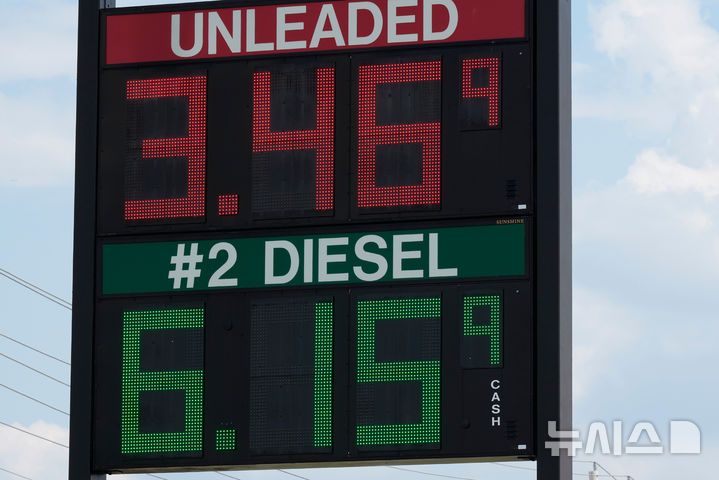
[Financial News] Expectations are growing that stock price trends for Korean and U.S. refiners could diverge as a surge in U.S. diesel prices raises the possibility of restrictions on diesel exports. Analysts say that if the U.S. actually restricts exports, domestic refining margins could come under downward pressure, while Asian refining margins could face stronger upward pressure. KB Securities maintained its positive outlook on the refining sector and proposed buying Korean refining stocks and selling U.S. refining stocks as a short-term investment strategy.
On the 24th, Jeon Woo-je, a researcher at KB Securities, identified the possibility of U.S. restrictions on diesel exports as a new variable for the refining sector in a report on the industry. U.S. President Donald Trump was previously reported to have expressed support on the 22nd for a plan to ban diesel exports.
The surge in U.S. diesel prices is behind the policy discussions. According to KB Securities, U.S. diesel retail prices have risen 78% since the start of the year, exceeding the 54% increase in gasoline prices. The operating rates of U.S. refiners have also climbed to 97%, up from the historical range of 90% to 92%.
KB Securities believes that global refined-product supplies could become even tighter if the U.S. restricts diesel exports while supply disruptions in Russia and the Middle East continue. Redirecting export volumes to the domestic market could weigh on refining margins in the U.S. However, Asian refining margins could rise in the global market as U.S. supplies decline.
As a result, KB Securities expects stock price trends for Korean and U.S. refiners to diverge. U.S. refiners could see their refining margins come under pressure as export restrictions increase domestic supplies, while Korean refiners could benefit from higher Asian refining margins. On this basis, KB Securities proposed buying Korean refining stocks and selling U.S. refining stocks in the short term.
However, this investment strategy is premised on U.S. restrictions on diesel exports actually becoming policy. Since the specific implementation method has not yet been finalized, the extent of the divergence between U.S. and Asian refining margins could vary depending on how the policy discussions progress.
[email protected] Kim Mi-hee Reporter