Office Worker in His 50s: "I Own Just One Home, but My Comprehensive Real Estate Tax Is 2.5 Times Higher... Should I Move In?" [Tax and Financial Planning Q&A]
- Input
- 2026-09-26 08:00:00
- Updated
- 2026-09-26 08:00:00
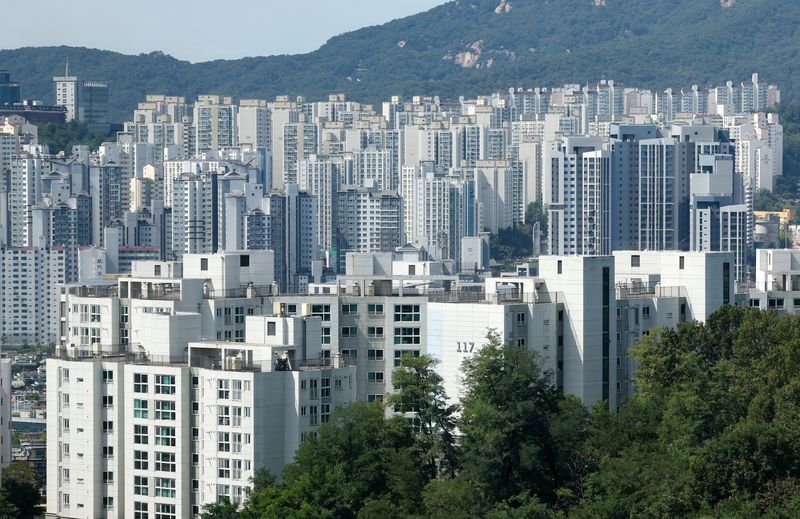
Q. A, an office worker in his 50s, owns an apartment in Seoul's Seocho District jointly with his spouse, with each holding a 50% share. However, he does not live in the property because of personal circumstances.
His concerns have grown since the recently announced real estate tax reform plan included measures to increase the comprehensive real estate holding tax and capital gains tax burdens on homes that are not owner-occupied. He sought tax advice to find out how much his tax burden would rise if the plan takes effect and whether he would need to move into the property to reduce it.
A. According to KB Securities, the core of the 2026 real estate tax reform plan is to reorganize the existing ownership-centered tax system around actual residence. The plan would relatively ease the tax burden on one-home owners who actually live in their homes, while tightening taxation on high-priced and non-owner-occupied homes.
The basic deduction for joint owners of a single non-owner-occupied home is currently KRW 900 million per person. The original reform plan announced on August 3 proposed reducing it to KRW 400 million. Although the revised plan raised the amount to KRW 600 million, the deduction would still be smaller than under the current system, so the tax burden is expected to increase.
The fair market value ratio is also scheduled to rise from the current 60% to 70%, while tax rates on ultra-high-priced homes are set to increase. In particular, the ratio for owners of multiple homes will rise to 80% after 2028. Combined with an increase in officially assessed prices next year, the actual tax burden could become even heavier. Owners of a single non-owner-occupied home, high-priced homes, and multiple homes should review changes in the deduction amounts, fair market value ratio, and applicable tax rates together.
Assuming the officially assessed value of A's apartment rises from KRW 3.491 billion in 2026 to KRW 3.942 billion in 2027, the couple's combined comprehensive real estate holding tax would increase from approximately KRW 5.8 million under the current system to approximately KRW 14.32 million under the revised plan. That is about 2.5 times the current amount. The increase would result from the basic deduction falling from KRW 900 million to KRW 600 million per person, the fair market value ratio rising from 60% to 70%, and the applicable tax rate increasing from 1.0% to 1.3%. This calculation assumes that the couple did not apply for the special treatment for joint owners of a single home.
If A and his spouse actually live in the property, each would receive a basic deduction of KRW 900 million. However, they would still be affected by the higher fair market value ratio and tax rate, leaving their combined comprehensive real estate holding tax at approximately KRW 8.98 million, which is higher than under the current system.
Capital gains tax will also be restructured around actual residence. Under the current system, one-household, one-home owners can receive a special long-term holding deduction of up to 80%, depending on their holding and residence periods. If the reform plan takes effect, the share of the deduction based on the holding period will be reduced starting in 2028, and the holding-period deduction will be abolished from 2029. After that, deductions will be granted only for the residence period, at an annual rate of 8%.
As a result, one-home owners who actually live in their homes will be affected relatively little, while one-home owners with short residence periods or no actual residence could see their deduction benefits reduced. The special long-term holding deduction for owners of multiple homes is also scheduled to shift to a system based on the residence period.
Because A does not actually live in the apartment, he can currently receive a deduction of up to 30% based on the holding period. However, if the reform plan is applied, only a deduction based on the residence period would be available. As a result, the special long-term holding deduction rate could be 0% if he sells the property without ever living there.
Cho Seung-hee, a tax specialist at KB Securities, advised, "With this tax reform, how a home was actually lived in could become a more important tax-saving criterion than how long it was owned. One-home owners should consider converting a non-owner-occupied home into their actual residence, taking future comprehensive real estate holding tax and capital gains tax into account together."
However, it is important to note that even owners who live in an ultra-high-priced home for an extended period could face a higher tax burden.
The tax credit limit for one-household, one-home owners' comprehensive real estate holding tax is scheduled to be set at KRW 8 million in 2027 and KRW 6 million from 2028 onward. A cap on the special long-term holding deduction for capital gains tax will also be introduced at KRW 2 billion in 2028 and KRW 1 billion from 2029 onward. Therefore, taxpayers should first calculate their estimated comprehensive real estate holding tax and capital gains tax, then decide whether to make a gift and when to sell. They should also secure in advance the liquidity needed to pay the taxes. The reform plan is still a government proposal that has not been finalized, and its details may change during the legislative process.
The [Tax and Financial Planning Q&A] series, based on consultations with tax experts at KB Securities, runs in the fourth week of every month.
[email protected] Lee Jeong-hwa Reporter