Min Hyung-bae, Mayor of Jeonnam-Gwangju Integrated Special City: "Public Institutions' Functions and Roles Must Be Redefined with Citizens at the Center"
- Input
- 2026-09-23 17:48:30
- Updated
- 2026-09-23 17:48:30
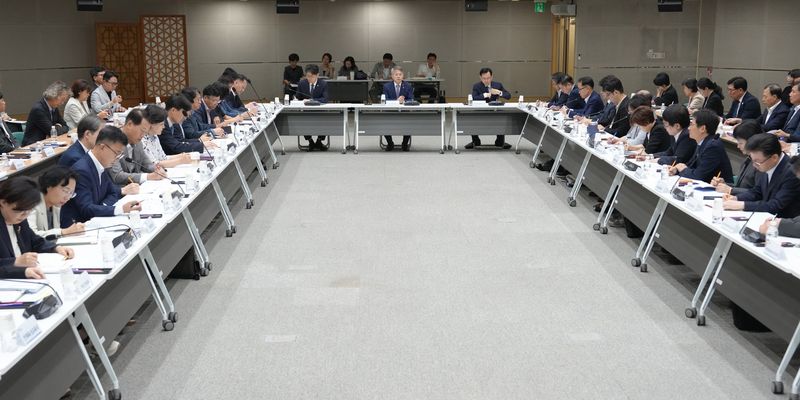
[Financial News Jeonnam-Gwangju = Reporter Hwang Tae-jong] Min Hyung-bae, mayor of Jeonnam-Gwangju Integrated Special City (mayor of Gwangju Metropolitan City), said on the 23rd, "With citizens at the center, we must redefine the functions and roles of public institutions from the perspective of the entire integrated special city."
Mayor Min Hyung-bae made the remarks at the second meeting of public institution heads, held that day at the Wangin Room of the Muan Government Complex. The meeting shared progress on public institution integration and discussed plans to establish a citizen-sovereignty-based public service delivery system in which citizens participate in policy and project planning and implementation.
According to Gwangju Metropolitan City, the meeting focused in particular on ways to improve public service efficiency by adjusting the functions and roles of public institutions that perform similar or overlapping tasks.
The integration methods have currently been finalized for 12 institutions—six in Jeonnam and six in Gwangju. These institutions plan to prepare ordinance bills containing their integration plans and submit them to the city council in October. After the ordinances are passed, they are scheduled to launch as integrated institutions next January following subsequent procedures, including drafting their articles of association and all regulations and forming their executive boards.
The ensuing discussion focused on "Plans to Pursue and Expand Projects Based on Citizen Sovereignty." Participants discussed ways to identify and expand public service models in which citizens do not remain merely beneficiaries of policies and projects but participate directly in their planning and implementation.
The participants also shared the Sandeulbom Project, a citizen-sovereignty-based basic care model developed by the Jeonnam Social Service Institute, as a case study. Based on this model, they exchanged views on ways to develop the Nambit Basic Care Model, the integrated care model for Jeonnam-Gwangju Integrated Special City.
The Sandeulbom Project is a multifaceted social service model implemented for residents of Gokseong County. Its core principle is for residents, villages and public institutions to build relationships together and expand care. Through Public Masil, which checks on residents' well-being and connects them with needed public services, the project provides purchase assistance, cleaning and disinfection, minor home repairs and leisure programs while building a local care network.
Mayor Min ordered officials to systematize the citizen-sovereignty-based operating principles and methods identified through the Sandeulbom Project and develop them into a common model applicable throughout Jeonnam-Gwangju Integrated Special City, which has many islands and remote areas.
The discussion also covered ways to connect the welfare, healthcare, cultural and employment resources held by each public institution to the Jeonnam Social Service Institute's community-based care model, thereby linking services dispersed among individual institutions around residents.
Mayor Min urged officials, "Please establish an AI-based integrated care delivery system that clearly identifies public service recipients and demand and responds quickly and consistently to needs in the care field. Data generated during the provision of public services should also be systematically managed and used."
Meanwhile, Gwangju Metropolitan City plans to hold meetings of public institution heads regularly after administrative integration to provide citizens with better public services and strengthen communication and cooperation among public institutions.
[email protected] Hwang Tae-jong Reporter