[Editorial] In a Harsh World, We Enthusiastically Embrace 'Bukang'
- Input
- 2026-09-23 16:59:57
- Updated
- 2026-09-23 16:59:57
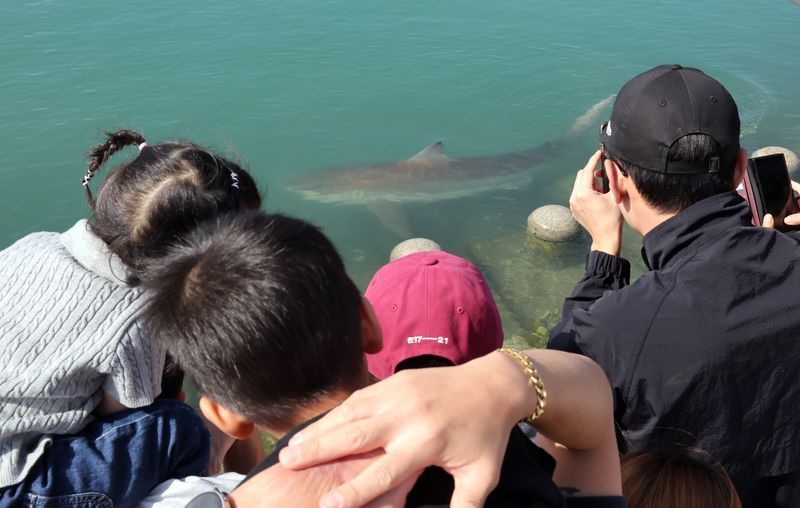
The Busan Port North Port Redevelopment Project, which is investing approximately 3 trillion won to build an international port, an opera house, hotels and other facilities, began in 2008 and is nearing completion. However, after a 3-to-4-meter-long shark entered the channel and was spotted on the 18th, citizens began flocking there. The shark brought to mind Jaws, a film about a shark attacking people, but citizens gave it the name 'Bukang,' and crowds seeking to see it turned North Port's channel into an unexpected hot spot.
Although it has fearsome teeth, people seem instead to find the shark cute. They showed the same reaction to a zebra and a wolf that escaped from a zoo several years ago. Where do such feelings toward animals that are not necessarily lovable come from? Perhaps we seek from animals the emotions we cannot experience in our relationships with other people.
It is a world of material abundance but dwindling human affection. This is likely the result of fierce competition and intensifying conflicts. When competition becomes intense, people naturally begin to see others as enemies rather than friends. Countless young people are competing for university admission and jobs. In the process, we are becoming increasingly individualistic, and affection between people is gradually drying up.
Ideological and gender conflicts have become so serious that fellow citizens treat one another as enemies. Generational conflict is even worse. On buses and subways, it has become difficult to find young people readily giving up their seats to older passengers. Recently, an older person even got into a physical altercation with a young woman who refused to give up her seat. There is no point in assigning blame. The world has changed this way, and everyone bears some responsibility.
In such a harsh social climate, it may be natural for people exhausted by other humans to turn their attention to animals. Animals are always consistent and simply act according to instinct. The companion-animal population continues to grow even as people choose not to have children. People love dogs and cats even more than their own children. That is why they even become enthusiastic about animals that have left their homes and become lost.
This is not something to view as a negative phenomenon. Interest in living things is a sign that our humanity has not completely disappeared. We still have warm hearts, and there remains a possibility that we can once again love and respect one another.
It would be good if we gave even half as much attention to the people around us as we have shown to the frightening shark. We need an attitude that allows us to set aside hatred, attacks and blame whenever possible, and to offer love, consideration and praise at any time. There are neighbors around us waiting for a kind word. The shark will soon return to the sea. As Chuseok approaches, let us show even a moment of attention and affection to those we have forgotten.