Man in His 40s Who Killed Girlfriend and Kept Her Body in a Refrigerator Receives Final 30-Year Sentence
- Input
- 2026-09-23 16:40:16
- Updated
- 2026-09-23 16:40:16
[Financial News] A man in his 40s who killed his girlfriend, hid her body in a kimchi refrigerator for nearly a year, and took out an 88 million won loan in her name has received a final 30-year prison sentence.
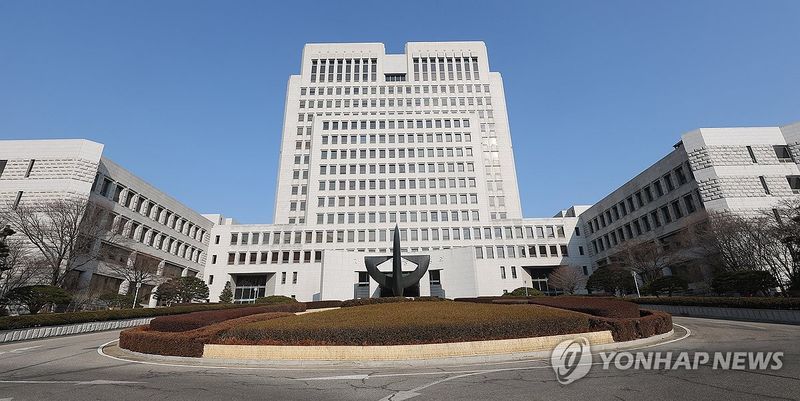
According to legal sources on the 23rd, the First Petty Bench of the Supreme Court of Korea, with Justice Shin Sook-hee serving as the presiding justice, upheld the lower court's 30-year prison sentence for A, 41, who was indicted on charges of murder, abandonment of a corpse, and fraud by use of a computer.
A was accused of strangling B to death on October 21, 2024, at a villa in Jochon-dong, Gunsan, North Jeolla Province, and abandoning her body in a kimchi refrigerator. He was also charged with taking out and misappropriating a loan amounting to 88 million won using B's mobile phone.
After the crime, A also used B's mobile phone to exchange messages with her family, pretending that she was still alive.
As a result, the crime remained undiscovered for nearly a year, until an investigation began after a suspected-missing-person report was filed last September. The lead came when B's younger sister became suspicious after communicating with her only through messaging services for a year.
The first trial court sentenced him to 30 years in prison, saying, "He must be isolated from society for an extended period through a severe sentence." The court also pointed out, "By abandoning the deceased victim's body in a cold kimchi refrigerator for 11 months, he desecrated it and damaged even the victim's final dignity."
The appeals court also upheld the 30-year sentence, stating, "At the appellate stage, the defendant made a criminal deposit of 15 million won for the victim's family, but the family submitted a document consenting to its withdrawal, saying they would not accept it. Considering the method of the crime and the extent of the harm, there appear to be no circumstances warranting a favorable change in the sentence solely because of the deposit."
A appealed, arguing that the sentence was unfair. However, the Supreme Court also found that the punishment was not excessive.
The court ruled, "Considering the various circumstances relevant to sentencing, including the defendant's age, character, environment, relationship with the victims, motive, means and consequences of the crime, and circumstances after the crime, the lower court's decision to uphold the first-instance judgment sentencing the defendant to 30 years in prison cannot be deemed seriously unfair, even after taking into account the mitigating circumstances asserted in the grounds for appeal."
[email protected] Kim Dong-gyu Reporter