Tanker Charter Rates Surpass $1.2 Million for the First Time Amid Fallout from Middle East War
- Input
- 2026-09-23 15:40:01
- Updated
- 2026-09-23 15:40:01
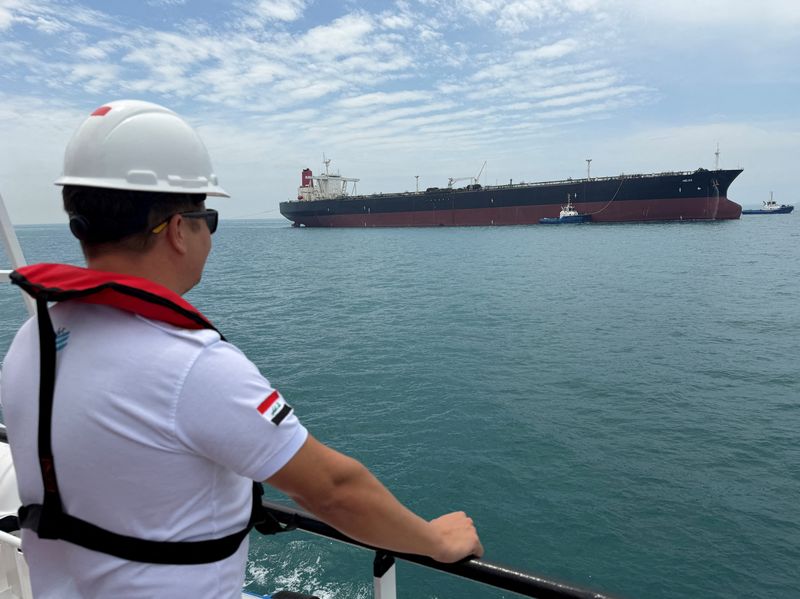
[Financial News] The freight rate for very large crude carriers (VLCCs), a mainstay of global oil transportation, surpassed $1.2 million per day for the first time in history amid the fallout from military clashes in the Middle East. Despite a recent slowdown in the rise of global oil prices, maritime transportation costs are soaring, emerging as a new ticking time bomb for the global energy market.
The Financial Times (FT) reported on the 22nd (local time), citing shipbroker Braemar, that charter rates for VLCCs capable of carrying about 2 million barrels of crude on the Middle East-China route had more than doubled since late August. Rates on the Brazil-China route rose by more than one-third over the past week. The surge is unprecedented, considering that rates tracked by the Baltic Exchange stood at about $120,000 per day before the war and averaged between $20,000 and $50,000 last year.
Amrita Sen, chief executive of Energy Aspects, warned, "Maritime freight rates are tracing a parabolic curve—an explosive rise beyond a linear trend. With the price of crude delivered to Asia approaching $150 per barrel, freight rates could become a decisive factor in bringing the market down in the short term."
The main causes of the freight-rate surge are route diversions and severe congestion caused by the war. Indian refiners are turning away from the Middle East to Brazil, Guyana, West Africa and even the North Sea, extending one-way shipping times to 30 to 40 days.
Crude passing through the Strait of Hormuz is being transported through a makeshift process: Around 60 shuttle tankers within Middle Eastern waters carry it to the Gulf of Oman, where it is transferred to other vessels through ship-to-ship (STS) operations. Clarksons Research estimates that about 15% of the world's tanker fleet is currently stranded off the coast of Oman.
Morgan Stanley analyst Martijn Rats explained, "Large tankers are spending as many as 10 days drifting at sea, unable to do anything while waiting to receive cargo. The enormous amount of time required for ship-to-ship transfers is worsening the vessel shortage." War-risk insurance premiums for operating in Middle Eastern waters have also climbed to as much as 10% of a vessel's hull value, adding to the burden.
The surge in transportation costs is sharply eroding refiners' margins and leading to actual production cuts. Maritime transportation costs now account for as much as 20% to 40% of crude costs, far above normal levels.
According to Argus Media, China's major independent refiner Hengli Petrochemical has reduced the operating rate of its 400,000-barrel-per-day Dalian refinery from full capacity to 80%. Rongsheng Petrochemical and Shenghong are scheduled to begin production cuts at the end of this month.
Brent crude futures peaked above $125 per barrel in April before recently falling to around $100. However, oil prices are under additional downward pressure as refiners abandon purchases because they cannot find vessels to transport the crude. Meanwhile, shortages of refined products have pushed diesel prices above $180 per barrel in Singapore and $200 in the United States and Europe, heightening concerns over prices for end consumers.
Tom Lee, an oil-market analyst at Argus Media, said, "Maritime transportation costs are no longer a minor ancillary expense in the oil market but a key variable determining prices. Logistics disruptions at sea are directly hitting global energy prices."
[email protected] Yoon Jae-jun Reporter