Jeju Education Grants Estimated to Fall by 31 Trillion Won... Jeju Education Office and Provincial Council to Respond Jointly
- Input
- 2026-09-23 15:28:00
- Updated
- 2026-09-23 15:28:00
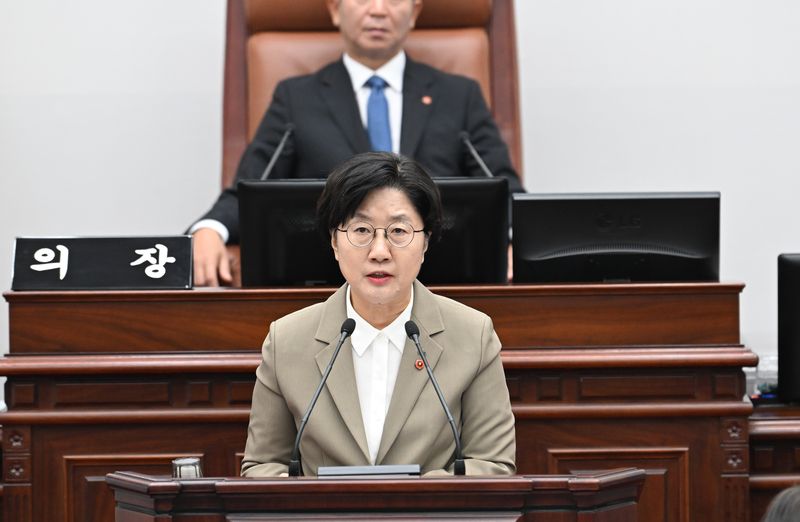
【Financial News Jeju=Jeong Yong-bok】The Jeju Special Self-Governing Provincial Office of Education estimates that nationwide local education finance grants could fall by 31 trillion won, from 110 trillion won to 79 trillion won, if the government's reform plan takes effect. The Jeju Special Self-Governing Provincial Council adopted a proposal calling for stable operation and rational reform, while the Jeju education office is asking the government to establish a formal consultative body with the Korean Council of Superintendents of Education.
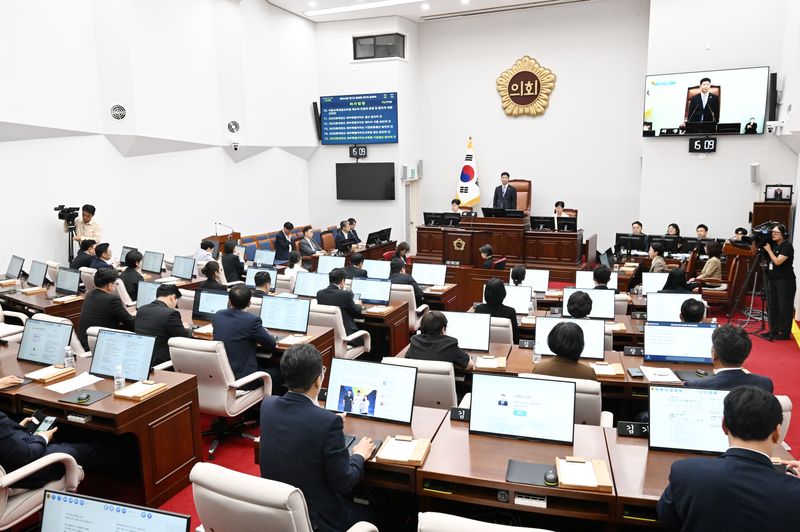
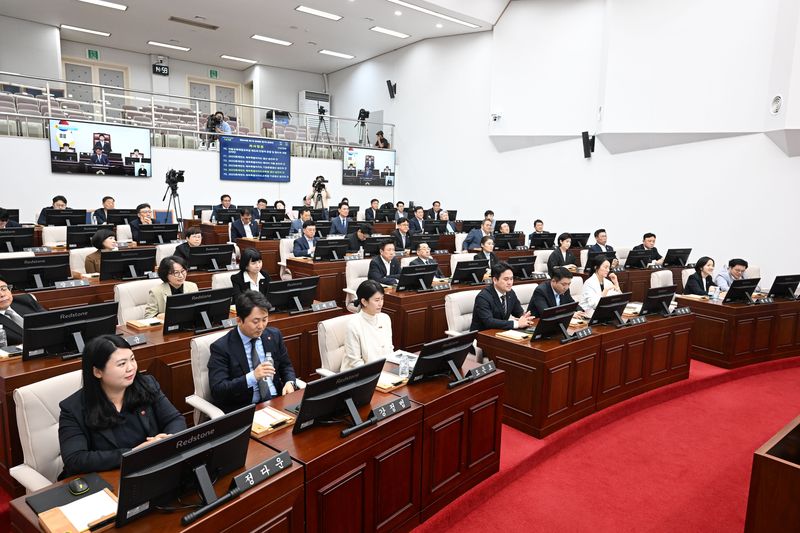
According to the Jeju Special Self-Governing Provincial Office of Education and the Jeju Special Self-Governing Provincial Council on the 23rd, the provincial council adopted the proposal titled "Proposal for the Stable Operation and Rational Reform of the Local Education Finance Grant System," put forward by its Education Committee, at the seventh plenary session of the first regular session of its 454th assembly the previous day. The proposal will be delivered to the government, the National Assembly of the Republic of Korea and other relevant institutions.
The core of the government's reform plan is to change the way local education finance grants are calculated by linking them to domestic tax revenue. These grants are the primary source of funding for primary and secondary education allocated by the central government to education offices in cities and provinces across the country. They are used for major education office programs, including personnel costs for teachers and staff, school operations, educational facilities and education welfare.
Under the current system, 20.79% of domestic tax revenue is linked to the grant funding pool. As tax revenue rises, the grant pool increases; when tax revenue falls, the grants are affected as well.
On August 21, the government announced a reform plan to abolish the fixed-rate system linking grants to 20.79% of domestic tax revenue. On September 3, it submitted a bill to partially amend the Local Education Finance Grant Act to the National Assembly of the Republic of Korea along with the government's 2027 budget proposal. On the 22nd, it also gave public notice of proposed amendments to the relevant enforcement decree and enforcement rules.
Under the new system, the amount of grants for the following year will be calculated based on the previous year's grants, with the average current-price growth rate over the past three years taken into account, along with 35% of the average change in the school-age population over the same period. In simple terms, the system will shift from linking education finance to "a fixed share of the domestic taxes collected by the government" to using "the previous year's grants" as a starting point while reflecting both economic growth and changes in the number of students.
The government says it will introduce a safeguard under which the state covers the difference if the total grants decrease from the previous year. The aim is to reflect the decline in the school-age population in the formula while preventing primary and secondary education funding from falling below the previous year's level.
The government plans to deposit the funds secured through the reform into the education and human resources account of the newly established Future Response Fund, thereby expanding the scope of education investment to include early childhood education, universities and lifelong education.
The Jeju education office believes that, apart from the mechanism preventing a year-on-year decrease, the overall scale of local education finance could shrink compared with what it would have been if the current system had remained in place.
The Jeju Special Self-Governing Provincial Office of Education estimates that nationwide grants would fall by approximately 31 trillion won, from 110 trillion won to 79 trillion won, if the government's reform plan were applied. The figures of 110 trillion won and 79 trillion won are not projections released by the government; they were presented by the Jeju education office after analyzing the impact of the reform plan.
The government's "preservation of the previous year's level" and the education office's "31 trillion won decrease estimate" use different points of comparison. The government plans to provide compensation based on whether the amount calculated under the new formula falls below the immediately preceding year's amount, while the education office is comparing the funds that could be secured if the current system linking grants to domestic tax revenue were maintained with the funds available under the new system.
The impact of changes in grants could be greater in Jeju. Based on the Jeju education office's second supplementary budget for this year, revenue stands at 1.6925 trillion won. Transfers from the central government account for 1.2775 trillion won, or 75.5%.
Transfers from local governments amount to 275.7 billion won, or 16.3%. Combined transfers from the central government and local governments total 1.5532 trillion won, accounting for 91.8% of total revenue. The office's own-source revenue is only 11.7 billion won, or 0.7%.
Investment in educational facilities is also cited as a factor adding to financial pressure. During an education administration session on the 9th, Jeju provincial councilor Oh Eun-cho said that approximately 330 billion won in additional funding would be needed after 2027 for ongoing educational facility projects in Jeju. Projects worth approximately 128 billion won had also completed preliminary planning or design work but could not proceed because of budgetary and other issues, Oh said.
At the time, Superintendent Ko Eui-suk of Jeju Special Self-Governing Province expressed concern about the reform of the grants, saying that the education office would continue to face fixed financial demands, including personnel costs for teachers and staff, special education, improvements to the educational environment and meal expenses, even if the school-age population declines.
The wording of the proposal was also revised during discussions at the provincial council. The Education Committee adopted the "Proposal Opposing the Reform of Local Education Finance Grants" on the 14th, but revised it through a formal reconsideration procedure on the 21st. Its final title was changed to "Proposal for the Stable Operation and Rational Reform of the Local Education Finance Grant System." Rather than outright opposition, the wording was adjusted to call for reform that ensures the stability of education finance and reflects views from the field.
The Korean Council of Superintendents of Education also maintains that a formal consultative body involving superintendents from cities and provinces should be established to revisit the grant calculation method, the appropriate scale and stability of local education finance, and future education needs.
Superintendent Ko Eui-suk said, "I will respond actively together with the Korean Council of Superintendents of Education so that a rational reform plan reflecting the views of the education community can be prepared adequately."
With the bill submitted to the National Assembly of the Republic of Korea and proposed amendments to the enforcement decree and enforcement rules made public, the discussion is moving to the National Assembly and the education community. The grant calculation method, the extent to which the school-age population is reflected, safeguards for the stability of local education finance and the operation of the Future Response Fund are expected to be the key issues in subsequent discussions.
[email protected] Jeong Yong-bok Reporter