Busan Port Authority Union: "Integration Is Not Reform but 'Regression'"
- Input
- 2026-09-25 08:00:00
- Updated
- 2026-09-25 08:00:00
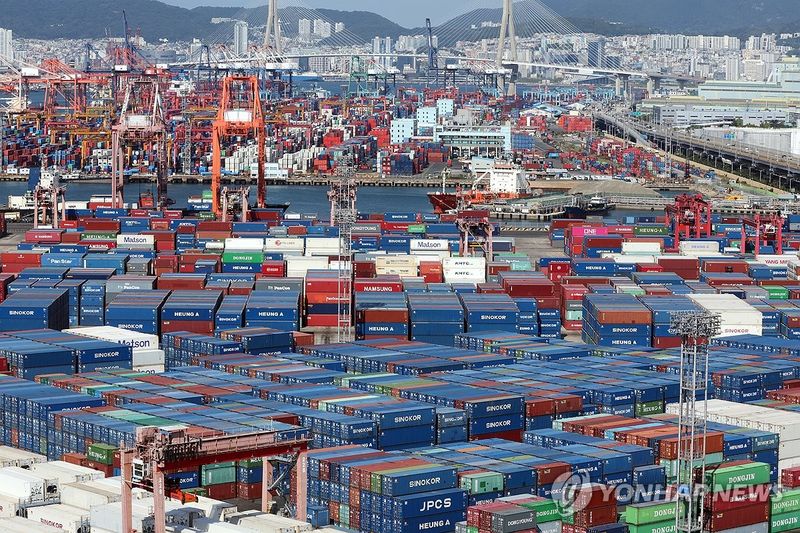
[Financial News] Opposition is mounting against the government's unilateral push to merge the port authorities, led by the Busan Port Authority (BPA), which oversees the Port of Busan, the world's second-largest transshipment port.
The labor unions of the four port authorities across the country—Busan, Incheon, Ulsan and Yeosu Gwangyang—announced on the 25th that they would hold a "Joint Struggle Mass Rally for Members of the Four Port Authorities" on the eastern side of Cheongwadae Sarangchae on the afternoon of the 28th. About 400 union members are expected to attend.
The rally was organized to give workers a direct opportunity to voice their opposition to the proposed port-authority merger included in the government's "Plan to Reform the Functions of Public Institutions," announced on the 3rd. They plan to call for the merger plan to be halted and for sufficient public discussion.
The government previously announced a plan to merge the four port authorities scattered across different regions into a single entity. Under the proposal, the authorities would be consolidated into the tentatively named Korea Port Authority, which would centralize policy and planning functions. The existing regional port authorities would be reorganized into four regional branches under the new authority to carry out specialized projects.
The unions characterize the merger as regression rather than reform. They oppose including four port authorities with different functions and roles in a uniform merger plan and pushing it forward under a "integrate first, verify later" approach without sufficient review or public discussion.
In Busan, local community groups also joined the BPA union in delivering a statement calling for the Busan City Party of the Democratic Party of Korea to withdraw the decision to merge and abolish the port authorities. The statement said that the City of Busan holds a 0% stake in the BPA and that only two of the port committee members are recommended by the city, leaving the local community without the authority to determine the agency's future. It also said the merger and abolition of the port authorities would offer no practical benefit and would reduce operational efficiency going forward.
The Busan community made clear that merging the port authorities was an anachronistic idea. Since the Port of London Authority was established in 1909, management authority over ports in advanced economies has steadily shifted from central to local governments and from state ownership to public-private and private ownership, they argued.
The City of Rotterdam holds a 70% stake in the Port of Rotterdam, while the Government of the Netherlands holds 30%. The Port of Los Angeles and the Port of Long Beach in the United States are each operated as port departments of their respective cities. The Port of New York and New Jersey is jointly controlled by two states, while the City of Shanghai holds the ownership stake and management authority over the Port of Shanghai.
The Busan Citizens’ Coalition for Economic Justice will hold a forum at the Busan Metropolitan Council on the 29th, together with People Power Party lawmaker Lee Seong-kwon of Busan's Saha-gap district, to discuss directions and strategies for developing the port authorities.
[email protected] Baek Chang-hoon Reporter