KRW 12 billion in prize money, yet winless for four years... Korean horse racing fails to overcome Japan's dominance
- Input
- 2026-09-23 14:41:29
- Updated
- 2026-09-23 14:41:29
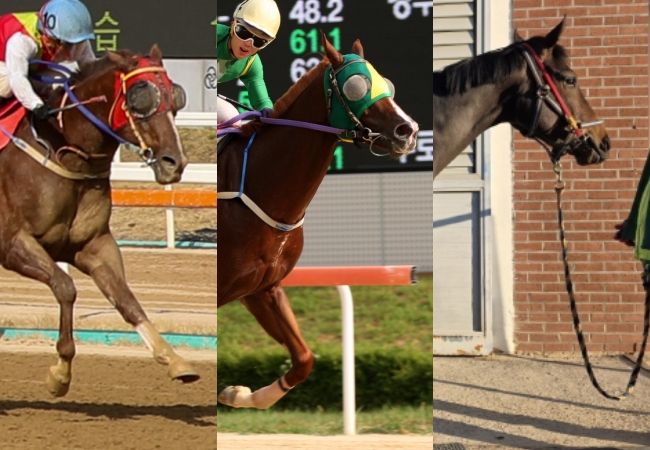
【Financial News Jeju—Jung Yong-bok, reporter】 The Korea Racing Authority (KRA) has offered KRW 12 billion in prize money for placings over the past four years and sent nearly three times as many domestic racehorses as foreign ones to the Korea Cup and Korea Sprint. However, no domestic horse has won either race during that period.
According to data Moon Dae-rim received from the KRA on the 23rd, a total of 77 domestic racehorses competed in the Korea Cup and Korea Sprint from 2023 through this year. That was 2.9 times the 27 overseas entries during the same period.
The number of domestic entries was 23 in 2023, 20 in 2024, 16 last year, and 18 this year. The corresponding figures for foreign horses were six, six, eight, and seven.
Despite the overwhelming number of domestic entries, foreign horses took the wins. Japanese horses won both the Korea Cup and Korea Sprint in 2023, and Japan swept both races again in 2024. Last year, Japan won the Korea Cup, while Hong Kong took the Korea Sprint.
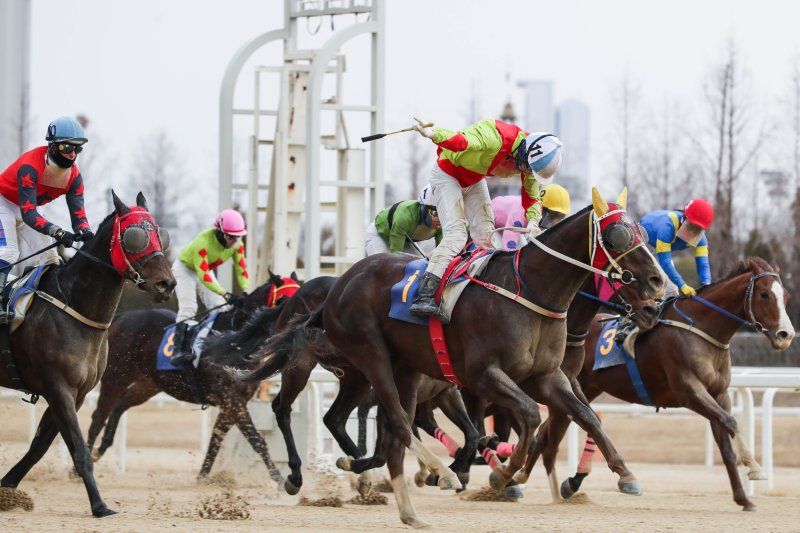
The gap was even more apparent this year. In the Korea Cup held at Let's Run Park Seoul on the 6th, Japan's Diktaean won, followed by Sunday Funday in second place. Japan's Dragon Wells and American Stage also finished first and second, respectively, in the Korea Sprint. The best result by a domestic horse was third place in both races.
The Korea Cup and Korea Sprint are premier international invitation races that directly test the competitiveness of Korean horse racing. This year's Korea Cup was run over 1,800 meters with KRW 1.6 billion in prize money for placings, while the Korea Sprint covered 1,200 meters with KRW 1.4 billion. The prize money for the two races alone totaled KRW 3 billion.
Prize money of the same scale was allocated from 2023 through this year, bringing the four-year total to KRW 12 billion. The costs of inviting foreign horses, holding events, and transporting and quarantining racehorses were additional.
The purpose of hosting international races is to raise the standard of domestic horse racing by competing against top foreign racehorses and to advance the systems for breeding, developing, and training horses. However, with no wins in four consecutive years at top-level international events held on home soil, calls are growing for an assessment of whether the money spent and experience gained are translating into greater competitiveness for the industry.
The gap with Japan is also wide in the industry's fundamentals. Data the KRA submitted to Moon's office show that horse-racing revenue in 2025 was KRW 6.4 trillion in South Korea, compared with KRW 44 trillion in Japan after conversion to Korean won. The number of races was 2,473 in South Korea and 18,538 in Japan, a difference of more than sevenfold.
Racehorse production totaled 1,116 horses in South Korea and 8,233 in Japan. South Korea's figure was 13.6% of Japan's. This indicates that the issue is not limited to race results; the two countries also differ greatly in the overall scale of the industry, from breeding and development through racing.
Overseas trips by KRA executives and employees also came under scrutiny. Moon's office calculated that 77 people took part in overseas trips related to international horse racing and racehorse development from 2022 through August this year, at a cost of KRW 406.72 million. The trips included supporting participation in international races, recruiting horses for races, inspecting candidates for import as breeding stallions, and purchasing overseas breeding stock.
KRA Chairman Woo Hee-jong also pointed to internal problems in a recent Facebook post, saying that the organization appeared inexperienced in areas such as overlooking basic elements while operating international events, despite repeatedly conducting overseas benchmarking. The KRA currently lists conducting horse racing with international competitiveness as one of its management goals.
The issue also hits close to home in Jeju. The island is the country's first special zone for the horse industry and a major production and development base, with Let's Run Park Jeju and the Korea Racing Authority Jeju Ranch. A market for breeding farms, horse development, and distribution remains active, with a yearling racehorse auction held in Jeju recently. This is why strengthening the international competitiveness of Korean racehorses is directly linked to horse prices and sales channels for Jeju breeders, as well as the introduction of high-quality breeding stallions and improvements to development systems.
Jeju Province is also investing KRW 8.9 billion in the horse industry this year and pursuing the introduction of high-quality horses and the expansion of breeding and training infrastructure. It is working to broaden an industry structure centered on racing into riding, equine welfare, and tourism, while also seeking to improve production competitiveness in the racehorse sector.
Moon Dae-rim said, "Given that tens of billions of won are spent every year to host international events, we need to assess whether that investment is leading to improved competitiveness among domestic racehorses." He added, "The KRA must clearly explain how its invitations to high-quality foreign horses and overseas study visits have been reflected in upgrading breeding stock and improving development and training systems."
He went on to emphasize, "An investment plan and step-by-step performance targets must be established to enhance the competitiveness of domestic racehorses."
[email protected] Jung Yong-bok Reporter