Semiconductor Lab Safety Management to Be Strengthened... Special Inspections Planned
- Input
- 2026-09-27 12:00:00
- Updated
- 2026-09-27 12:00:00
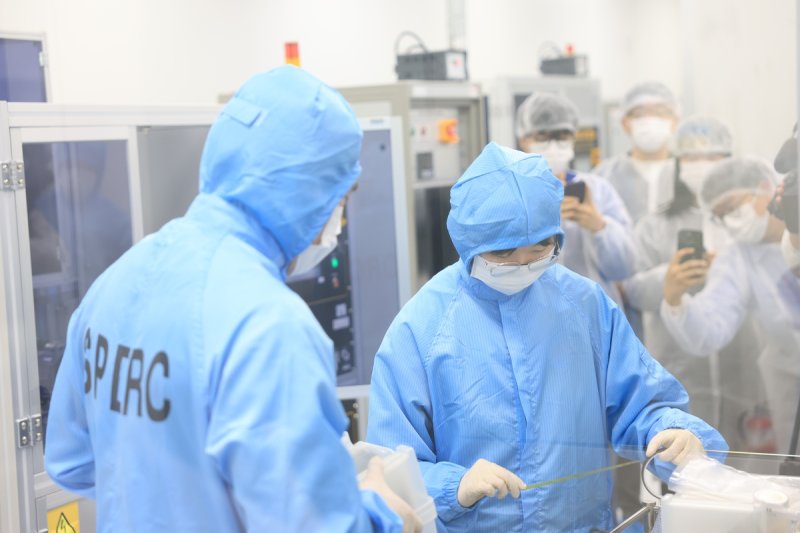
[Financial News] The Ministry of Science and ICT said on the 27th that it will conduct special on-site inspections and provide tailored support programs to strengthen safety management at the growing number of semiconductor laboratories at universities and research institutes.
The ministry will first visit research sites to assess safety management practices at semiconductor laboratories and identify and address potential accident risks. The special inspections will begin with Korea University of Technology and Education (KOREATECH) in late September and be carried out on a pilot basis at three institutions by the end of the year. Starting next year, the ministry plans to expand the inspections to 22 major universities and government-funded research institutes nationwide to more closely manage the operation of semiconductor laboratories.
It will also develop and provide various support measures to help researchers affiliated with semiconductor laboratories take responsibility for their own safety during research activities. A self-inspection checklist covering key safety issues that must be checked on-site will be developed and distributed by the end of this year. Next year, safety guidelines and educational content tailored to semiconductor research activities will be rolled out in stages so that researchers can more easily learn and follow safety rules. In addition, universities and research institutes planning to build new semiconductor laboratories will receive tailored consulting to ensure that safety is prioritized from the design stage and to help create safer research environments.
The Ministry of Science and ICT also plans to establish a collaborative framework with specialized agencies to enhance the expertise and effectiveness of safety management in semiconductor laboratories. It will sign a memorandum of understanding with the National Institute of Chemical Safety, an agency specializing in chemical accident response, by the end of this year. The two sides will then conduct joint inspections, accident investigations and consulting for semiconductor laboratories. The ministry also plans to operate a regular safety council to continuously share and address safety issues in semiconductor laboratories, thereby establishing an interagency safety net to protect researchers.
According to the Ministry of Science and ICT, accidents at semiconductor laboratories nearly doubled from 18 in 2023 to 32 in 2025 as semiconductor research expanded at universities. The ministry explained that semiconductor research involves handling large quantities of highly acidic solutions and toxic gases. It is also conducted in cleanrooms enclosed on all sides to prevent dust from escaping, meaning that even a small leak of hazardous substances could rapidly cause major harm not only to researchers but also to nearby living spaces. Thorough prevention and management are therefore essential.
Lee Jun-bae, director general of the Future Talent Policy Bureau at the Ministry of Science and ICT, said, "It is more important than anything to create a safe environment where researchers can focus solely on semiconductor research without worrying about laboratory accidents." He added, "We will actively support efforts to establish a comprehensive safety net tailored to research sites in cooperation with specialized agencies."
[email protected] Yeon Ji-an Reporter