Could Cancer Cells Be Returned to Normal? Researchers Find a 'Minimal Stimulus' to Change Cell Fate [Health LAB]
- Input
- 2026-09-28 05:00:00
- Updated
- 2026-09-28 05:00:00
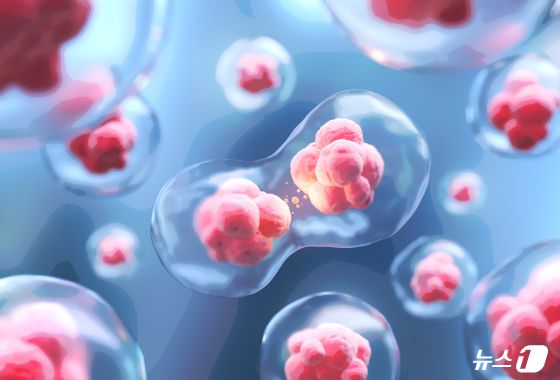
[Financial News] How can stem cells be guided to become a desired type of cell, or immune cells be regulated in their inflammatory responses? A South Korean research team has developed a technology that identifies the key targets needed to guide cells into a desired state with a single stimulus, without permanently altering their genes.
On the 28th, Korea Advanced Institute of Science and Technology (KAIST) said a research team led by Kwang-Hyun Cho, a professor in its Department of Bio and Brain Engineering, had developed a foundational technology called 'NUDGE.' The technology uses the natural gene-regulatory processes already present inside cells to redirect their fate with minimal, temporary intervention.
Technologies that change cell fate are drawing attention as a key tool for treating intractable diseases and advancing regenerative medicine. They can be used to differentiate stem cells into cells with specific functions or restore diseased and aged cells to a state closer to normal.
The NUDGE technology developed by the team uses a computational logic model to examine how key genes inside a cell influence one another and analyze the long-term state the cell will eventually reach. It then mathematically decomposes the logical functions representing the interactions between genes to identify the minimum combination of control factors needed to convert the cell from its current state to a desired one.
For example, when differentiating stem cells into cardiomyocytes, it serves as a 'minimal-stimulation blueprint' that identifies which target molecules among the thousands of genes need to be stimulated temporarily.
A key feature is that the technology can identify all possible minimal control combinations and mathematically guarantee the results. The team also proposed an efficient approximation method so the approach can be applied to large-scale molecular networks. In addition, it can analyze the path stimulated cells take to reach a target state and how stably that state is maintained. This makes it possible to assess in advance the possibility that unexpected states may emerge as cells change.
The team validated the technology by applying it to 63 previously reported biological networks. The analysis showed that conventional methods involving permanent genetic manipulation impaired cellular plasticity or induced abnormal equilibrium states that do not exist under natural conditions in 55 of the 63 networks.
By contrast, NUDGE's minimal-control approach achieved an error rate of less than 0.01 in more than 90% of all networks. It also identified the most effective minimal-intervention combinations with a high probability of 83%.
To determine how well NUDGE could explain real biological phenomena, the team applied it to three distinct processes: cardiomyocyte differentiation, fate determination in mast cells involved in allergic reactions, and the conversion of macrophages, a type of immune cell, into an anti-inflammatory state.
In the cardiomyocyte differentiation process, the technology reproduced the actual biological phenomenon in which MESP1, a factor important for heart development and regeneration, briefly becomes active early on to induce differentiation and then disappears in mature cardiomyocytes. It also revealed that GATA2 and GATA1 act as key points determining cell fate during mast-cell development. In the macrophage study, the team derived optimal one-time, transient control strategies involving IL-4 and other factors to convert cells into various 'M2' states while reducing inflammation without impairing normal immune function.
The significance of this technology lies in its broad applicability. Rather than being a treatment limited to a specific disease or cell type, it is a foundational platform that identifies where to apply a single stimulus to convert a cell from its current state into another state desired by researchers.
It is expected to have broad applications, ranging from research aimed at guiding normal stem cells into specific differentiated cells such as cardiomyocytes to normalizing diseased or aged cells, regenerating damaged tissue, regulating immune responses, and designing reversible treatment strategies to return cancer cells to a state closer to normal.
The findings were published online in the September 18 issue of the Proceedings of the National Academy of Sciences (PNAS).
[email protected] Yeon Ji-an Reporter