"The Field, Not the Chairperson's Office" ... Park Jong-hyeok, Incheon Council Chair, Stresses Council Work That Changes Citizens' Lives
- Input
- 2026-09-27 06:00:00
- Updated
- 2026-09-27 06:00:00
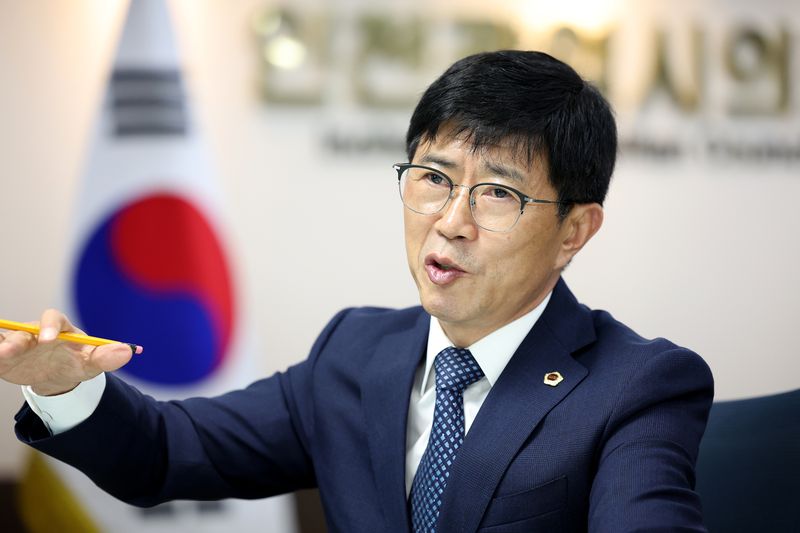
【Financial News, Incheon—Reporter Han Gap-su】 "The days of sitting in the chairperson's office and simply receiving reports are over. Whenever there is a site where citizens' lives are being materially changed, I will go there myself, crossing the boundaries between administration and people's livelihoods to find solutions."
Since taking office, Park Jong-hyeok has made field-centered council work a core value and is working to strengthen communication with citizens. He aims to create a 'productive council' that faithfully carries out its fundamental role of checking and overseeing the executive administration while offering reasonable and feasible alternatives rather than stopping at simple criticism or formal oversight.
On the 27th, Park presented solutions to key issues, including strengthening lawmakers' capabilities, restoring trust in the council through integrity, expanding communication with citizens, relocating the 3rd Supply Depot in his Bupyeong constituency, addressing flooding along Gulpocheon, and easing the local fiscal burden caused by redevelopment and reconstruction.
■ A Working Council Needs More Capable Lawmakers
Park identifies 'expertise' and 'integrity' as the foundations of council work. In his 25th year since entering politics, he noted that lawmakers entering a local council for the first time can find it difficult to quickly understand how administration and policy function. Since taking office, he has therefore promoted training programs, policy discussions, and visits to major institutions to strengthen lawmakers' capabilities.
As a first step, the council provided training under the theme 'The Dignity of the 10th Incheon Metropolitan Council Members and the Skills of Collaborative Governance.' The program covered the working methods of policy support officers and executive administration officials, the process of preparing and executing budgets, administrative terminology, and questions and answers—practical matters needed for council activities.
Park explained, "Each lawmaker has expertise in his or her respective field and tremendous passion. If that is supported by the systematic functions of the council, it can lead to much more complete council work."
Regarding relations with the executive administration, he emphasized a balance between 'checks and cooperation.' The council must carefully examine whether citizens' taxes are being used properly, he said, but this should not lead to opposition for opposition's sake or wasteful conflict.
He said, "The council's legitimate checks are not meant to hinder the administration but to serve as a complement that helps create better administration. Where alternatives are needed, I will present feasible alternatives together rather than stopping at criticism."
Park stressed that integrity is especially important to restoring citizens' trust in the council. As the Incheon Metropolitan Council recently received a disappointing result in an integrity assessment, he said he would lead by example, beginning by relinquishing his own authority and strictly following the rules.
Park stated, "This year, I will definitely turn our integrity rating around and rebuild a clean Incheon Metropolitan Council that citizens can genuinely trust and rely on."
■ The 3rd Supply Depot Site Should Be Returned to Citizens
Park also plans to make communication with citizens more field-oriented. Beyond simply receiving civil complaints, the council will regularly organize programs in which lawmakers visit sites involving people's livelihoods and conflicts, speak with residents, and seek solutions. It will also expand digital communication channels, including online citizen petitions and social media.
He emphasized, "I will ensure that citizens' voices do not end as opinions but lead to policies and, beyond policies, to concrete changes in their lives."
Park identified the relocation of the 3rd Supply Depot as a key issue in his Bupyeong constituency. He believes the military land located in downtown Bupyeong should be returned to citizens and transformed into a new urban space. In particular, he stressed the need to find ways to use the site as an environmentally friendly space for citizens rather than simply developing it, taking into account the area's environmental conservation value.
Based on his experience handling the relocation of a reserve forces training center when he was chair of the Bupyeong District Council, Park is also focusing on ways to secure the funding needed to relocate the military installation.
He believes that the funding options should be examined from various angles over the medium and long term, including state support, because securing funds is difficult under the current donation-for-transfer arrangement alone.
He forecast that linking the land vacated by the military relocation with nearby Camp Market could significantly transform Bupyeong's urban spatial structure.
Park said, "Revitalizing the old downtown should not simply mean building new facilities. Returning previously disconnected spaces to citizens and connecting them with surrounding areas is an important direction for urban regeneration."
Park also identified the local fiscal burden resulting from redevelopment and reconstruction as an area requiring institutional improvements. Bupyeong District has a high population density and a large share of social welfare spending, meaning that lower-level local governments do not have sufficient funds they can use at their own discretion. State-supported projects also often require matching local funds, which can place a heavier burden on financially weaker local governments.
■ The Old Downtown and New Towns Must Grow Together to Make Incheon a Global Hub
Saying that institutional improvements based on the fiscal conditions of each region are necessary, Park is also considering making the issue of easing local fiscal burdens a shared agenda through a consultative body of chairpersons of metropolitan councils nationwide.
Regarding the chronic flooding of Gulpocheon, he stressed the need for a comprehensive plan covering both upstream and downstream areas. Rainwater from Bupyeong, Gyeyang, and Bucheon is concentrated in Gulpocheon, while large-scale developments in Gyeyang District and Bucheon Daejang District could weaken the rainwater-buffering function of existing farmland.
Park pointed out, "The flooding problem along Gulpocheon should not be solved through localized improvements in upstream areas alone. The downstream drainage conditions, flow velocity, and surrounding development must also be examined comprehensively."
For the balanced development of Incheon Metropolitan City, Park proposed shared growth between the old downtown and new towns. He said that for Incheon to advance beyond being a leading city in South Korea and become a global hub, the regeneration of the old downtown, expansion of metropolitan transportation networks, and development of future growth industries must all move forward together.
He emphasized the need to complete metropolitan transportation networks such as the Great Train eXpress (GTX) and KTX as soon as possible to narrow regional disparities, while actively nurturing future growth engines such as biotechnology, artificial intelligence, and advanced aviation by leveraging Incheon Metropolitan City's airport and port infrastructure.
Park said, "For the ultimate goals of Incheon Metropolitan City's development and citizens' happiness, I will always sit down with the executive administration and work together. While maintaining strict checks and oversight, we will build a healthy partnership that communicates and cooperates actively on major issues."
[email protected] Han Gap-su Reporter