Defense Minister Kang Shin-chul Meets U.S. Ambassador Michelle Steel for First Time, Discusses Key Issues Including Wartime OPCON and Gwangju Military Airport
- Input
- 2026-09-23 14:02:52
- Updated
- 2026-09-23 14:02:52
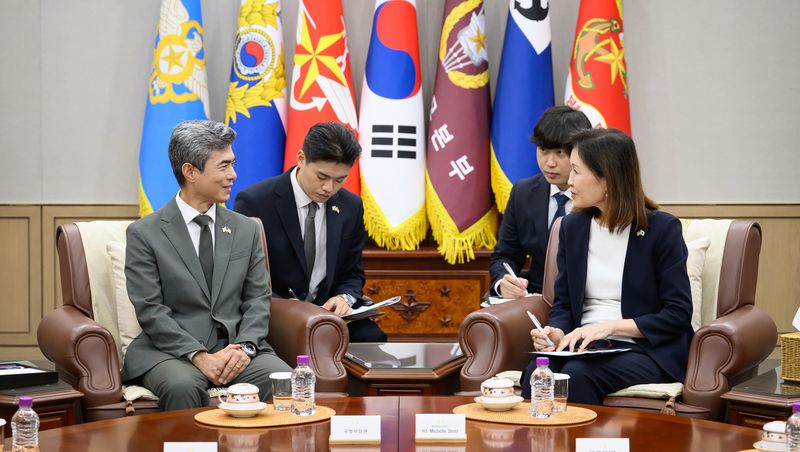
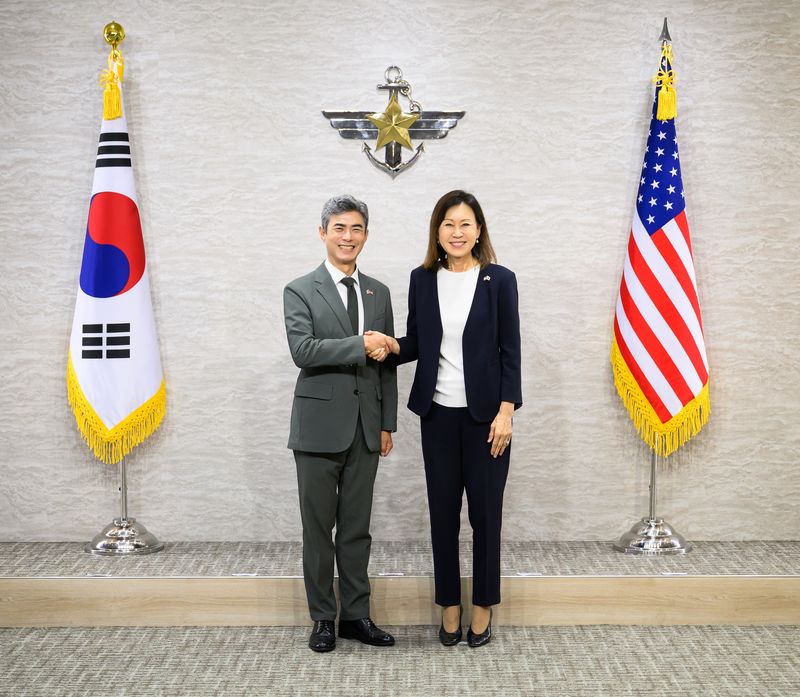
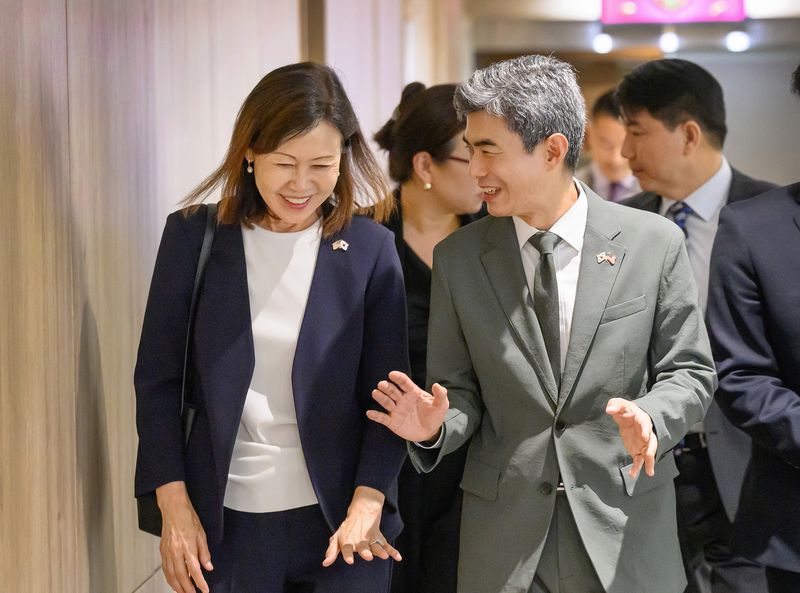
According to the Ministry of National Defense on the 23rd, Defense Minister Kang Shin-chul met with the U.S. ambassador to South Korea, Michelle Steel, at the ministry's headquarters in Yongsan District, Seoul, that morning. They held in-depth discussions on the regional security situation surrounding the Korean Peninsula and key alliance issues involving the two countries' militaries.
Minister Kang welcomed Ambassador Steel's visit to the Ministry of National Defense and found common ground with her. Referring to his previous post as ambassador to Saudi Arabia, Kang said he deeply understood the weight of the diplomatic responsibilities and political significance carried by the head of an overseas mission. He added, "I hope Ambassador Steel will serve as a strong bridge connecting the two countries through deep trust and capability cooperation for the continued development of the ROK-U.S. Alliance."
Regarding the direction of the ROK-U.S. Alliance, Minister Kang said, "Over the years, the alliance between our two countries has evolved from a strong military and security alliance into a future-oriented, comprehensive strategic alliance that contributes to shared prosperity and peace and stability in the region." He also made clear, "We will further solidify the alliance through close communication and steadfast coordination between the defense leadership of the two countries." Ambassador Steel expressed agreement, responding, "Even amid a rapidly changing and increasingly uncertain regional security environment, I will make every effort as ambassador to preserve the foundation of the strongest and most steadfast ROK-U.S. Alliance and advance it to the next level."
The most notable aspect of the meeting was that the two sides discussed substantive security challenges. They placed key regional and local issues on the table, including the status of coordination on the transition of wartime OPCON, a central pillar of the restructuring of the combined defense posture, and the relocation of Gwangju military airport, which is entangled in regional political interests. Both sides expressed their resolve to tackle these issues head-on and agreed to maintain close communication through diplomatic and security channels to promote the mutually beneficial development of the alliance.
[email protected] Lee Jong-yoon Reporter