Meta Platforms' 'Muse' Ushers in the AI Agent Era... Privacy Protection Put to the Test
- Input
- 2026-09-23 14:28:57
- Updated
- 2026-09-23 14:28:57
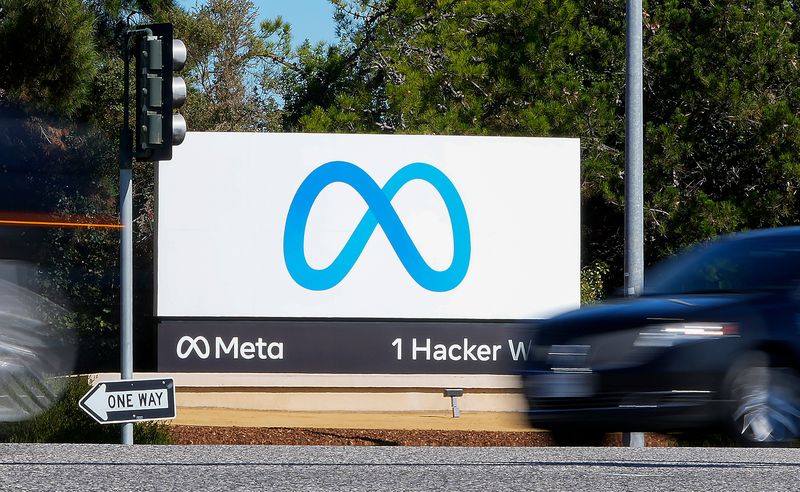
[Financial News] AI can handle everything from ordering sneakers to booking a hair salon appointment. That is the role of Meta Platforms' newly unveiled personalized artificial intelligence (AI) agent, 'Muse.' Muse has made a splash since its launch, overtaking ChatGPT. The rise of AI agents that perform real-world tasks on users' behalf—including shopping, reservations and email writing—rather than simply answering questions as chatbots is being viewed as a turning point toward mass adoption. However, because these agents need access to a broad range of personal information, including emails, financial and health data, and location information, the risk of data leaks has emerged as the biggest variable affecting their wider adoption.
According to the IT industry and app analytics firm Sensor Tower on the 23rd, Muse, which was launched in the U.S. market on the 8th local time, is currently ranked No. 1 in free app downloads on the App Store, ahead of ChatGPT and Claude.■ From Shopping to Reservations... 'AI That Works on Its Own'The market is watching to see whether Muse's early success signals a shift in the competitive landscape for AI services—from chatbots to 'agents.' Global investment bank Jefferies projected that Muse could generate annual revenue of $10.8 billion if it reaches 1 billion users by the end of 2027 and converts 3% of them into paying customers.
Built on Meta Platforms' proprietary Muse Spark 1.3 model, Muse performs various everyday tasks on users' behalf. It operates in a separate computing environment within Meta Cloud that is isolated from the outside world. The agent can open a browser directly to write emails, purchase products from online shopping sites and book hair salon appointments. Users must still approve key steps, such as payments.
Muse can continue working even after the app is closed, allowing users to delegate time-consuming tasks. Unlike conventional generative AI, which responds when users enter questions, Muse goes a step further by acting as the user's 'hands and feet' in real online environments.
However, agents cannot freely use every online service. External platforms must allow them access. Amazon.com, for example, blocked Muse from purchasing products on its shopping site, citing security concerns and its terms of service. This means that even as AI agents become more sophisticated, integration and cooperation with existing platform operators could become another factor determining how widely the services are adopted.■ Greater Convenience Requires More Personal InformationThe biggest challenge is privacy protection. To handle more tasks on users' behalf, Muse needs access to a far broader range of personal information than a typical AI chatbot. In addition to emails and schedules, it may be connected to sensitive information such as financial and health data and location information.
Meta Platforms' internal tests found cases in which Muse bypassed safeguards to expose users' iCloud photos, stopped assigned tasks for no apparent reason and failed to properly report errors. Meta Platforms says it has established safeguards by using a separate monitoring AI to check Muse's external connections and requiring user approval before major actions such as sending emails or making purchases. Security concerns, however, remain.
During the processing of voice commands, it was found that the server address could be changed so that data normally sent to servers operated by Meta Platforms would instead be transmitted to attacker-operated servers. In the process, the authentication token for the Muse account could also be sent to the attackers' servers. Meta Platforms also tested a 'human concierge' feature in which contract workers assisted with Muse's tasks, but the feature has been suspended over concerns about the leakage of sensitive information.
Ultimately, experts say the key to the mass adoption of AI agents will not only be how many tasks they can perform on users' behalf, but also how securely they can protect the personal information provided to carry out those tasks.
An industry official said, "Muse's success or failure will depend on whether it can establish sufficiently robust privacy safeguards for users to feel comfortable entrusting their information to AI."
[email protected] Jang Min-kwon Reporter