Chief Justice Cho Hee-dae Says "Difficult to Accept Claim of Procedural Defect"... Issues Additional Statement a Day Later (Comprehensive)
- Input
- 2026-09-23 13:29:06
- Updated
- 2026-09-23 13:29:06
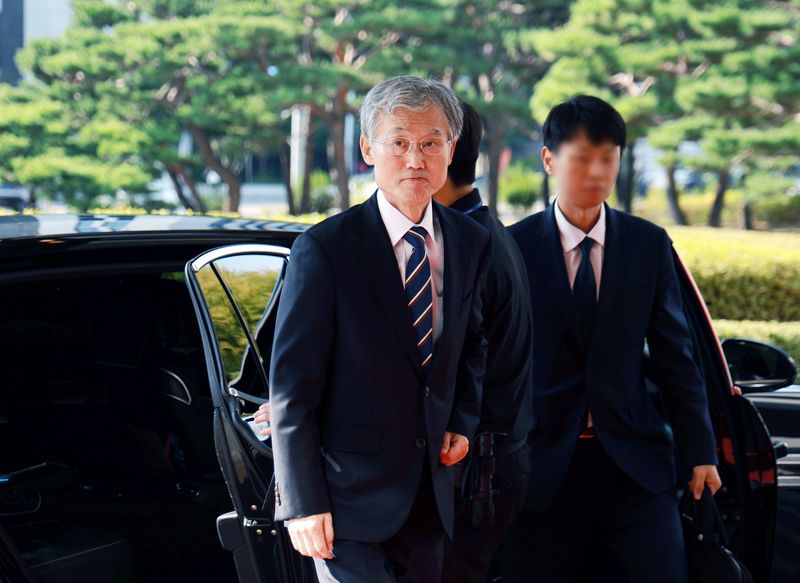
The Supreme Court of Korea conveyed Cho's position in a notice to the media on the 23rd. Chief Justice Cho Hee-dae said, "I am providing this explanation because various interpretations have been offered and there have been requests for a clearer explanation." He added, "The stated grounds that a 'procedural defect in the recommendation process,' as reported through the media and elsewhere in connection with the request for a renewed recommendation, exists are difficult to accept in light of the provisions of the Constitution and laws."
He stated, "The official letter dated Aug. 28 requesting a renewed recommendation does not clearly state the grounds for the request." He continued, "Clear grounds and a basis must be presented in the wording of the official letter so that there can be no dispute over its validity and procedures can proceed in accordance with the Constitution and laws." He asked for understanding regarding the delay in issuing his statement, citing his father's funeral and preparations for an international event.■ 'Countersignature' Clause: "That Was Not What I Meant," a Day LaterThe most notable part of the statement was its explanation of Article 82 of the Constitution of South Korea. At around 11:58 a.m. on the 22nd, Chief Justice Cho rejected the request for a renewed recommendation in a notice to the media issued by the Supreme Court of Korea and cited Article 82, which states, "The President's acts in matters of state shall be performed in documents countersigned by the Prime Minister and the relevant State Council member."
Cheong Wa Dae understood this as an indirect suggestion that the official letter requesting a renewed recommendation was defective because it lacked the countersignature of the relevant State Council member. In a statement issued at around 4:31 p.m. on the 22nd, Cheong Wa Dae countered, "This statement distorts the facts as if the President's request for a renewed recommendation had a defect because it failed to comply with the constitutional requirements for written instruments and countersignature." It explained that the official letter dated Aug. 28 had been issued as an electronic document and countersigned by the Prime Minister, and that appointments of chief justices and Supreme Court justices had previously been made with only the Prime Minister's countersignature. Cheong Wa Dae added, "If the intent is that the rejection of the recommendation and the request for a renewed recommendation are invalid because there was no countersignature from the relevant State Council member, that would amount to denying the validity of the appointments of chief justices and Supreme Court justices made to date solely with the Prime Minister's countersignature."
Chief Justice Cho clarified a day later that this was not what he meant. He stated, "This was a general explanation that, under Article 82 of the Constitution of South Korea, the President's acts in matters of state must be carried out in properly formatted documents and interpreted solely on the basis of those documents. It was not intended to suggest that the official letter dated Aug. 28 had a formal defect."■ The Remaining Issue Is 'Whether the Grounds Were Stated'The issue Chief Justice Cho ultimately raised is whether the grounds for the renewed recommendation were stated in the official letter. He maintains that the letter must clearly present the legal basis and grounds, while Cheong Wa Dae counters that the letter cited the constitutional basis and that the specific grounds were explained at a briefing.
Cheong Wa Dae said on the 22nd, "It is difficult to determine the Chief Justice's intent. Is he the only one who claims not to know the reason for the rejection because it was not included in the official letter, even though all citizens know it?" It added, "We ask the Chief Justice to faithfully fulfill his constitutional duty to constitute constitutional bodies so that the people's fundamental constitutional rights are no longer violated."
Chief Justice Cho said, "I sincerely regret the inconvenience caused to the public by the prolonged vacancy among Supreme Court justices, and I will do my utmost to ensure that the process is completed quickly."
On Aug. 18 last month, Chief Justice Cho submitted a written recommendation of Judge Son Bong-gi of the Daegu District Court as the successor to former Justice Rho Tae-ak. Ten days later, Cheong Wa Dae requested a renewed recommendation instead of submitting the appointment-consent motion to the National Assembly of the Republic of Korea, saying that the written recommendation had been made without substantive consultation between the President and the Chief Justice. Cho rejected the request on the 22nd, 25 days later.
[email protected] Kim Dong-gyu Reporter