Saudi Arabia Powerless Against Houthi Rebels Despite Advanced Weapons
- Input
- 2026-09-25 07:00:00
- Updated
- 2026-09-25 07:00:00
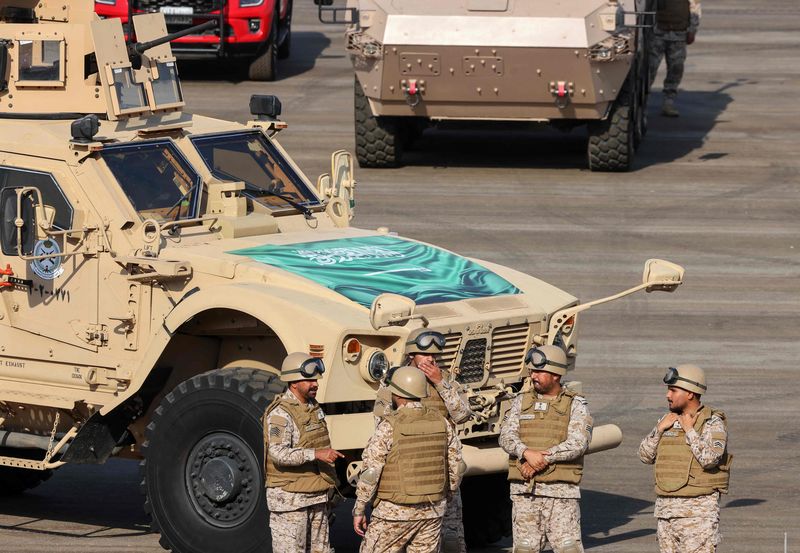
[Financial News] Saudi Arabia's military is armed with formidable financial resources fueled by oil wealth and state-of-the-art weapons. Yet, after more than a decade of conflict, it has failed to defeat Yemen's pro-Iranian Houthi rebels and is once again struggling under a fierce offensive.
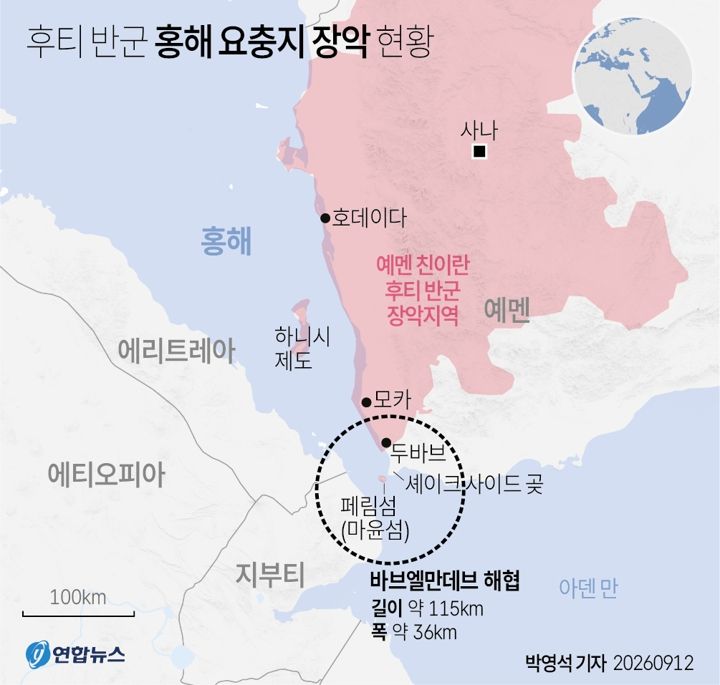
On Sept. 19 (local time), the Houthi rebels launched a missile attack on Riyadh, Saudi Arabia's capital. They then seized Yemen's entire Red Sea coastline, effectively blocking Saudi Arabia's crude oil export routes. Experts say Saudi Arabia failed to overcome the Houthis' strong cohesion, which is backed by rugged terrain and close Iranian support, while relying too heavily on the incompetence and divisions of local proxy forces.■ Even State-of-the-Art Weapons Prove IneffectiveSaudi Arabia has pursued both stronger national defense and greater diplomatic leverage by purchasing vast quantities of weapons from Western defense companies in the United States, United Kingdom and France. It recently received approval from the United States to purchase 48 F-35 stealth fighter jets for $24.3 billion, or approximately 32 trillion won.
Despite possessing formidable weapons, the Saudi military is widely viewed as having significantly weaker overall combat capabilities in actual operations. This is due to the structural limitations of a system that has long relied on foreign mercenaries and private military companies employing civilian contractors.
Bernard Haykel, a professor at Princeton University, noted, "Saudi Arabia needs to build an army and a population prepared to fight on their own and make sacrifices to defend the country, but that is not the case at present."
Ironically, some observers say the Saudi royal family's deliberate efforts to reduce and fragment the military to prevent a coup have instead hindered the kingdom. Ray Takeyh, a senior fellow at the Council on Foreign Relations (CFR), told a U.S. congressional hearing in 2015, "The only reason Saudi Arabia's monarchy has not been overthrown by the military in the Middle East is that it has kept the military weak."
■The Houthi Rebels' CohesionBy contrast, the Houthi rebels have built a tenacious defense network based on rugged mountainous terrain and strong tribal ties. With Iranian support, they have acquired advanced weapons systems, including missiles and drones. Unlike Yemen's divided government forces, they have maintained a robust command-and-control structure.
Thomas Juneau, a professor at the University of Ottawa, said, "The Houthis maintain a united front by exercising strong control through a centralized government over the various factions that initially made up the movement."
Sustained airstrikes by the United States, United Kingdom and Israel throughout 2024 and 2025 also failed to completely neutralize the Houthis' missile and drone capabilities. The Houthis are escalating pressure by threatening maritime routes through the Red Sea and directly striking Saudi oil fields and territory.
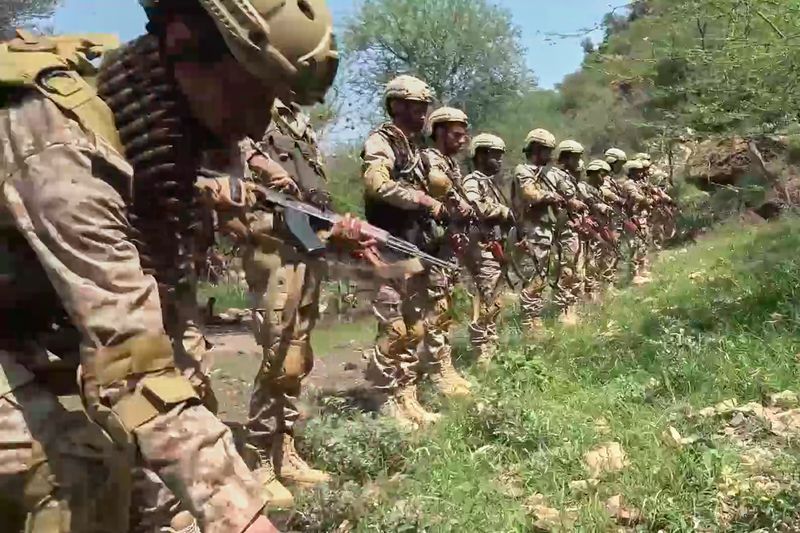
Saudi Arabia intervened alongside the United Arab Emirates in 2015 to restore Yemen's government after the Houthis seized the capital, Sanaa. However, the front has completely collapsed as tensions between the two countries have recently come to the surface.
Last year, UAE coalition forces temporarily seized areas under the control of Yemen's government, prompting angry Saudi officials to demand that the UAE withdraw. The UAE then abruptly pulled out of the Red Sea coast along with key assets, including attack helicopters, creating a serious military capability vacuum. Saudi Arabia failed to fill the gap, and the local defensive lines collapsed.
Middle East expert Michael Knights analyzed, "The collapse was caused by the weakening of cooperation with local forces in Yemen on top of having already suffered a major blow."
Morale among Yemen's government forces is also reportedly at rock bottom. A government soldier in Lahij Governorate in southern Yemen said, "We are not only short of weapons and ammunition, but we are not even being paid on time," adding, "Supplies arrived recently, but they are still woefully inadequate."
Mohammed bin Salman, Saudi Arabia's crown prince, is reportedly said to have repeatedly asked U.S. President Donald Trump for support in stopping the Houthis. However, no outcome capable of turning the situation around has emerged. Saudi Arabia's predicament is deepening as it lacks the will and strategy to fight on the ground despite being armed with state-of-the-art weapons.
[email protected] Yoon Jae-jun Reporter